
Child IQ Testing in Escondido
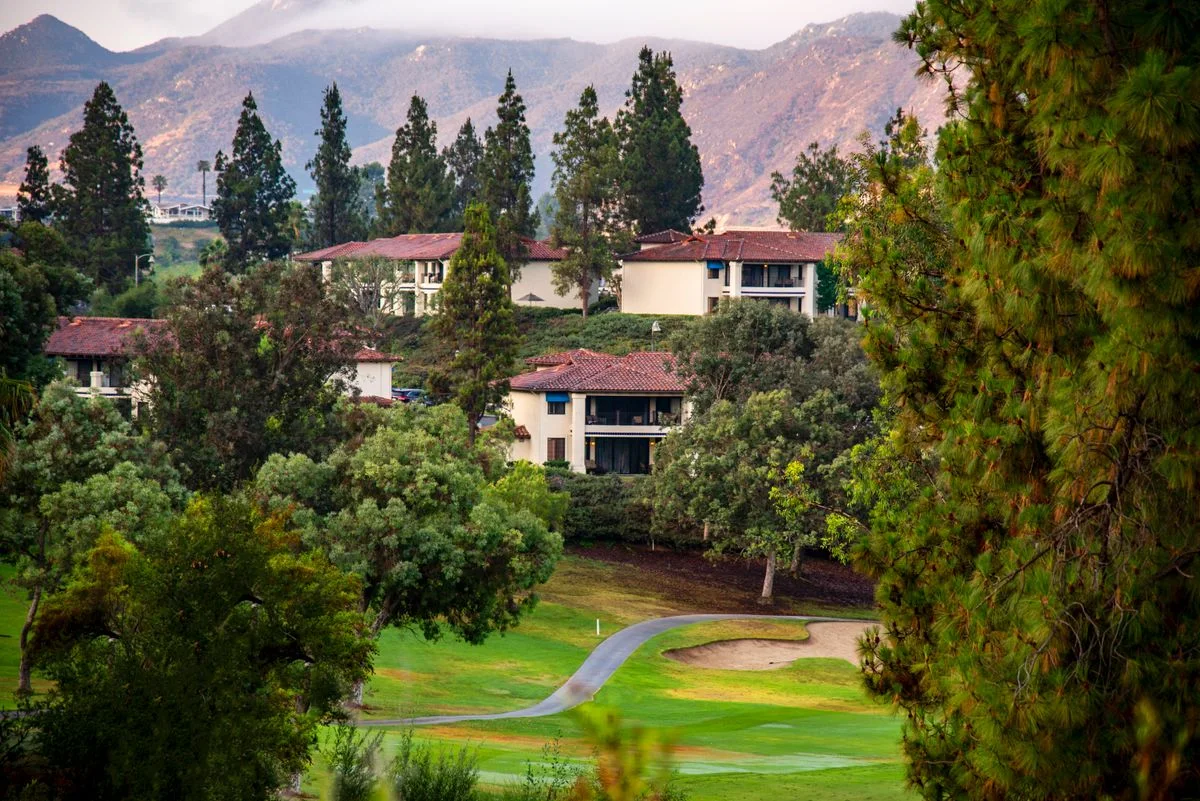

Professional child IQ testing in Escondido – whether you need an assessment for school placement, gifted program eligibility, or to understand your child's learning profile, we connect you with licensed psychologists in the Escondido area.
Last Updated: September 2026
Gifted Testing
Identify giftedness for school placement, enrichment, and talent programs using WISC-V or Stanford-Binet 5.
WISC-V Test
Wechsler Intelligence Scale for Children® Fifth Edition – the gold standard for child IQ testing.
Stanford-Binet 5
Stanford-Binet Intelligence Scales Fifth Edition – comprehensive cognitive assessment for all ages.
Full Evaluation
Combined assessment with detailed report and recommendations. Includes WISC-V or Stanford-Binet 5.
School Placement Testing
Testing for private school admission and gifted program eligibility using WISC-V or Stanford-Binet 5.
Schedule Child IQ Testing
Book your WISC-V & Stanford-Binet 5 for ages 6–16. Gifted identification, learning profiles, etc. with a licensed psychologist in Escondido today.
Child IQ Testing in Escondido: city context
Escondido children learn in a multilingual North County community that includes district, charter, private, faith-based, homeschool, and regional programs. A child's measured performance can reflect access to instruction, language development, school mobility, attendance, health, disability, anxiety, sleep, and familiarity with formal testing as well as underlying reasoning skills. The evaluator should document these influences and avoid turning a single score into a broad claim about potential.
Families should first name the decision the evaluation must support. Questions about EUSD GATE screening, reading or math intervention, special-education eligibility, grade acceleration, private-school admission, ADHD, autism, developmental delay, or a twice-exceptional profile require different records and sometimes different test batteries. Ask the school or other receiving organization for its current written requirements before private testing begins.
Escondido families seek testing for gifted screening, uneven achievement, learning disabilities, ADHD, developmental questions, private-school planning, and twice-exceptional profiles. The city has separate elementary/middle and high-school districts, and exact enrollment follows address boundaries.
- Children: 22.7% of city residents are under age 18.
- Language: 45.3% of residents age five and older speak a language other than English at home.
- Diversity: 52.3% of residents are Hispanic or Latino, and 29.0% are foreign born.
- Interpretation: Language development, opportunity, disability, health, school history, and testing conditions belong in the report.
A gifted question may need evidence aligned with EUSD screening; a learning question requires direct achievement testing; ADHD needs developmental and behavioral evidence; and medical or autism referrals require broader assessment. Parents should ask what each proposed test adds.
IQ by gender & ethnicity (child population)
Gifted potential and learning needs occur across genders and every racial, ethnic, linguistic, economic, and disability group. Escondido demographics should guide equitable access and culturally informed interpretation, not predict an individual child's ability.
Escondido school districts and gifted programs
Escondido Union School District GATE
EUSD provides GATE services in elementary and middle grades. The district states that all second-graders participate in November universal screening and that CogAT results are one piece of the process.
The CogAT is a digital, non-reading cognitive-abilities measure; it is not the same as a full individual clinical IQ evaluation. Site teams review data and make recommendations, with district-level confirmation.
Parents should request the current GATE flyer and ask how the district combines the screener with classroom data, teacher and parent information, prior achievement, and other pertinent evidence. They should also ask how results are reported, how long an identification remains active, what services actually follow eligibility at the child's campus, and what process applies after transfer into or out of EUSD.
A private WISC, Stanford-Binet, or other clinical report may add information about an individual profile, but families should not assume it replaces district screening or guarantees identification. If outside evidence is accepted, obtain the required instrument, recency, licensed-examiner, report, and submission rules in writing before paying for an evaluation.
Grades 3 through 8 referrals
Parents of students not previously screened may submit a background and input form by the current deadline. A school team reviews teacher, parent, and other pertinent data before deciding whether the student receives the screener.
Useful input focuses on observable learning needs: rate of mastery, depth of questions, unusual problem-solving, advanced work products, need for greater complexity, and the child's response to existing differentiation. Avoid coaching the child on secure test items or presenting enrichment participation as proof of a score. Keep dated copies of forms and written communications, and confirm the applicable school-year deadline because webpages and procedures can change.
Universal screening and equity
Universal second-grade screening can broaden access beyond parent or teacher referral. Families should ask about language access, disability accommodations, make-up testing, score reporting, and how students entering after the screening year are considered.
Equitable interpretation requires more than testing everyone. Teams should examine participation and follow-through for English learners, students with disabilities, highly mobile pupils, children absent on the test date, and students whose strengths are not expressed through rapid classroom performance. A non-reading format reduces some language demands but does not make a test culture-free or erase the effects of interrupted opportunity.
Escondido Union High School District
EUHSD offers AP, a-g, CTE, arts, and other rigorous coursework. Placement uses course prerequisites and district procedures; elementary GATE identification does not automatically place a student in every high-school option.
High-school planning should start with the student's graduation plan, prerequisite sequence, interests, workload, transportation, extracurricular commitments, and postsecondary goals. AP, honors, career-technical, arts, dual-enrollment, and advanced mathematics pathways may use distinct criteria. Families should verify course availability and catalog rules for the student's campus and year rather than relying on an IQ label from elementary school.
Charter, private, and regional options
Charter and private schools use their own admissions or placement rules. Nearby college dual-enrollment and regional programs have separate age, readiness, prerequisite, and enrollment requirements. Confirm each current process in writing.
When comparing programs, look beyond the word “advanced.” Ask who teaches the course, how acceleration differs from enrichment, whether students can work deeply in areas of strength while receiving support elsewhere, what counseling and disability services exist, how progress is reviewed, and whether transportation or fees create barriers. A strong match should support intellectual challenge without sacrificing belonging, health, or a sustainable schedule.
Escondido private-school admissions and testing
Local independent options include Calvin Christian School, Escondido Adventist Academy, Escondido Christian School, and other faith-based or private programs. Requirements vary by school, grade, and year and may include records, recommendations, interviews, observations, readiness, or achievement measures. Families should not assume an individually administered IQ test is required.
Ask for the exact accepted instrument, score age, administrator qualification, report components, purpose, and deadline. Admission, grade placement, gifted programming, learning support, and accommodations are different questions and may require different evidence. No ethical psychologist can promise admission.
Escondido gifted-identification data
Identification rates are administrative outcomes, not estimates of community intelligence. Ask EUSD for current counts separating students screened, referred, reviewed, identified, served, transferred, and declining services. Examine access by race, ethnicity, language, disability, and economic status with appropriate denominators and privacy safeguards.
CogAT scores, parent information, school data, and district review serve different roles. A percentile is relative to a norm group, not the percentage of questions answered correctly, and small score differences should be interpreted with measurement error and testing conditions in mind.
The child IQ testing process: step by step
Understanding the testing process can help parents prepare their child and reduce anxiety. Here's what to expect:
- Initial consultation (15–20 minutes): A brief phone or video call with the psychologist to discuss your child's background, concerns, and goals. This helps determine the right test and approach.
- Testing session (60–90 minutes): The child meets one-on-one with a licensed psychologist in a quiet, comfortable room. The psychologist administers the WISC-V or Stanford-Binet 5, which includes a series of subtests measuring verbal comprehension, visual-spatial reasoning, fluid reasoning, working memory, and processing speed. Breaks are offered as needed.
- Scoring and interpretation (1–2 days): The psychologist scores the test and analyzes the results. They consider the child's age, background, and any relevant medical or educational history.
- Feedback session (45–60 minutes): The psychologist meets with the parents (and the child, if appropriate) to explain the results. They discuss the Full-Scale IQ, index scores, strengths, and areas for growth. They also provide tailored recommendations for home, school, and extracurriculars.
- Comprehensive written report (5–7 days): You receive a detailed report with all scores, normative comparisons, and actionable next steps. This report can be shared with schools, doctors, or other professionals.
The entire process from consultation to report usually takes 1–2 weeks, depending on scheduling. The testing itself is non-invasive and designed to be engaging for children.
What is the WISC-V test?
The WISC-V (Wechsler Intelligence Scale for Children® – Fifth Edition) is the most widely used IQ test for children aged 6:0–16:11. It provides a Full-Scale IQ and five primary index scores: Verbal Comprehension, Visual-Spatial, Fluid Reasoning, Working Memory, and Processing Speed. The test is administered one-on-one by a trained psychologist and takes about 60–90 minutes.
The WISC-V is normed on a large, representative sample of U.S. children and is updated regularly to ensure accuracy. It is the gold standard for gifted identification, learning disability diagnosis, and school placement.
Why test your child's IQ?
IQ testing provides valuable insights into your child's cognitive strengths and weaknesses. It can help:
- Identify giftedness: For admission to gifted programs, private schools, or enrichment opportunities.
- Diagnose learning disabilities: Such as dyslexia, dyscalculia, or ADHD, which can be masked by high intelligence.
- Guide educational planning: Tailor instruction to your child's unique learning profile.
- Provide reassurance: Understand why your child is different from peers and how to support them.
Escondido gifted-testing timeline
EUSD publishes annual dates. Current guidance describes forms in October and screening in November, but families must verify the applicable school year. Start by confirming enrollment, obtaining the current GATE flyer and FAQ, and asking whether private evidence is reviewed.
- Before screening: Gather records, teacher observations, prior tests, and accommodation needs.
- During screening: Confirm language, disability, make-up, and technology procedures.
- Private evaluation: Give the psychologist the district's current rules and deadline.
- After review: Request written results, eligibility reasoning, service details, and reconsideration procedures.
If a comprehensive private evaluation is appropriate, allow time for intake, record collection, one or more testing appointments, scoring, report preparation, feedback, and school review. Do not schedule a child immediately after illness, a major disruption, or an exhausting school day when a reasonable alternative exists. Tell the examiner about prior exposure to the same or similar instruments, current medication, hearing or vision needs, and required accommodations before the appointment.
After results arrive, ask what the confidence intervals mean, whether index differences limit interpretation of a global score, which conclusions are strongly supported, and which remain tentative. Convert findings into a small number of observable classroom actions and agree on when the team will review whether those actions are working.
Escondido advanced learning by age group
- Early elementary: Differentiation and second-grade universal GATE screening.
- Grades 3–8: GATE referral or screening, classroom differentiation, Quantum Academy and other program-specific options.
- High school: AP, a-g, CTE, arts, dual enrollment, and advanced courses with their own prerequisites.
- Twice-exceptional students: Gifted services and disability supports may both be necessary.
Acceleration can be subject-specific or broader and should consider mastery, motivation, executive skills, peer context, transportation, and long-term course sequencing. An IQ score alone does not settle placement.
A trial with progress monitoring can be safer than treating placement as permanent. The team can define the advanced material, supports, indicators of mastery and well-being, and a review date. When a child is advanced in one subject, planners should check how the move affects later prerequisites, transportation between campuses or classrooms, peer relationships, and access to electives.
Escondido child ADHD and learning-disability assessment
IQ testing alone does not diagnose ADHD, dyslexia, or another learning disability. A comprehensive evaluation may include developmental and school history, parent and teacher reports, observation, achievement measures, attention and executive-function data, emotional screening, and review of language, vision, hearing, sleep, and medical factors.
Parents may request a school evaluation in writing. Clinical diagnosis and school eligibility are related but separate decisions. Bring report cards, interventions, state and district scores, attendance, work samples, medication information, and every prior test administration to prevent invalid duplication.
School teams evaluate whether a disability affects educational access and whether the student meets governing eligibility criteria; licensed clinicians diagnose under clinical standards and may address treatment. One process does not automatically control the other. Families can ask what areas the school proposes to assess, which records and observers will be included, how English development and instruction will be considered, and how results will guide services.
For twice-exceptional children, strong reasoning can mask reading, writing, attention, autism-related, motor, language, or emotional needs, while a disability can suppress the expression of advanced ability. Interpretation should examine the complete pattern, not average unlike scores into an apparently ordinary result. Recommendations may need both advanced content and explicit support.
Escondido enrichment and summer learning
Potential resources include Escondido Public Library, the California Center for the Arts, San Diego Children's Discovery Museum, Kit Carson Park, Queen Califia's Magical Circle, Daley Ranch, school programs, and regional college or museum offerings. The Safari Park is a major regional resource with an Escondido mailing address.
- STEM: Science, coding, robotics, nature study, and museum programs.
- Humanities: Reading, writing, history, languages, debate, and theater.
- Arts: Visual art, music, performance, and design may use portfolios or auditions.
- Well-being: Preserve sleep, friendships, physical activity, and unstructured time.
Offerings, ages, fees, and accessibility change. Most enrichment does not require an IQ label.
Escondido child-testing costs and routes
District screening and evaluations connected with public-school obligations may be available without a private fee, while independent testing is often self-pay or subject to insurance exclusions. Request a written estimate covering consultation, records, testing, scoring, feedback, report, school forms, and meetings.
Insurance may cover medically necessary diagnostic assessment while excluding gifted or admissions testing. Confirm codes, network status, authorization, deductible, denied-claim responsibility, payment plans, and whether a lower-cost clinic's scope and timeline satisfy the referral need.
Ask whether the quoted price includes parent and teacher rating forms, an observation, achievement testing, bilingual assessment, adaptive-behavior measures, a written report, feedback with caregivers, and consultation with the school. Clarify whether additional record-review time, missed appointments, expedited reports, copies, or meetings are billed separately. The least expensive IQ-only battery is not good value when the question requires a comprehensive learning, developmental, emotional, or attention evaluation.
Parents should receive a clear explanation of consent, confidentiality, who the client is, who may receive the report, how test data are protected, and what information can be shared with a school or insurer. Adolescents should receive an age-appropriate explanation of the purpose. Testing should not be presented as a pass/fail event, a measure of worth, or a promise of placement.
Areas we serve
We support all areas of Escondido.
Frequently Asked Questions
Both are excellent tests. WISC-V is more commonly used for school-age children, while Stanford-Binet 5 can be used for ages 2–85. We often recommend WISC-V for gifted identification.
The test itself takes 60–90 minutes. With the consultation, feedback, and report, the entire process is about 1–2 weeks.
No, you can book directly with our psychologists. We serve both self-referred and professionally referred children.
Yes, our reports are accepted by Escondido Public Schools, private schools, and other gifted programs.
Some plans cover cognitive assessments when there is a clinical indication. Check with your provider.
Get a good night's sleep, eat a healthy meal, and arrive relaxed. No specific preparation is needed.
You'll receive a comprehensive report with your child's scores and tailored recommendations.
Some interview and feedback components may be available remotely, but many standardized cognitive tests require in-person administration. Confirm with the psychologist and the organization receiving the report.