
IQ Testing in Elizabeth

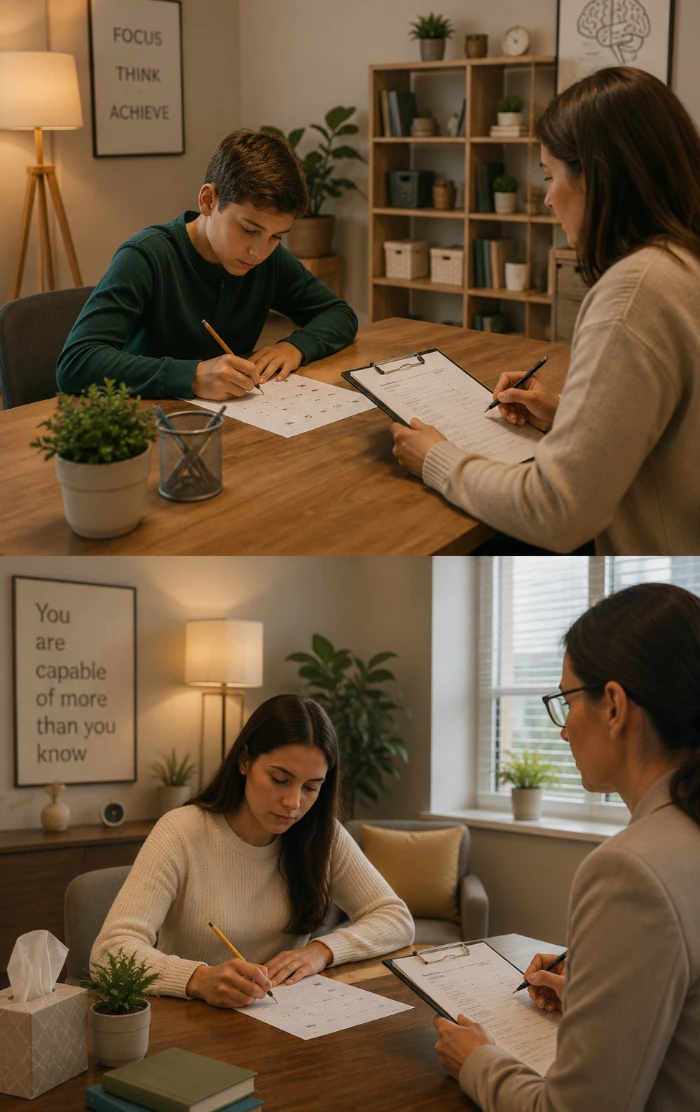
Professional IQ testing in Elizabeth – whether you need an assessment for school, employment, gifted program eligibility, or personal insight, we connect you with licensed psychologists in the Elizabeth area.
Last Updated: September 2026
Child IQ Testing
WISC-V & Stanford-Binet for ages 6–16. Gifted identification, learning profiles.
Adult IQ Testing
WAIS-IV & WAIS-5 available. Comprehensive adult cognitive assessments. Clinical & occupational.
WISC-V Test
Wechsler Intelligence Scale for Children® Fifth Edition – the gold standard for child IQ testing.
WAIS-IV & WAIS-5 Tests
Wechsler Adult Intelligence Scale® – Fourth Edition (WAIS-IV) and Fifth Edition (WAIS-5) available for adult IQ testing.
Gifted Testing
Identify giftedness for school placement, enrichment, and talent programs using WISC-V or Stanford-Binet.
Stanford-Binet 5
Stanford-Binet Intelligence Scales Fifth Edition – comprehensive cognitive assessment for all ages.
Mensa Testing
Mensa admission testing and preparation for the high-IQ society. Accepts WAIS-IV, WAIS-5, and Stanford-Binet 5 scores.
Full Evaluation
Combined assessment with detailed report and recommendations. Includes WISC-V, WAIS-IV, WAIS-5, or Stanford-Binet 5 as appropriate.
IQ Testing in Elizabeth, NJ: city context
Elizabeth is the Union County seat and New Jersey's fourth-largest city. The U.S. Census Bureau estimated 141,675 residents in 2025, up from 137,298 in the 2020 Census, within 12.32 square miles of land. Its setting beside Newark Liberty International Airport and the Port Newark–Elizabeth Marine Terminal places residents within a dense New York–New Jersey network of schools, hospitals, government, transportation, warehousing, retail, manufacturing, and professional services.
Local testing questions often involve Elizabeth Public Schools gifted or special-education processes, multilingual learning, private-school placement, disability accommodations, adult career changes, graduate study, and cognitive concerns following illness or injury. A valid evaluation considers language history, education, culture, health, sensory and motor needs, and testing conditions rather than treating one score as a complete description of ability.
IQ by gender & ethnicity
Elizabeth's population is approximately 49.9% female. Standardized intelligence tests are designed so broad male and female averages are similar, while individuals may show different verbal, visual-spatial, fluid-reasoning, working-memory, and processing-speed patterns. No authoritative city dataset establishes separate Elizabeth IQ averages by sex, race, ethnicity, neighborhood, or language group.
Current Elizabeth demographic context includes:
- Hispanic or Latino residents: 67.4% of the city population.
- Black residents: 16.3% identify as Black alone.
- Asian residents: 1.8% identify as Asian alone.
- White, non-Hispanic residents: 12.1%.
- Foreign-born residents: 51.6%, making migration, prior schooling, and language history central to fair interpretation.
- Language other than English at home: 77.1% of residents age five and older.
- Educational attainment: 74.2% of adults age 25+ are high-school graduates or higher, and 14.6% hold a bachelor's degree or higher.
Group statistics must never be converted into assumptions about an individual. A licensed psychologist evaluates the person's referral question, dominant and testing languages, education, health, disability, and behavioral observations when selecting and interpreting measures.
What is professional IQ testing?
Intelligence quotient (IQ) testing is a standardized method to measure human cognitive abilities and intellectual potential. Professional IQ tests are administered by licensed psychologists in a controlled environment to ensure accuracy and reliability. Unlike online quizzes, clinical assessments provide a full-scale IQ score along with detailed breakdowns of verbal comprehension, perceptual reasoning, working memory, and processing speed.
In Elizabeth, IQ testing is commonly used for gifted program admission, learning disability identification, career guidance, neuropsychological evaluation, and personal development. The results are presented in a comprehensive report that includes normative comparisons, strengths and weaknesses, and actionable recommendations.
Who should get tested?
IQ testing can benefit children, adolescents, and adults in various situations:
- Children: Parents often seek testing for school readiness, gifted placement, or to understand learning challenges.
- Adults: Many adults take IQ tests for career advancement, graduate school applications, or personal curiosity.
- Mensa candidates: High-IQ societies require official test scores for membership.
- Clinical referrals: Psychologists may recommend testing as part of a broader neuropsychological evaluation.
Types of IQ tests
We offer the most recognized and scientifically validated intelligence tests in the field:
- WISC-V (Wechsler Intelligence Scale for Children® – Fifth Edition): The gold standard for children aged 6:0–16:11. It provides a Full-Scale IQ and five primary index scores.
- WAIS-IV (Wechsler Adult Intelligence Scale® – Fourth Edition): The most widely used adult IQ test for ages 16–90. It measures cognitive functioning across four domains.
- Stanford-Binet Intelligence Scales – Fifth Edition: A comprehensive assessment for ages 2–85, often used for gifted identification and clinical evaluations.
- Gifted Testing: Often includes the WISC-V or Stanford-Binet, plus additional creativity and achievement measures.
- Mensa Testing: We provide official Mensa admission testing and preparation materials.
How the testing process works
- Initial consultation: Brief phone or video call to discuss your needs and match you with the right psychologist.
- Testing session: In-person or remote testing (depending on the test) with a licensed psychologist. Most sessions last 1–2 hours.
- Scoring and interpretation: The psychologist scores the test and interprets the results in the context of your background and goals.
- Feedback session: A detailed review of your results, including strengths, weaknesses, and practical recommendations.
- Comprehensive report: You receive a written report with all scores, normative comparisons, and actionable next steps.
For a brief educational starting point before arranging a clinical assessment, this IQ test can help you understand common question formats, but it cannot replace standardized testing by a qualified psychologist.
How much does IQ testing cost in Elizabeth?
The cost of IQ testing in Elizabeth varies depending on the type of test, the psychologist's experience, and whether a comprehensive report is required. Typical fees range from $200 to $1,200 for a full assessment. Gifted testing and Mensa admission testing are often at the lower end, while neuropsychological evaluations may be higher.
Some insurance plans cover IQ testing when it's deemed medically necessary. We recommend checking with your provider for details. We also offer affordable payment plans and sliding-scale options for qualifying individuals.
Elizabeth's Intellectual History & Legacy
Elizabethtown was established in the 1660s and named for Lady Elizabeth Carteret. It became New Jersey's first colonial capital, and the colony's first legislature met here in 1668. Alexander Hamilton spent part of his youth in the community, while George Washington traveled through Elizabeth on the way to his 1789 inauguration. This history remains visible in the Midtown historic district, Boxwood Hall, Liberty Hall, the First Presbyterian Church campus, and local archives.
Modern educational life is anchored by Elizabeth Public Schools, the Elizabeth Public Library, Union College of Union County programs, and Kean University immediately northwest of the city. Nearby Rutgers University–Newark, New Jersey Institute of Technology, Rutgers New Jersey Medical School, and regional teaching hospitals extend access to psychology, neuroscience, education, health-science, engineering, business, and workforce training.
Elizabeth employment and cognitive-assessment context
Routine Elizabeth hiring generally does not require a clinical IQ test. Employers may use lawful, job-related skills tests, licensing examinations, safety assessments, medical fitness evaluations, or aptitude measures. A psychologist's cognitive evaluation is more commonly requested for disability documentation, rehabilitation, career planning, or clarification of learning and attention needs.
- Trinitas Regional Medical Center and RWJBarnabas Health: Clinical, technical, behavioral-health, rehabilitation, administrative, and support roles.
- Elizabeth Public Schools: Teaching, school psychology, counseling, special education, operations, transportation, technology, and administration.
- Port Newark–Elizabeth Marine Terminal: Maritime, cargo, warehousing, customs, safety, engineering, and logistics work.
- Newark Liberty International Airport corridor: Aviation, maintenance, security, cargo, hospitality, and ground-operations positions.
- Union County and City of Elizabeth government: Courts, public safety, public works, health, social services, parks, libraries, and administrative services.
- UPS, FedEx, Amazon, and regional distribution operations: Logistics, fleet, warehouse, data, management, and safety-sensitive functions.
- The Mills at Jersey Gardens and local commercial districts: Retail, hospitality, food service, facilities, loss prevention, and management.
- Manufacturing and construction: Bayway-area industry, building trades, utilities, maintenance, engineering, and project management.
Elizabeth IQ testing by area
No credible dataset supports neighborhood IQ averages. Practical differences concern transportation, school assignment, language access, and proximity to providers. Midtown concentrates government, rail, library, and commercial services; Elmora contains dense residential and business corridors; Elizabethport connects waterfront and port communities; and North End, Peterstown, Bayway, and Westminster residents may use different bus, road, and school routes.
Provider fit matters more than repeating neighborhood names. Confirm the exact Elizabeth street address, age range, testing language, accessibility, parking or transit route, report format, and whether the receiving school, court, employer, disability office, or Mensa accepts the proposed test and examiner credentials.
Elizabeth Universities and Research Institutions
- Kean University: A public university near Elizabeth offering programs in psychology, education, health, business, sciences, technology, and the arts, with university clinics and community partnerships.
- Rutgers University–Newark: Regional research university with psychology, neuroscience, public affairs, business, criminal justice, social work, and graduate study.
- New Jersey Institute of Technology: Newark-based public research university focused on engineering, computing, architecture, science, business, and technology.
- Rutgers New Jersey Medical School: Academic medical education and research in Newark, linked with University Hospital and regional clinical training.
- Union College of Union County: Public community college providing transfer, allied-health, business, technology, and workforce pathways to Union County residents.
- Trinitas School of Nursing: Elizabeth-based nursing education associated with Trinitas Regional Medical Center and Union College.
- Seton Hall University: Nearby South Orange institution with undergraduate and graduate study in education, psychology, business, health, law, and other fields.
- Regional clinical research: RWJBarnabas Health, University Hospital, Children's Specialized Hospital, and other systems support professional training and selected research programs.
Elizabeth Economic Context
- Median household income: $66,555 in 2020–2024 Census estimates.
- Per-capita income: $28,969.
- Residents in poverty: 15.7%.
- Bachelor's degree or higher: 14.6% of adults age 25 and older.
- Mean travel time to work: 26.7 minutes, although port, airport, New York, and cross-county trips can take longer.
- Healthcare and social-assistance activity: Census business data report approximately $742.6 million in 2022 receipts/revenue within the city.
- Transportation and warehousing: Approximately $3.283 billion in 2022 receipts/revenue reflects the importance of the port, airport, trucking, cargo, and distribution.
- Retail sales: Approximately $1.893 billion in 2022.
- Accommodation and food services: Approximately $420.6 million in 2022 sales.
- Labor-force participation: 67.6% of residents age 16 and older; female labor-force participation was 61.5%.
- Housing: 25.6% owner occupancy, a $449,300 median owner-occupied home value, and $1,523 median gross rent.
- Regional strengths: Port logistics, aviation, warehousing, healthcare, education, government, retail, manufacturing, construction, hospitality, and access to the wider New York–New Jersey economy.
Elizabeth School District Data
- Elizabeth Public Schools: The city district serves students through neighborhood, choice, specialized, and alternative programs.
- Gifted continuum: District curricula include enrichment and higher-order extension work, while accelerated programs for grades 2–8 operate at Terence C. Reilly School No. 7 and William F. Halloran School No. 22.
- Multiple measures: Applications are reviewed by a school-based committee using academic achievement, specialized talents, behavior, and other information; admission is not based on one online IQ score.
- Academic acceleration: Gifted programs combine advanced academics with visual arts, performing arts, and physical education, including accelerated mathematics.
- High-school pathway: Elizabeth High School Frank J. Cicarell Academy offers a rigorous college-preparatory, honors, Advanced Placement, and AP Capstone environment with published eligibility and continuation standards.
- Special education: When disability is suspected, the district's Child Study Team process may include psychological, educational, social, speech-language, and other assessments under federal and New Jersey rules.
- Language access: Given the city's multilingual population, evaluators should document dominant language, English proficiency, schooling history, interpreter use, and whether nonverbal or bilingual measures are appropriate.
- Private and charter options: Admission and accommodation documentation vary by school and year; families should obtain written requirements before purchasing private testing.
Local Testing Centers and Psychologists
- Henry Janc, Ph.D.: Psychologist listed at 655 East Jersey Street, Elizabeth, NJ 07206, with psychological testing and evaluation of intelligence among the documented scope of psychology services; phone (908) 994-7504. Confirm current availability, age range, test inventory, fees, and report acceptance directly.
- Trinitas Regional Medical Center: Elizabeth hospital within RWJBarnabas Health offering behavioral-health, rehabilitation, pediatric, adult, and specialty services; referrals and neuropsychological availability vary by department.
- Family and Children's Services: Elizabeth community organization reported to provide counseling, psychological testing, and psychosocial or psychiatric evaluation services; verify present programs and eligibility.
- Elizabeth Public Schools: School psychologists and Child Study Teams evaluate eligible students through district procedures when educational concerns warrant assessment.
- Positive Reset Elizabeth: Local mental-health clinic describing psychological evaluations for emotional, behavioral, and cognitive concerns; ask whether formal IQ, achievement, or neuropsychological measures are offered.
- Regional options: Kean-affiliated clinics, Children's Specialized Hospital, Rutgers services, and private New Jersey psychologists may provide cognitive, developmental, learning, ADHD, autism, or neuropsychological assessment.
- Provider verification: Confirm active New Jersey licensure, competence with the requested instrument, language capacity, exact Elizabeth office location, report format, fees, insurance, and in-person requirements.
- School or Mensa acceptance: Obtain the receiving organization's current written rules before testing, because accepted editions, score thresholds, credentials, and documentation can change.
- Emergency distinction: IQ testing is scheduled assessment, not crisis care. Use 988 or emergency services for immediate safety concerns.
Elizabeth Events and Conferences
- Elizabeth Public Schools sessions: Gifted-program information, application guidance, family workshops, and curriculum events vary by school year.
- Kean University programs: Psychology, education, health, research, arts, and community events provide regional learning opportunities.
- Elizabeth Public Library: Literacy, technology, youth, cultural, and educational programming supports learning across ages.
- New Jersey Psychological Association: Continuing education addresses assessment, ethics, diversity, neuropsychology, telehealth, and professional practice.
- RWJBarnabas Health education: Community health programs and professional training may address development, behavior, rehabilitation, neurology, and mental health.
- Northern New Jersey Mensa: Official calendars may include talks, games, social meetings, youth activities, testing, and regional gatherings.
- Historic and cultural learning: Boxwood Hall, Liberty Hall Museum, local heritage groups, and city programs connect residents with Elizabeth's colonial and industrial history.
Transportation and Accessibility
- Major roads: Interstate 95/New Jersey Turnpike, Interstate 278, U.S. Routes 1 and 9, Route 27, Route 28, and local port and airport approaches.
- Rail: NJ Transit serves Elizabeth and North Elizabeth stations on the Northeast Corridor and North Jersey Coast Line, with connections toward Newark, New York Penn Station, Rahway, and points south.
- Bus: NJ Transit routes link city neighborhoods with Newark, Union County communities, rail stations, shopping areas, and other regional destinations.
- Airport: Newark Liberty International Airport borders the city's northeast side; terminal access generally requires road, bus, rail, taxi, or ride-share connections.
- Port traffic: Truck activity near the Port Newark–Elizabeth Marine Terminal and industrial corridors can affect appointment travel.
- Nearby cities: Newark is immediately north, Jersey City and Manhattan are reachable by regional transit or road, and travel times vary sharply with congestion and service changes.
- Walkability: Midtown and several commercial corridors are walkable, but highway barriers, freight routes, weather, and distance affect access in other areas.
- Accessibility: Confirm elevators, step-free entrances, parking, paratransit, interpreter needs, sensory accommodations, and accessible restrooms before the appointment.
- Testing-day planning: Allow extra time for peak commuting, school traffic, port activity, airport congestion, construction, rain, snow, and rail delays.
- Session length: Ask whether a long battery can be divided into shorter visits when fatigue, attention, disability, or medication timing may affect valid performance.
- Remote components: Intake and feedback may sometimes occur remotely, but standardized cognitive testing often requires controlled in-person administration.
- Address check: Verify that the provider's listed office is physically within Elizabeth if exact-city service is required.
Elizabeth Weather and Seasonal Considerations
- Climate: Elizabeth has four distinct seasons, with warm humid summers, cool to cold winters, and precipitation throughout the year.
- Summer: Heat, humidity, thunderstorms, and poor air quality can affect sleep, travel, comfort, and concentration.
- Winter: Snow, ice, freezing rain, and early darkness can delay buses, trains, roads, schools, and appointments.
- Coastal storms: Nor'easters, tropical systems, heavy rain, wind, and localized flooding may disrupt port, airport, rail, and road operations.
- Testing environment: Rooms should be quiet, well lit, temperature controlled, and free from avoidable interruptions, with breaks and water available as clinically appropriate.
- September–November: School referrals, gifted questions, accommodation planning, and early application deadlines often increase demand.
- December–March: Private-school, graduate, and standardized-test documentation may coincide with holiday schedules and winter disruption.
- April–August: Families may prefer evaluations before the next school year, while graduations, summer programs, and clinician vacations affect availability.
- Preparation: Adequate sleep, food, hydration, prescribed medication taken as directed, glasses or hearing devices, and early arrival are more useful than coaching.
Areas we serve
We support all areas of Elizabeth. Confirm the psychologist's exact office address, age range, language capacity, specialty, accessibility, and in-person requirements before scheduling.
Frequently Asked Questions
WISC-V is for children aged 6–16, while WAIS-IV is for adults aged 16–90. Each is normed for its specific age group.
Most IQ tests take between 60 and 90 minutes, plus a feedback session. Allow 2–3 hours total.
No, you can book directly with our psychologists. We serve both self-referred and professionally referred individuals.
Potentially. Acceptance depends on the exact test, edition, qualifying score, administration date, examiner credentials, and current Mensa documentation rules. Confirm before testing.
Some plans cover cognitive assessments when there is a clinical indication. Check with your provider.
Get a good night's sleep, eat a healthy meal, and arrive relaxed. No specific preparation is needed.
You'll receive a comprehensive report with your scores and tailored recommendations.
Some interview and feedback components may be available remotely, but many standardized cognitive tests require in-person administration. Confirm with the psychologist and the organization receiving the report.