
Child IQ Testing in Cleveland

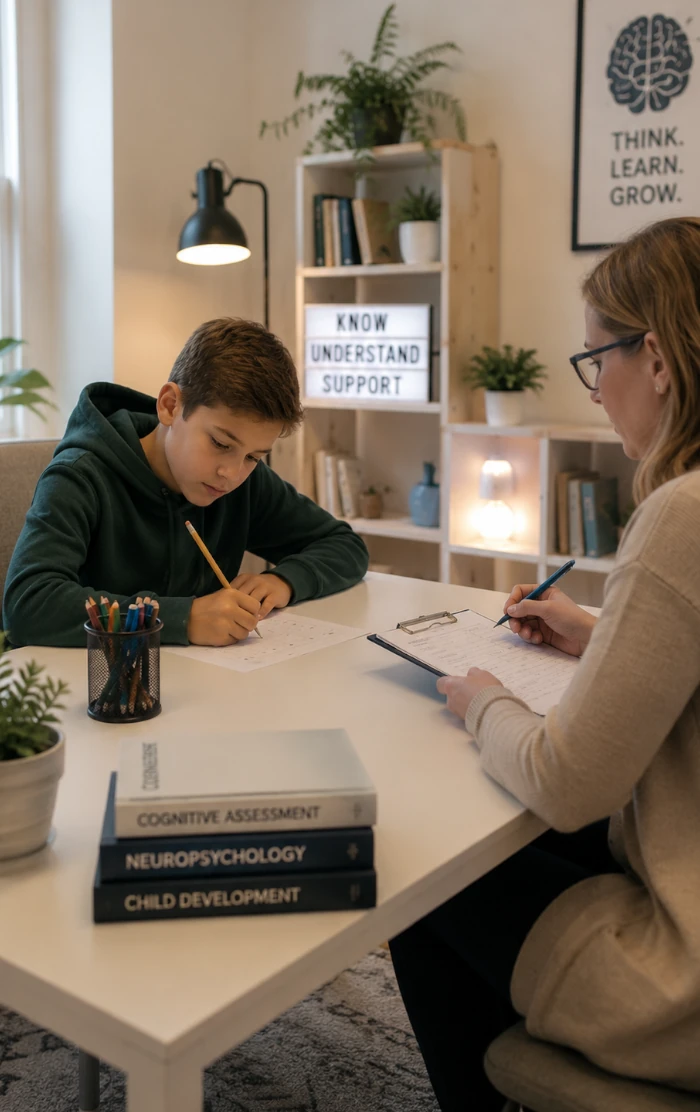
Professional child IQ testing in Cleveland – whether you need an assessment for school placement, gifted program eligibility, or to understand your child's learning profile, we connect you with licensed psychologists in the Cleveland area.
Last Updated: September 2026
Gifted Testing
Identify giftedness for school placement, enrichment, and talent programs using WISC-V or Stanford-Binet 5.
WISC-V Test
Wechsler Intelligence Scale for Children® Fifth Edition – the gold standard for child IQ testing.
Stanford-Binet 5
Stanford-Binet Intelligence Scales Fifth Edition – comprehensive cognitive assessment for all ages.
Full Evaluation
Combined assessment with detailed report and recommendations. Includes WISC-V or Stanford-Binet 5.
School Placement Testing
Testing for private school admission and gifted program eligibility using WISC-V or Stanford-Binet 5.
Schedule Child IQ Testing
Book your WISC-V & Stanford-Binet 5 for ages 6–16. Gifted identification, learning profiles, etc. with a licensed psychologist in Cleveland today.
Child IQ Testing in Cleveland: city context
Child IQ testing in Cleveland may support gifted identification, learning-disability evaluation, ADHD or autism assessment, school placement, twice-exceptional planning and understanding uneven academic development.
IQ by gender & ethnicity (child population)
- Child population: 21.0% of Cleveland residents are under age 18.
- Gender: Intelligence tests use age-based norms; gender should not predict an individual child’s ability.
- Language: 14.6% of residents speak a language other than English at home, requiring careful test-language decisions.
- Race and ethnicity: City percentages describe population context, not a child’s expected score.
- Opportunity: School access, poverty, health, disability and educational experience can affect observed performance.
- Twice exceptionality: High ability can coexist with ADHD, autism, dyslexia, anxiety or other disability.
- No neighborhood averages: There are no defensible IQ averages for Cleveland neighborhoods or attendance areas.
Cleveland School Districts and Gifted Programs
Cleveland Metropolitan School District Gifted Education
- History: CMSD began formal gifted programming in 1921 and describes its program as the nation’s longest-running all-inclusive model.
- Students served: The district reports enriching experiences for more than 2,500 children with high intellectual and/or academic ability.
- Grades: Gifted service is concentrated in grades 2–8, with advanced coursework in high school.
- Models: Pull-out resource rooms, gifted service providers, cluster settings and selected self-contained classrooms may be used.
- Availability: Services and grade-level openings vary by school and should be confirmed directly.
CMSD Advanced Academic Pathways
- Honors and AP: Advanced Placement offerings vary by high school.
- Early college: Bard Early College, Cleveland Early College and other pathways combine high-school and college work.
- Acceleration: Single-subject and whole-grade acceleration are available through formal review.
- Early entrance: Kindergarten early-entrance testing is coordinated through gifted and psychological services.
- Twice-exceptional services: Students may receive both an IEP and Written Education Plan.
Neighboring District Pathways
- Cleveland Heights-University Heights: Maintains separate gifted, honors and acceleration procedures.
- Shaker Heights: Offers advanced, AP and International Baccalaureate pathways under district rules.
- Lakewood and Parma: Use their own screening, identification and service plans.
- Suburban variability: Approved instruments, cut scores, service models and deadlines differ.
- Residency: Enrollment and attendance boundaries can affect access to district programming.
Advanced Academic and Concurrent-Enrollment Options
- College Credit Plus: Eligible Ohio students may earn high-school and college credit under state and institutional rules.
- AP and IB: Course availability and admissions requirements vary by school.
- STEM and thematic schools: Cleveland schools include science, medicine, architecture, design, arts and technology themes.
- Dual enrollment: Tri-C, Cleveland State and other colleges maintain separate readiness and placement requirements.
- Testing role: IQ results may inform planning but do not automatically place a student.
Ohio Gifted Requirements and Family Rights
- State categories: Ohio identifies giftedness in superior cognitive ability, specific academic ability, creative thinking and visual or performing arts.
- Approved measures: Districts use state-approved instruments and required criteria.
- Written Education Plan: Students receiving gifted service generally have a WEP describing goals, services and progress monitoring.
- Whole-grade and subject acceleration: District policy should provide a formal process.
- Appeals and withdrawal: Families should review district procedures for disputes, reassessment and exiting services.
- Private reports: A private evaluation may contribute evidence but the district makes educational eligibility and placement decisions.
Cleveland Private Schools and Programs Using Testing Information
- Independent schools: May request cognitive, achievement, admissions or readiness data, but requirements vary.
- Faith-based schools: Catholic and other religious schools maintain separate admissions and accommodation policies.
- Montessori schools: Placement decisions may emphasize developmental fit, observation and records more than a single score.
- Specialized schools: Programs serving dyslexia, autism, ADHD or other needs may require comprehensive evaluation.
- Boarding or national schools: Families should verify whether the school accepts the WISC-V, Stanford-Binet, WPPSI or another measure.
- Report age: Some schools require recent testing completed within a defined period.
- Decision authority: Testing informs but does not guarantee admission or placement.
Cleveland Gifted Identification Statistics
- CMSD reach: The district reports more than 2,500 students receiving enriching experiences for high intellectual and/or academic ability.
- Pull-out footprint: Gifted Intervention Specialists serve students at numerous elementary and middle schools.
- Historical context: Cleveland’s gifted program began in 1921.
- Identification: CMSD materials describe cognitive and academic criteria using approved standardized measures.
- Services versus identification: Being identified does not guarantee the same service model at every school.
- No citywide IQ estimate: Program counts cannot be used to calculate an average IQ for Cleveland children.
- Equity: Multilingual, economically disadvantaged, disabled and twice-exceptional students require fair access to referral and assessment.
The child IQ testing process: step by step
Understanding the testing process can help parents prepare their child and reduce anxiety. Here's what to expect:
- Initial consultation (15–20 minutes): A brief phone or video call with the psychologist to discuss your child's background, concerns, and goals. This helps determine the right test and approach.
- Testing session (60–90 minutes): The child meets one-on-one with a licensed psychologist in a quiet, comfortable room. The psychologist administers the WISC-V or Stanford-Binet 5, which includes a series of subtests measuring verbal comprehension, visual-spatial reasoning, fluid reasoning, working memory, and processing speed. Breaks are offered as needed.
- Scoring and interpretation (1–2 days): The psychologist scores the test and analyzes the results. They consider the child's age, background, and any relevant medical or educational history.
- Feedback session (45–60 minutes): The psychologist meets with the parents (and the child, if appropriate) to explain the results. They discuss the Full-Scale IQ, index scores, strengths, and areas for growth. They also provide tailored recommendations for home, school, and extracurriculars.
- Comprehensive written report (5–7 days): You receive a detailed report with all scores, normative comparisons, and actionable next steps. This report can be shared with schools, doctors, or other professionals.
The entire process from consultation to report usually takes 1–2 weeks, depending on scheduling. The testing itself is non-invasive and designed to be engaging for children.
What is the WISC-V test?
The WISC-V (Wechsler Intelligence Scale for Children® – Fifth Edition) is the most widely used IQ test for children aged 6:0–16:11. It provides a Full-Scale IQ and five primary index scores: Verbal Comprehension, Visual-Spatial, Fluid Reasoning, Working Memory, and Processing Speed. The test is administered one-on-one by a trained psychologist and takes about 60–90 minutes.
The WISC-V is normed on a large, representative sample of U.S. children and is updated regularly to ensure accuracy. It is the gold standard for gifted identification, learning disability diagnosis, and school placement.
Why test your child's IQ?
IQ testing provides valuable insights into your child's cognitive strengths and weaknesses. It can help:
- Identify giftedness: For admission to gifted programs, private schools, or enrichment opportunities.
- Diagnose learning disabilities: Such as dyslexia, dyscalculia, or ADHD, which can be masked by high intelligence.
- Guide educational planning: Tailor instruction to your child's unique learning profile.
- Provide reassurance: Understand why your child is different from peers and how to support them.
Cleveland Gifted Testing Timeline
- Start with the school: Ask the gifted coordinator which measure, score, deadline and documentation are required.
- Referral: CMSD accepts referrals from educators, parents and students under district procedures.
- Record collection: Gather report cards, standardized scores, work samples, IEP/504 plans and prior evaluations.
- Private scheduling: Comprehensive child evaluations may require several weeks for consultation, testing and reporting.
- School review: District staff decide identification and service after reviewing qualifying evidence.
- Acceleration: Whole-grade acceleration may require the Iowa Acceleration Scale or another formal process.
- Early entrance: Kindergarten early-entrance testing follows a separate application and summer clinic schedule.
- Appeal: Families should preserve reports and written decisions if requesting reconsideration.
Cleveland Gifted Programs by Age Group
- Preschool: Assessment should focus on developmental questions, early entrance and appropriate school fit.
- Kindergarten–grade 1: Early entrance or acceleration decisions require maturity and functional-readiness evidence, not IQ alone.
- Grades 2–6: CMSD pull-out and service-provider models are prominent.
- Grades 7–8: Gifted services, honors and advanced subject options may be available at selected schools.
- High school: AP, honors, early-college, thematic and College Credit Plus pathways become more relevant.
- Twice-exceptional students: Programming should coordinate gifted goals with IEP or 504 supports.
- Social-emotional needs: Peer fit, perfectionism, anxiety and motivation should be considered at every age.
Cleveland Child ADHD and Learning Disability Assessment
- IQ is one component: Learning-disability evaluation also needs achievement, history, observations and school data.
- ADHD: Diagnosis requires symptoms and impairment across settings, not a low working-memory score alone.
- Dyslexia: Reading evaluation should examine decoding, fluency, spelling, phonological processing and language.
- Autism: Social communication, developmental history, behavior and adaptive functioning require specialized measures.
- Medical factors: Sleep, seizures, concussion, medication, pain and chronic illness can affect performance.
- School evaluation: Families may request an educational evaluation in writing when disability is suspected.
- Private evaluation: Can add diagnostic detail, but the school team decides eligibility and services.
- Multilingual assessment: Language proficiency and educational exposure must guide test selection.
Cleveland Summer Programs for Gifted Children
- Great Lakes Science Center: STEM camps and science activities vary by year.
- CWRU: Pre-college, research and enrichment programs may be offered by departments.
- Cleveland State: Youth, arts, sport and academic programs vary seasonally.
- Museums: Cleveland Museum of Art, Natural History Museum and other institutions offer camps and workshops.
- Libraries: Cleveland Public Library and Cuyahoga County Public Library provide reading, technology and maker programs.
- Music and arts: Cleveland Institute of Music, Cleveland Institute of Art and performing-arts organizations offer specialized experiences.
- Eligibility: Most enrichment programs use age, interest or application criteria rather than IQ alone.
Cleveland Child Testing Costs by Provider Type
- School evaluation: Public-school disability and gifted screening may be available without direct family charge when district criteria are met.
- Stand-alone IQ test: Usually costs less than a comprehensive evaluation but answers fewer questions.
- Psychoeducational evaluation: Adds achievement, attention, behavior and school recommendations.
- Neuropsychological evaluation: Broader medical and cognitive assessment is typically more expensive and time intensive.
- Insurance: Medical necessity, network status, referral and prior authorization affect coverage.
- Educational-only questions: Insurance often does not cover testing solely for gifted or school admission purposes.
- Written estimate: Ask about consultation, testing, report, feedback, forms and record-review fees.
Areas we serve
We coordinate testing for residents throughout Cleveland while keeping geographic references concise, useful and natural rather than repeating neighborhood names for search engines.
- Central access: Downtown, Campus District, Midtown and nearby communities.
- West Side access: Ohio City, Tremont, Detroit-Shoreway, Edgewater, West Park and adjacent areas.
- East Side access: University Circle, Fairfax, Glenville, Buckeye-Shaker, Lee-Miles and neighboring communities.
- Regional access: Families from Lakewood, Cleveland Heights, Shaker Heights, Parma, Euclid and other Cuyahoga County communities can ask about travel and scheduling.
Frequently Asked Questions
Both are excellent tests. WISC-V is more commonly used for school-age children, while Stanford-Binet 5 can be used for ages 2–85. We often recommend WISC-V for gifted identification.
The test itself takes 60–90 minutes. With the consultation, feedback, and report, the entire process is about 1–2 weeks.
No, you can book directly with our psychologists. We serve both self-referred and professionally referred children.
Yes, our reports are accepted by Cleveland Metropolitan School District, private schools, and other gifted programs.
Some plans cover cognitive assessments when there is a clinical indication. Check with your provider.
Get a good night's sleep, eat a healthy meal, and arrive relaxed. No specific preparation is needed.
You'll receive a comprehensive report with your child's scores and tailored recommendations.
Interviews and feedback may be available remotely, but many standardized cognitive tests require controlled administration and may need an in-person appointment. Contact us for details.