
IQ Testing in Chesapeake

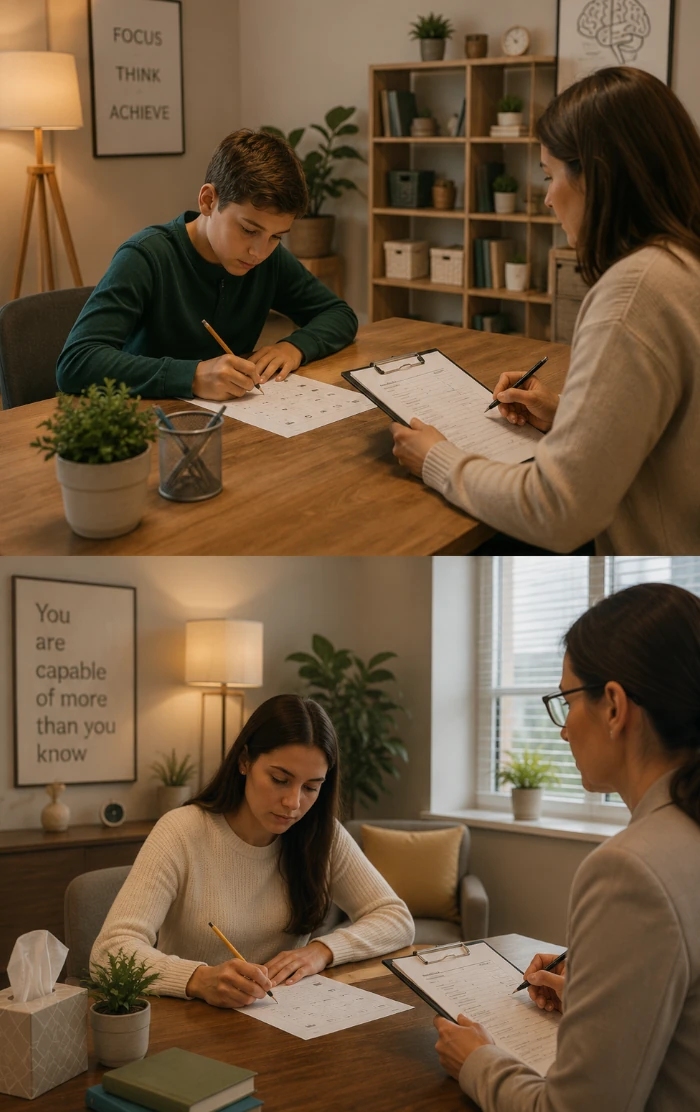
Professional IQ testing in Chesapeake – whether you need an assessment for school, employment, gifted program eligibility, or personal insight, we connect you with licensed psychologists in the Chesapeake area.
Last Updated: September 2026
Child IQ Testing
WISC-V & Stanford-Binet for ages 6–16. Gifted identification, learning profiles.
Adult IQ Testing
WAIS-IV & WAIS-5 available. Comprehensive adult cognitive assessments. Clinical & occupational.
WISC-V Test
Wechsler Intelligence Scale for Children® Fifth Edition – the gold standard for child IQ testing.
WAIS-IV & WAIS-5 Tests
Wechsler Adult Intelligence Scale® – Fourth Edition (WAIS-IV) and Fifth Edition (WAIS-5) available for adult IQ testing.
Gifted Testing
Identify giftedness for school placement, enrichment, and talent programs using WISC-V or Stanford-Binet.
Stanford-Binet 5
Stanford-Binet Intelligence Scales Fifth Edition – comprehensive cognitive assessment for all ages.
Mensa Testing
Mensa admission testing and preparation for the high-IQ society. Accepts WAIS-IV, WAIS-5, and Stanford-Binet 5 scores.
Full Evaluation
Combined assessment with detailed report and recommendations. Includes WISC-V, WAIS-IV, WAIS-5, or Stanford-Binet 5 as appropriate.
IQ Testing in Chesapeake: city context
Chesapeake is an independent city in South Hampton Roads with an estimated 255,332 residents in 2025. Its unusually large 338.46-square-mile land area combines Greenbrier and South Norfolk urban centers, suburban communities such as Great Bridge and Western Branch, industrial and port-related corridors, military-connected households, farms, wetlands, and the Great Dismal Swamp.
Local demand for cognitive assessment is shaped by Chesapeake Public Schools, private and faith-based schools, military families, Tidewater Community College's Chesapeake Campus, nearby universities, healthcare systems, logistics and defense employers, and adults or children seeking gifted identification, disability documentation, career guidance, graduate-school planning, Mensa evidence, or diagnostic clarification.
- Common referral goals: Gifted education, school planning, ADHD and learning evaluation, autism-related questions, disability accommodations, career decisions, graduate study, neuropsychological concerns, and personal insight.
- Regional access: Chesapeake providers may serve residents from Norfolk, Virginia Beach, Portsmouth, Suffolk, North Carolina border communities, and other parts of Hampton Roads.
- Provider matching: The correct examiner depends on age, referral purpose, test edition, language needs, receiving institution, insurance, military or VA requirements, and clinical complexity.
Gender, age and demographic statistics
Current Census estimates describe the population but do not establish separate local IQ averages for demographic groups:
- Female population: 50.9%.
- Residents under age 18: 24.2%.
- Residents age 65 and older: 14.6%.
- White alone: 55.1%.
- Black or African American alone: 29.1%.
- Asian alone: 3.9%.
- Two or more races: 9.1%.
- Hispanic or Latino: 7.7%; Hispanic origin may overlap with racial categories.
- Foreign-born residents: 5.8%.
- Language other than English at home: 8.4% of residents age five and older.
- Education: 94.2% of adults age 25 and older are high-school graduates or higher, and 36.9% hold a bachelor's degree or higher.
- Labor-force participation: 62.8% overall and 61.8% among women age 16 and older.
- Clinical interpretation: Examiners use age-based national norms and consider education, language, culture, disability, medical history, attention, mood, sleep, medication, and testing conditions rather than inferring ability from gender, race, ethnicity, or neighborhood.
What is professional IQ testing?
Intelligence quotient (IQ) testing is a standardized method to measure human cognitive abilities and intellectual potential. Professional IQ tests are administered by licensed psychologists in a controlled environment to ensure accuracy and reliability. Unlike online quizzes, clinical assessments provide a full-scale IQ score along with detailed breakdowns of verbal comprehension, perceptual reasoning, working memory, and processing speed.
In Chesapeake, IQ testing is commonly used for gifted program admission, learning disability identification, career guidance, neuropsychological evaluation, and personal development. The results are presented in a comprehensive report that includes normative comparisons, strengths and weaknesses, and actionable recommendations.
Who should get tested?
IQ testing can benefit children, adolescents, and adults in various situations:
- Children: Parents often seek testing for school readiness, gifted placement, or to understand learning challenges.
- Adults: Many adults take IQ tests for career advancement, graduate school applications, or personal curiosity.
- Mensa candidates: High-IQ societies require official test scores for membership.
- Clinical referrals: Psychologists may recommend testing as part of a broader neuropsychological evaluation.
Types of IQ tests
We offer the most recognized and scientifically validated intelligence tests in the field:
- WISC-V (Wechsler Intelligence Scale for Children® – Fifth Edition): The gold standard for children aged 6:0–16:11. It provides a Full-Scale IQ and five primary index scores.
- WAIS-IV (Wechsler Adult Intelligence Scale® – Fourth Edition): The most widely used adult IQ test for ages 16–90. It measures cognitive functioning across four domains.
- Stanford-Binet Intelligence Scales – Fifth Edition: A comprehensive assessment for ages 2–85, often used for gifted identification and clinical evaluations.
- Gifted Testing: Often includes the WISC-V or Stanford-Binet, plus additional creativity and achievement measures.
- Mensa Testing: We provide official Mensa admission testing and preparation materials.
How the testing process works
- Initial consultation: Brief phone or video call to discuss your needs and match you with the right psychologist.
- Testing session: In-person or remote testing (depending on the test) with a licensed psychologist. Most sessions last 1–2 hours.
- Scoring and interpretation: The psychologist scores the test and interprets the results in the context of your background and goals.
- Feedback session: A detailed review of your results, including strengths, weaknesses, and practical recommendations.
- Comprehensive report: You receive a written report with all scores, normative comparisons, and actionable next steps.
How much does IQ testing cost in Chesapeake?
The cost of IQ testing in Chesapeake varies depending on the type of test, the psychologist's experience, and whether a comprehensive report is required. Typical fees range from $200 to $1,200 for a full assessment. Gifted testing and Mensa admission testing are often at the lower end, while neuropsychological evaluations may be higher.
Some insurance plans cover IQ testing when it's deemed medically necessary. We recommend checking with your provider for details. We also offer affordable payment plans and sliding-scale options for qualifying individuals.
Before arranging a formal evaluation in Chesapeake, adults and families can try an online IQ test to become familiar with common reasoning tasks, keeping in mind that it cannot replace professional assessment.
Chesapeake's Intellectual History & Legacy
- Great Bridge history: The 1775 Battle of Great Bridge helped end British rule in Virginia before the Declaration of Independence and remains central to the city's historical identity.
- Waterways and engineering: The Elizabeth River branches, Albemarle and Chesapeake Canal, Intracoastal Waterway, locks, bridges, rail lines, and port connections created long-standing demand for navigation, surveying, logistics, and civil engineering skills.
- Great Dismal Swamp: The refuge and canal corridor support environmental science, ecology, hydrology, conservation, recreation, and historical research.
- Military and maritime region: Chesapeake's proximity to Naval Station Norfolk, Portsmouth Naval Shipyard, Coast Guard facilities, and defense contractors supports engineering, cyber, logistics, intelligence, and skilled-trades careers.
- Tidewater Community College: The Chesapeake Campus provides transfer, workforce, science, technology, healthcare, business, public-service, and military-connected pathways on a 69-acre campus with protected wetlands.
- Regional universities: Old Dominion University, Norfolk State University, Regent University, Virginia Wesleyan University, and the ODU medical campus expand research and professional education.
- Cultural learning: Chesapeake Central Library, local history sites, parks, waterways, and Hampton Roads museums and science organizations provide enrichment across age groups.
Top Employers in Chesapeake Requiring Cognitive Skills
- Chesapeake Public Schools and City of Chesapeake: Education, school psychology, special education, public safety, engineering, planning, utilities, finance, technology, and administration.
- Chesapeake Regional Healthcare: Clinical care, nursing, imaging, rehabilitation, information technology, operations, and healthcare administration.
- Dollar Tree: Corporate headquarters functions involving merchandising, supply chain, finance, analytics, information systems, human resources, and legal work.
- Sentara Health and regional medical systems: Neuroscience, behavioral health, clinical operations, data, insurance, and management roles across Hampton Roads.
- QVC and distribution operations: E-commerce, fulfillment, inventory systems, customer service, analytics, and logistics.
- Defense and federal contractors: Cybersecurity, ship repair, engineering, intelligence support, systems integration, and program management connected to regional military installations.
- Port, rail, warehousing, and trucking firms: Intermodal logistics, freight planning, customs, maintenance, safety, procurement, and supply-chain management.
- Advanced manufacturing and business services: Plastics, food processing, metal fabrication, technology, finance, construction, and professional services.
Chesapeake IQ Testing by City Area
- Greenbrier and Summit Pointe: Central access to offices, retail, hotels, HRT routes, I-64, and healthcare or professional services.
- Great Bridge and municipal-center area: Schools, city offices, libraries, residential communities, Battlefield Boulevard, and Cedar Road access.
- Western Branch: Connections to Portsmouth, Suffolk, I-664, US-17, military employers, schools, and regional medical services.
- Deep Creek and South Norfolk: Historic communities, industrial and rail corridors, HRT routes, I-464, US-17, and Norfolk access.
- Hickory, Grassfield, and southern Chesapeake: Rural-suburban communities, schools, farms, Chesapeake Regional Airport, and North Carolina-border travel.
- Indian River and River Walk: Residential, school, commercial, and cross-city access toward Virginia Beach and Norfolk.
- Service approach: Appointment location, travel time, school requirements, accessibility, and clinical specialization matter more than neighborhood keywords.
Chesapeake Universities and Research Institutions
- Tidewater Community College Chesapeake Campus: Transfer and workforce programs, accessibility services, military and veteran support, tutoring, science learning environments, and regional automotive training.
- Old Dominion University: Programs and research in psychology, clinical psychology, education, engineering, cybersecurity, data science, business, nursing, ocean and earth sciences, and health professions.
- Macon & Joan Brock Virginia Health Sciences at ODU: Medical and health-professions education connected to the Eastern Virginia Medical Center.
- Norfolk State University: Psychology, education, social work, health, science, technology, engineering, and public-service pathways.
- Regent University: Psychology and counseling programs including clinical psychology, educational psychology, counseling, and online graduate study.
- Virginia Wesleyan University: Liberal arts, sciences, business, education, and preprofessional programs in nearby Virginia Beach.
- Regional access: Hampton University, Christopher Newport University, William & Mary, and specialized online programs expand options within the broader region.
Chesapeake Economic Context
- Median household income: $95,373 in 2020–2024 Census estimates.
- Per-capita income: $44,985.
- Residents in poverty: 9.4%.
- Bachelor's degree or higher: 36.9% of adults age 25 and older.
- Mean travel time to work: 25.8 minutes, although bridge, tunnel, military-base, port, and cross-Hampton Roads trips can be substantially longer.
- Health and social-assistance activity: Census business data report approximately $1.56 billion in 2022 receipts/revenue within the city.
- Transportation and warehousing: Approximately $799 million in 2022 receipts/revenue reflects Chesapeake's intermodal, trucking, rail, distribution, and port-related economy.
- Accommodation and food services: Approximately $789 million in 2022 sales.
- Retail sales: Approximately $5.05 billion in 2022.
- Regional strengths: Logistics, maritime commerce, defense, cybersecurity, healthcare, education, advanced manufacturing, retail headquarters, distribution, construction, agriculture, utilities, and public administration.
Chesapeake School District Data
Chesapeake Public Schools Gifted Education
- Home-school services: Elementary and middle-school gifted programming includes cluster grouping in the student's home school, supported by classroom teachers who receive gifted-education professional development and coaching from gifted specialists.
- Differentiated instruction: Services build from Virginia Standards of Learning while increasing complexity, depth, pace, problem solving, creativity, and opportunities for independent work.
- Identification: Families should confirm current nomination windows, screening instruments, eligibility criteria, review procedures, and transfer rules with Chesapeake Public Schools because requirements can change by grade and plan cycle.
- Advisory oversight: Chesapeake's Gifted Education Advisory Committee annually reviews the local gifted plan and its implementation.
- Advanced pathways: Middle- and high-school students may also use honors, Advanced Placement, dual-enrollment, Governor's School, academy, virtual, and other advanced coursework according to eligibility and school offerings.
Virginia Gifted-Education Framework
- Local plan requirement: Virginia school boards must approve a comprehensive Local Plan for the Education of the Gifted under 8VAC20-40.
- Local decisions: Divisions establish referral, identification, service, review, and appeal procedures within state regulations, so practices differ among Chesapeake, Virginia Beach, Norfolk, Portsmouth, Suffolk, and other divisions.
- K–12 services: State regulations require differentiated instructional opportunities for identified gifted students across kindergarten through grade 12.
- Multiple evidence sources: Ability, achievement, classroom products, teacher and parent information, creativity, performance, and other evidence may be considered under the current local plan.
- Equitable access: Identification should consider students from varied cultural, linguistic, socioeconomic, disability, and military-connected backgrounds.
- Outside testing: A private WISC-V or Stanford-Binet report can add information but does not automatically control public-school identification or placement.
Local Testing Centers and Psychologists
- Chesapeake Regional Healthcare: Chesapeake Regional Medical Center and affiliated practices provide hospital, rehabilitation, imaging, behavioral-health referral, and specialty-care pathways; confirm whether the needed service is psychological, developmental, neurological, or neuropsychological.
- Sentara Health: Regional neurology and neuroscience teams include neurologists and neuropsychologists who evaluate memory, cognition, movement, epilepsy, stroke, brain injury, and related conditions.
- Children's Hospital of The King's Daughters: Pediatric specialty and developmental services in Hampton Roads may be relevant for complex child referrals, depending on age and clinical question.
- Macon & Joan Brock Virginia Health Sciences at Old Dominion University: The Norfolk medical campus connects academic medicine, behavioral science, rehabilitation, and specialty-care training with the regional health system.
- VA Hampton Health Care: Eligible veterans may access mental-health, rehabilitation, neurology, disability, and specialty referral pathways through VA facilities serving Hampton Roads.
- Private psychologists: Hampton Roads practices vary in age range and may offer IQ, ADHD, autism, learning-disability, neuropsychological, disability, forensic, presurgical, and diagnostic evaluations.
- Credential verification: Confirm Virginia psychologist licensure, neuropsychology or school-psychology training, accepted ages, test edition, report purpose, insurance, fees, and turnaround time before scheduling.
Chesapeake Events and Conferences
- Tidewater Community College: Career, transfer, workforce, nonprofit-leadership, military-connected, and community events occur at the Chesapeake Campus.
- Old Dominion University and regional universities: Public lectures, research presentations, psychology and education events, career fairs, arts programs, and continuing education.
- Healthcare systems: Chesapeake Regional, Sentara, CHKD, and regional partners offer health education, support groups, professional training, and community programs.
- Chesapeake libraries and parks: Literacy, technology, maker, history, environmental, youth, and family programs support lifelong learning.
- Great Dismal Swamp and waterways: BikeFest, Paddle for the Border, ecology activities, historical programs, and outdoor education connect recreation with regional science and history.
- Tidewater Mensa: Monthly gatherings, dining, games, testing information, gifted-youth resources, and member activities depend on current volunteer schedules.
Transportation and Accessibility
- Major roads: I-64 crosses Greenbrier and connects Norfolk and Virginia Beach; I-464 links Chesapeake with downtown Norfolk; I-664 serves Western Branch and the Monitor-Merrimac corridor; US-17/Dominion Boulevard runs toward North Carolina; US-13/Military Highway, US-460, VA-168/Chesapeake Expressway, Battlefield Boulevard, Cedar Road, George Washington Highway, Portsmouth Boulevard, and Greenbrier Parkway handle major local travel.
- Public transit: Hampton Roads Transit operates Chesapeake bus routes including connections among South Norfolk, Robert Hall Boulevard, Summit Pointe, Greenbrier, the municipal center, Norfolk, and Virginia Beach; route coverage and frequency vary substantially across the city's large land area.
- Paratransit: HRT Paratransit provides ADA complementary service for eligible riders within the service area; certification and advance reservations are required.
- Airport: Chesapeake Regional Airport (CPK) is a general-aviation facility with a 5,500-foot runway, instrument approach, fuel, and pilot services. Norfolk International Airport (ORF) is the primary commercial airport for Coastal Virginia.
- Distance to other cities: Roughly 20–35 minutes to downtown Norfolk or Portsmouth; 25–45 minutes to Virginia Beach depending on destination; about 35–50 minutes to Suffolk; 45–70 minutes to Newport News; 1.5 hours to Williamsburg; 1.5–2 hours to the Outer Banks; and about 2 hours to Richmond, depending on traffic, bridges, tunnels, tolls, and weather.
- Walkability: Summit Pointe, parts of Greenbrier, South Norfolk, and compact areas around civic, retail, or mixed-use destinations offer the strongest pedestrian access, while much of Chesapeake is suburban or rural and requires driving.
- Bike infrastructure: The 8.6-mile paved Dismal Swamp Canal Trail, Deep Creek Park connections, Northwest River Park trails, Oak Grove Park, Indian River Park, Great Bridge Lock Park, and other city parks support road, hybrid, and mountain biking.
- Water crossings and freight: Drawbridges, tunnels, rail crossings, port freight, and shipyard traffic can add delay even when mileage is short.
- Appointment planning: Allow extra time for I-64 and I-464 congestion, High-Rise Bridge approaches, toll routes, school traffic, military shifts, construction, tropical weather, and low-lying-road flooding.
Chesapeake Weather and Seasonal Considerations
- Hot, humid summers: Heat and humidity can worsen fatigue, headaches, dehydration, medication side effects, and attention after a long drive.
- Hurricanes and tropical storms: Wind, heavy rain, school closures, power interruptions, and evacuation traffic can disrupt appointments from June through November.
- Flooding: Low-lying roads, tidal waterways, drainage constraints, and recurrent heavy rain can reduce transportation access in parts of Hampton Roads.
- Thunderstorms: Lightning, downpours, and localized road flooding are common during warm months.
- Winter variability: Snow is less frequent than in inland Virginia, but freezing rain, black ice, and bridge icing can cause major delays.
- Allergies: Tree pollen, grass, mold, and other seasonal triggers may affect sleep, comfort, and alertness.
- Testing readiness: Schedule when the examinee can arrive rested, fed, appropriately medicated, and without rushing from school, work, a base, or a cross-region commute.
Areas we serve
We support all areas of Chesapeake.
Frequently Asked Questions
WISC-V is for children aged 6–16, while WAIS-IV is for adults aged 16–90. Each is normed for its specific age group.
Most IQ tests take between 60 and 90 minutes, plus a feedback session. Allow 2–3 hours total.
No, you can book directly with our psychologists. We serve both self-referred and professionally referred individuals.
Some professionally administered scores may be submitted as prior evidence, but acceptance is determined solely by American Mensa under its current rules.
Some plans cover cognitive assessments when there is a clinical indication. Check with your provider.
Get a good night's sleep, eat a healthy meal, and arrive relaxed. No specific preparation is needed.
You'll receive a comprehensive report with your scores and tailored recommendations.
Interviews and feedback may be available remotely, but many standardized cognitive tests require controlled administration and may need an in-person appointment. Contact us for details.