
IQ Testing in Chandler
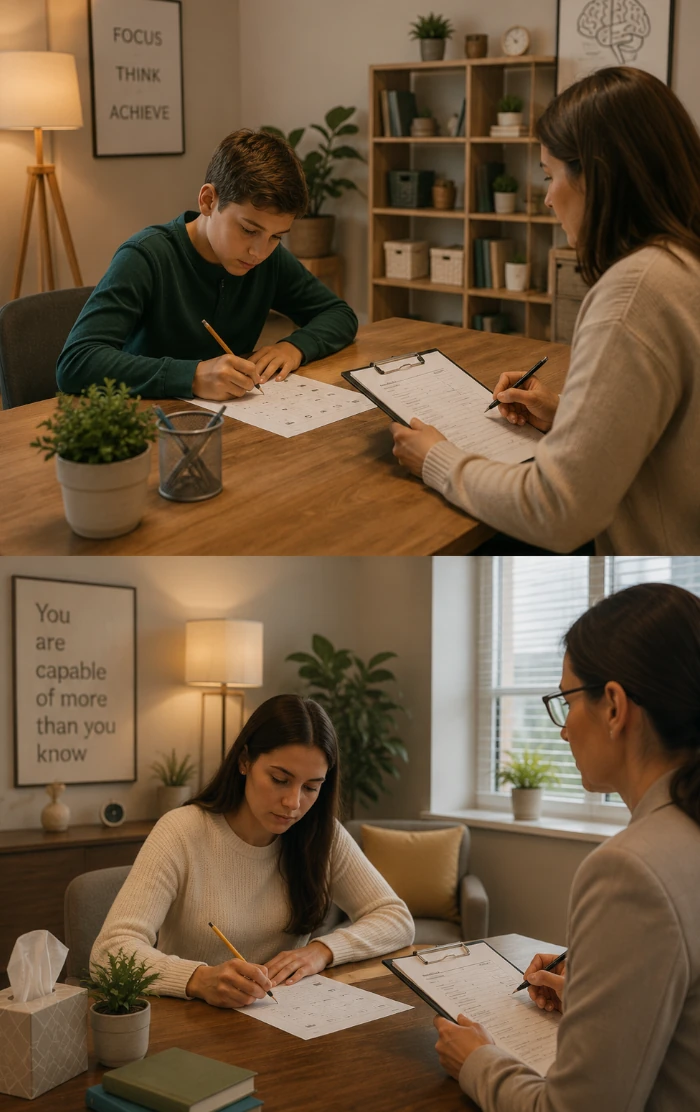
Professional IQ testing locally – whether you need an assessment for school, employment, gifted program eligibility, or personal insight, we connect you with licensed psychologists in the the city area.
Last Updated: September 2026
Child IQ Testing
WISC-V & Stanford-Binet for ages 6–16. Gifted identification, learning profiles.
Adult IQ Testing
WAIS-IV & WAIS-5 available. Comprehensive adult cognitive assessments. Clinical & occupational.
WISC-V Test
Wechsler Intelligence Scale for Children® Fifth Edition – the gold standard for child IQ testing.
WAIS-IV & WAIS-5 Tests
Wechsler Adult Intelligence Scale® – Fourth Edition (WAIS-IV) and Fifth Edition (WAIS-5) available for adult IQ testing.
Gifted Testing
Identify giftedness for school placement, enrichment, and talent programs using WISC-V or Stanford-Binet.
Stanford-Binet 5
Stanford-Binet Intelligence Scales Fifth Edition – comprehensive cognitive assessment for all ages.
Mensa Testing
Mensa qualification guidance and professionally administered testing that may be submitted as prior evidence, subject to American Mensa’s current rules.
Full Evaluation
Combined assessment with detailed report and recommendations. Includes WISC-V, WAIS-IV, WAIS-5, or Stanford-Binet 5 as appropriate.
IQ Testing in Chandler: city context
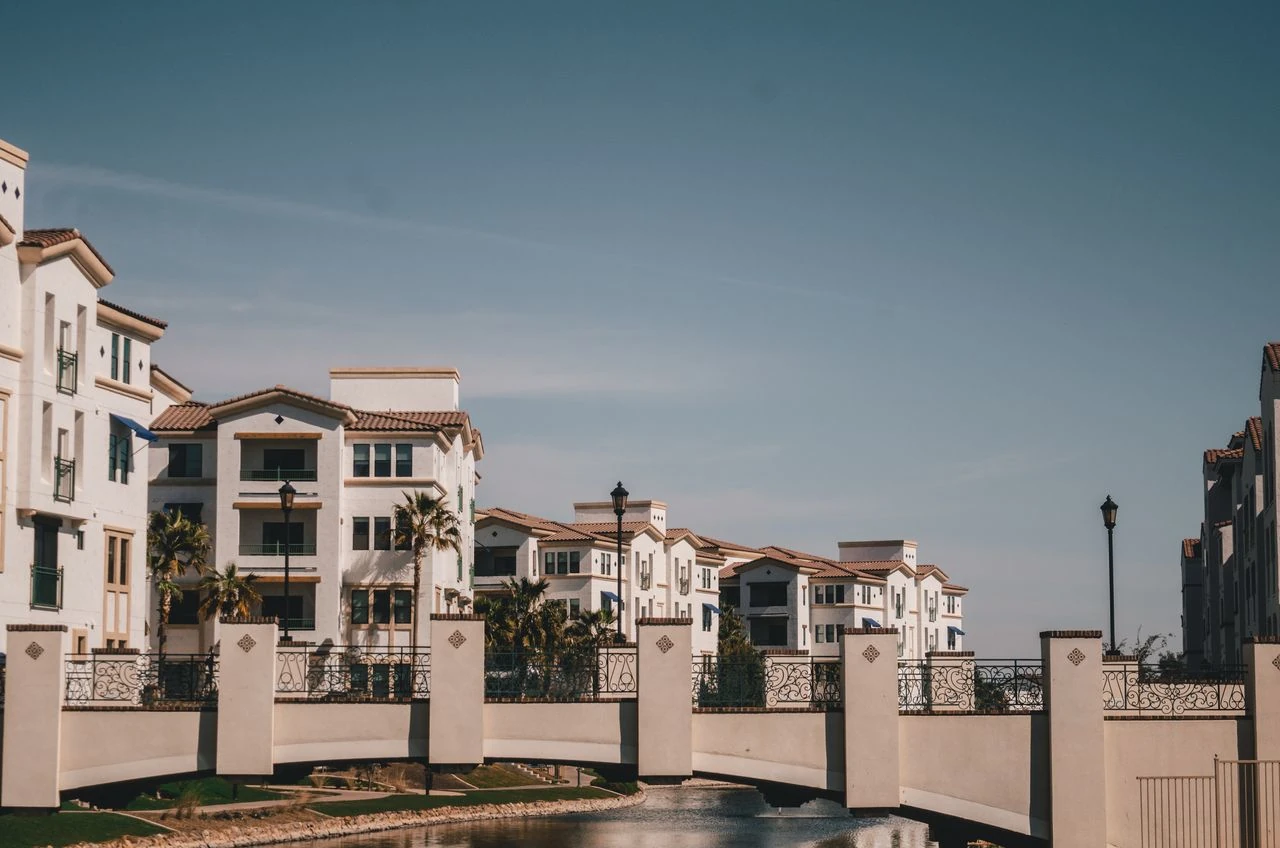
Chandler is a major East Valley city in the Phoenix metropolitan area. The U.S. Census Bureau estimated 278,748 residents in 2025, a 1.0% increase from the 2020 estimates base, across approximately 65.30 square miles of land. Its testing population includes children in multiple school systems, semiconductor and technology professionals, healthcare workers, engineers, educators, entrepreneurs, veterans, university students and multilingual families.
The local educational and assessment environment is shaped by Chandler Unified School District, Kyrene School District, Tempe Union High School District, Chandler-Gilbert Community College, nearby Arizona State University campuses, Chandler Regional Medical Center, Banner Ocotillo Medical Center, Phoenix Children's East Valley services and the wider Phoenix-area network of psychologists and neuropsychologists.
Gender, age and demographic statistics
Current Census estimates provide useful planning context but do not establish local IQ averages for demographic groups:
- Population estimate: 278,748 residents in 2025.
- Female population: 49.6%.
- Residents under age 18: 22.8%.
- Residents age 65 or older: 13.6%.
- White alone: 59.8%.
- Black or African American alone: 5.2%.
- American Indian and Alaska Native alone: 1.8%.
- Asian alone: 11.8%.
- Native Hawaiian and Other Pacific Islander alone: 0.2%.
- Two or more races: 16.0%.
- Hispanic or Latino: 21.7%.
- Foreign-born residents: 15.6%.
- Language other than English at home: 23.7% of residents age five and older.
- Education: 93.9% of adults age 25 and older are high-school graduates or higher, and 47.7% hold a bachelor's degree or higher.
- Gender interpretation: Professional tests use age-based national norms rather than separate city norms for men and women.
- Group statistics: Demographic percentages must never be used to infer an individual's cognitive ability.
What is professional IQ testing?
Intelligence quotient (IQ) testing is a standardized method to measure human cognitive abilities and intellectual potential. Professional IQ tests are administered by licensed psychologists in a controlled environment to ensure accuracy and reliability. Unlike online quizzes, clinical assessments provide a full-scale IQ score along with detailed breakdowns of verbal comprehension, perceptual reasoning, working memory, and processing speed.
In the city, IQ testing is commonly used for gifted program admission, learning disability identification, career guidance, neuropsychological evaluation, and personal development. The results are presented in a comprehensive report that includes normative comparisons, strengths and weaknesses, and actionable recommendations.
Who should get tested?
IQ testing can benefit children, adolescents, and adults in various situations:
- Children: Parents often seek testing for school readiness, gifted placement, or to understand learning challenges.
- Adults: Many adults take IQ tests for career advancement, graduate school applications, or personal curiosity.
- Mensa candidates: High-IQ societies require official test scores for membership.
- Clinical referrals: Psychologists may recommend testing as part of a broader neuropsychological evaluation.
Types of IQ tests
We offer the most recognized and scientifically validated intelligence tests in the field:
- WISC-V (Wechsler Intelligence Scale for Children® – Fifth Edition): The gold standard for children aged 6:0–16:11. It provides a Full-Scale IQ and five primary index scores.
- WAIS-IV (Wechsler Adult Intelligence Scale® – Fourth Edition): The most widely used adult IQ test for ages 16–90. It measures cognitive functioning across four domains.
- Stanford-Binet Intelligence Scales – Fifth Edition: A comprehensive assessment for ages 2–85, often used for gifted identification and clinical evaluations.
- Gifted Testing: Often includes the WISC-V or Stanford-Binet, plus additional creativity and achievement measures.
- Mensa Testing: We provide professionally administered cognitive testing and Mensa qualification guidance; American Mensa alone determines whether evidence is accepted.
How the testing process works
- Initial consultation: Brief phone or video call to discuss your needs and match you with the right psychologist.
- Testing session: In-person or remote testing (depending on the test) with a licensed psychologist. Most sessions last 1–2 hours.
- Scoring and interpretation: The psychologist scores the test and interprets the results in the context of your background and goals.
- Feedback session: A detailed review of your results, including strengths, weaknesses, and practical recommendations.
- Comprehensive report: You receive a written report with all scores, normative comparisons, and actionable next steps.
How much does IQ testing cost in Chandler?
The cost of IQ testing locally varies depending on the type of test, the psychologist's experience, and whether a comprehensive report is required. Typical fees range from $200 to $1,200 for a full assessment. Gifted testing and Mensa admission testing are often at the lower end, while neuropsychological evaluations may be higher.
Some insurance plans cover IQ testing when it's deemed medically necessary. We recommend checking with your provider for details. We also offer affordable payment plans and sliding-scale options for qualifying individuals.
Chandler's Intellectual History & Legacy
Chandler's intellectual identity combines agricultural history, public education, aerospace, semiconductor engineering, healthcare, entrepreneurship and planned metropolitan growth.
- Agricultural and rail roots: Downtown preserves the commercial core that developed around Dr. A.J. Chandler's planned townsite and early irrigation economy.
- Semiconductor leadership: Intel's Chandler campuses helped make advanced manufacturing, engineering and chip design central to the local economy.
- Public education: Chandler Unified, Kyrene and Tempe Union provide gifted, honors, Advanced Placement, International Baccalaureate, career-technical and dual-enrollment pathways.
- Higher education: Chandler-Gilbert Community College's Pecos campus supports transfer, workforce, STEM, health, aviation and business preparation.
- Healthcare: Chandler Regional, Banner Ocotillo and regional pediatric and neurological providers expand clinical and allied-health opportunities.
- Aviation: Chandler Municipal Airport supports general aviation, flight training and aerospace activity, while Phoenix-Mesa Gateway and Sky Harbor provide commercial access.
- Innovation corridor: The Price Corridor concentrates technology, finance, advanced manufacturing and business-services employers.
- Community learning: Libraries, museums, arts organizations, parks and environmental programs support lifelong education.
Top Employers in Chandler Requiring Cognitive Skills
- Semiconductors and technology: Intel, Microchip Technology and related suppliers employ engineers, technicians, analysts, software professionals and operations specialists.
- Aerospace and defense: Northrop Grumman and regional aviation employers use systems engineering, manufacturing, cybersecurity and program-management skills.
- Financial and business services: Wells Fargo, Bank of America and Price Corridor offices employ analysts, technology teams, compliance specialists and managers.
- Healthcare: Chandler Regional, Banner Ocotillo and regional health systems employ clinicians, psychologists, technicians, administrators and data professionals.
- Public education: Chandler Unified, Kyrene and Tempe Union employ teachers, gifted specialists, school psychologists, counselors and technology staff.
- Higher education: Chandler-Gilbert Community College employs faculty, advisers, researchers and workforce-training professionals.
- Municipal government: The City employs professionals in engineering, planning, public safety, information technology, water, finance and transportation.
- Retail, hospitality and entrepreneurship: Downtown, Chandler Fashion Center and local business districts support management, marketing, logistics and customer-experience roles.
Chandler IQ Testing by Neighborhood
Testing decisions should be based on the referral question and provider qualifications, not neighborhood stereotypes. Location still matters for school boundaries, transportation and appointment planning.
People in Chandler who are curious about cognitive problem-solving may begin with an online IQ test, then consult a licensed psychologist when they need standardized scores or a written report.
- Downtown and central Chandler: Access to municipal services, Chandler-Gilbert Community College, community programs and regional bus routes.
- Price Corridor and west Chandler: Major technology, finance and employment campuses near Loop 101 and Loop 202.
- Ocotillo and south Chandler: Residential communities near Banner Ocotillo, the Paseo Trail and south-city schools.
- Fulton Ranch and Cooper Commons: Family-oriented neighborhoods where school-district boundaries and testing deadlines should be verified.
- Andersen Springs and Twelve Oaks: West-central access to Kyrene schools, Chandler Fashion Center and Tempe connections.
- Fox Crossing and southeast Chandler: Access to Chandler Unified schools, Chandler Municipal Airport and Queen Creek corridors.
- Sun Lakes and nearby communities: Older adults may use Chandler-area providers, but residence and transportation should be confirmed because Sun Lakes is outside the incorporated city.
Chandler Universities and Research Institutions
- Chandler-Gilbert Community College: Serves more than 19,000 students annually and offers 150-plus degrees and certificates across more than 70 academic programs; its Pecos campus is in Chandler.
- Arizona State University Polytechnic: The nearby Mesa campus supports engineering, technology, aviation, business, health and applied research.
- Arizona State University: The broader metropolitan university provides graduate, professional, online and research pathways across hundreds of programs.
- Chandler Early College: Located at the CGCC Pecos campus, it supports high-school students completing college coursework under current admission rules.
- Regional health education: Chandler Regional, Banner, Phoenix Children's and East Valley training programs support clinical education and internships.
- Industry research: Semiconductor, aerospace, cybersecurity and advanced-manufacturing employers create applied projects and technical career pathways.
- Research distinction: University or employer research participation may not provide a clinical diagnosis or school-ready report.
Chandler Economic Context
- Median household income: $108,095 in 2020–2024 Census estimates.
- Per-capita income: $53,946.
- Residents in poverty: 7.9%.
- Bachelor's degree or higher: 47.7% of adults age 25 and older.
- Mean travel time to work: 23.9 minutes, although cross-Valley travel can be much longer during peak periods.
- Health and social-assistance activity: Approximately $2.490 billion in 2022 receipts/revenue.
- Transportation and warehousing: Approximately $686.7 million in 2022 receipts/revenue.
- Accommodation and food services: Approximately $1.455 billion in 2022 sales.
- Retail sales: Approximately $6.390 billion in 2022.
- Regional strengths: Semiconductors, aerospace and defense, financial services, software, healthcare, education, advanced manufacturing, logistics, tourism, retail and professional services.
Chandler School District Data
- Arizona requirement: Public districts identify gifted learners and provide services under locally approved scope-and-sequence plans.
- Chandler Unified School District: Uses universal second-grade CogAT screening unless families decline, school-site testing for grades 3–6, and monthly Saturday testing options under current rules.
- CATS self-contained program: Eligible students in grades 3–6 may receive accelerated, interdisciplinary instruction at district host sites.
- Knox and Weinberg Gifted Academies: K–6 schools of choice use problem-based learning, design thinking and integrated STEAM instruction for eligible students.
- Consultative services: Identified students may remain in their home classrooms with individualized differentiation plans.
- Junior-high CATS: Grades 7–8 options provide advanced cohort coursework at designated campuses.
- Kyrene School District: Serves parts of west Chandler and provides gifted resource, cluster and academy options under its own procedures.
- Tempe Union High School District: Serves portions of Chandler and offers gifted services, honors, AP, IB and specialized high-school pathways.
- Boundary verification: A Chandler mailing address does not by itself determine district, school assignment or gifted-program eligibility.
Local Testing Centers and Psychologists
- Private psychologists: Chandler and East Valley practices may provide IQ, gifted, ADHD, autism, learning-disability, disability and psychoeducational evaluations.
- Licensure: Verify psychologists through the Arizona Board of Psychologist Examiners and confirm experience with the requested age group and referral question.
- Chandler Regional Medical Center: Neurological and rehabilitation services may support medical referrals; hospital care is not automatically equivalent to a school-ready evaluation.
- Banner Ocotillo Medical Center: Provides hospital, neurology, imaging and related medical services that may contribute to referral planning.
- Phoenix Children's: Regional pediatric specialty services may evaluate developmental, neurological and behavioral concerns.
- School evaluations: Public districts conduct evaluations under educational rules; an independent report may inform but does not automatically replace district procedures.
- Report fit: Confirm the receiving school, employer, court, licensing body or testing organization will accept the proposed evaluation.
Chandler Events and Conferences
- CUSD gifted-parent events: District presentations explain gifted eligibility, CogAT testing, program models and enrollment procedures.
- School showcases: Knox, Weinberg, CATS campuses and career academies may host tours, information nights and student events.
- CGCC programs: Transfer events, career fairs, lectures, performing arts and workforce workshops occur at the Pecos campus.
- Technology and business events: Price Corridor employers and regional organizations host engineering, semiconductor, cybersecurity and entrepreneurship programs.
- Greater Phoenix Mensa: Calendars may include testing, social events, games, discussions, gifted-youth activities and regional gatherings.
- Downtown cultural events: Arts, library, museum and community programs provide enrichment opportunities.
- Current scheduling: Verify dates, registration, parking and age requirements directly with the organizer.
Transportation and Accessibility
- Major roads: Loop 101 Price Freeway runs along west Chandler; Loop 202 Santan Freeway crosses the south; SR 87/Arizona Avenue, Chandler Boulevard, Ray Road, Warner Road, Pecos Road, Queen Creek Road and Dobson, Alma School, McQueen and Gilbert roads are major corridors.
- Public transit: Valley Metro operates 11 local and regional bus routes serving much of the city, an express route from Chandler Park and Ride, and connections toward Mesa, Tempe and Valley Metro Rail.
- On-demand service: Chandler Flex provides shared on-demand service in its designated area, while the city's first-mile/last-mile program discounts qualifying rides to selected bus stops south of Pecos Road.
- Airports: Chandler Municipal Airport serves general aviation; Phoenix Sky Harbor International Airport and Phoenix-Mesa Gateway Airport provide scheduled passenger service.
- Distance to other cities: Roughly 15–25 minutes to Mesa, Gilbert and Tempe; 25–40 minutes to central Phoenix and Scottsdale; about 1 hour 45 minutes to Tucson; and approximately 2.5–3 hours to Flagstaff, depending on traffic.
- Walkability: Downtown Chandler is the city's most walkable district, with restaurants, cultural venues and civic destinations; most other areas are more car-oriented.
- Bike infrastructure: Chandler is a Bronze-Level Bicycle Friendly Community with local and regional lanes, routes and canal paths; the 6.5-mile Paseo Trail and protected-lane projects such as Frye Road are key facilities.
- Appointment planning: Loop 101 and Loop 202 congestion, construction, school traffic and summer heat can affect travel time.
Accessibility questions to confirm before testing:
- Whether the office has accessible parking and a step-free entrance.
- Whether paratransit or RideChoice drop-off can be coordinated with the appointment.
- Whether the testing room permits mobility equipment, assistive technology, interpreters and scheduled breaks.
Chandler Weather and Seasonal Considerations
- Extreme heat: Late spring through early fall can bring dangerous temperatures; morning appointments, hydration and reliable air conditioning are important.
- Monsoon season: Summer storms can produce dust, lightning, heavy rain, localized flooding and abrupt travel delays.
- Air quality: Ozone and dust can affect asthma, headaches, fatigue and concentration.
- School calendar: Testing demand often rises before gifted deadlines, school transitions and accommodation-renewal periods.
- Sleep and hydration: Heat exposure, travel and schedule changes can affect attention, working memory and processing speed.
- Rescheduling: Severe illness, sleep deprivation, medication changes or unsafe travel conditions may justify postponing testing.
Areas we serve
We support all areas of Chandler.
Frequently Asked Questions
WISC-V is for children aged 6–16, while WAIS-IV is for adults aged 16–90. Each is normed for its specific age group.
Most IQ tests take between 60 and 90 minutes, plus a feedback session. Allow 2–3 hours total.
No, you can book directly with our psychologists. We serve both self-referred and professionally referred individuals.
Some professionally administered scores may be submitted as prior evidence, but acceptance is determined solely by American Mensa under its current rules.
Some plans cover cognitive assessments when there is a clinical indication. Check with your provider.
Get a good night's sleep, eat a healthy meal, and arrive relaxed. No specific preparation is needed.
You'll receive a comprehensive report with your scores and tailored recommendations.
Interviews and feedback may be available remotely, but many standardized cognitive tests require controlled administration and may need an in-person appointment. Contact us for details.