
IQ Testing in Brownsville

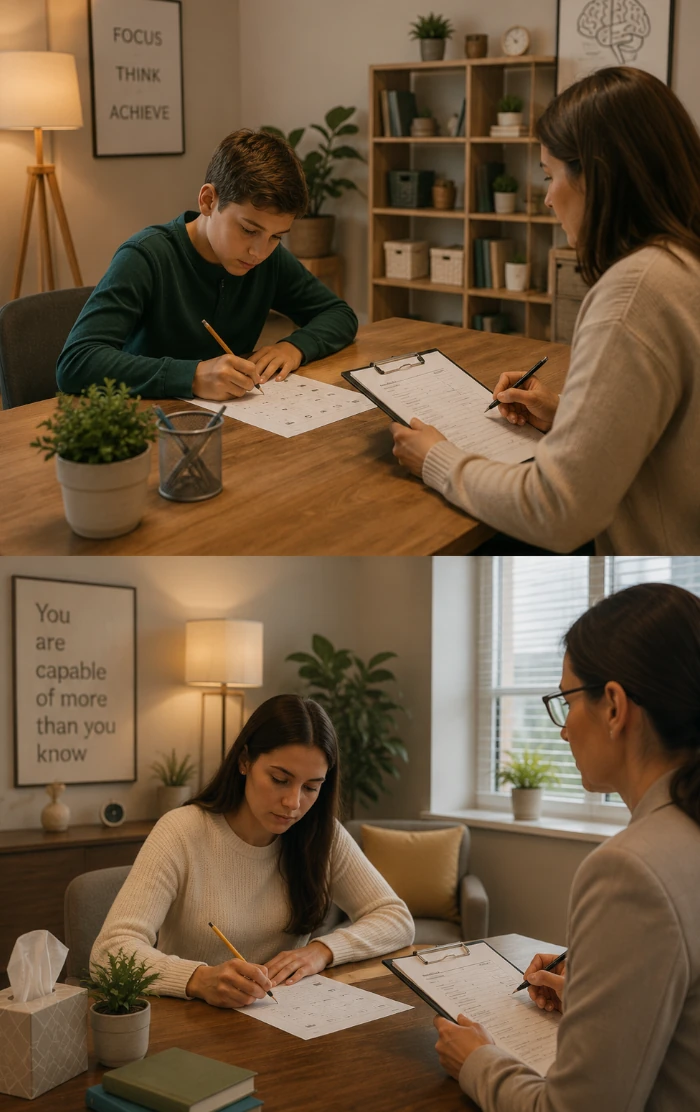
Professional IQ testing in Brownsville – whether you need an assessment for school, employment, gifted program eligibility, or personal insight, we connect you with licensed psychologists in the Brownsville area.
Last Updated: September 2026
Child IQ Testing
WISC-V & Stanford-Binet for ages 6–16. Gifted identification, learning profiles.
Adult IQ Testing
WAIS-IV & WAIS-5 available. Comprehensive adult cognitive assessments. Clinical & occupational.
WISC-V Test
Wechsler Intelligence Scale for Children® Fifth Edition – the gold standard for child IQ testing.
WAIS-IV & WAIS-5 Tests
Wechsler Adult Intelligence Scale® – Fourth Edition (WAIS-IV) and Fifth Edition (WAIS-5) available for adult IQ testing.
Gifted Testing
Identify giftedness for school placement, enrichment, and talent programs using WISC-V or Stanford-Binet.
Stanford-Binet 5
Stanford-Binet Intelligence Scales Fifth Edition – comprehensive cognitive assessment for all ages.
Mensa Testing
Mensa admission testing and preparation for the high-IQ society. Accepts WAIS-IV, WAIS-5, and Stanford-Binet 5 scores.
Full Evaluation
Combined assessment with detailed report and recommendations. Includes WISC-V, WAIS-IV, WAIS-5, or Stanford-Binet 5 as appropriate.
IQ Testing in Brownsville: city context
Gender, age and demographic statistics
Brownsville had an estimated 192,957 residents on July 1, 2025. Census 2020–2024 estimates report that 51.4% of residents are female, 28.4% are under age 18, and 13.0% are age 65 or older. The city is 31.7% White alone, 0.4% Black alone, 0.6% American Indian or Alaska Native alone, 0.8% Asian alone, 0.1% Native Hawaiian or Other Pacific Islander alone, 55.6% reporting two or more races, and 94.0% Hispanic or Latino; race and Hispanic-origin categories are not mutually exclusive.
These figures describe community context, not intelligence. IQ scores must be interpreted individually in light of age, education, disability, health, culture, language exposure, and testing conditions. In Brownsville, 83.6% of residents age five and older speak a language other than English at home, 27.5% are foreign-born, 72.0% of adults age 25 and older completed high school, and 24.5% hold a bachelor’s degree or higher. Bilingual development, the language of schooling, border mobility, interpreter use, and the limits of English-language verbal scores require careful documentation.
- Female residents: 51.4%.
- Children and teens: 28.4% are under age 18.
- Older adults: 13.0% are age 65 or older.
- Language context: 83.6% speak a language other than English at home.
- Foreign-born residents: 27.5%.
- Educational context: 72.0% completed high school and 24.5% hold a bachelor’s degree or higher.
- Interpretation: No gender, racial, ethnic, immigration, age, neighborhood, or language group should be presumed to have a particular IQ profile.
What is professional IQ testing?
Intelligence quotient (IQ) testing is a standardized method to measure human cognitive abilities and intellectual potential. Professional IQ tests are administered by licensed psychologists in a controlled environment to ensure accuracy and reliability. Unlike online quizzes, clinical assessments provide a full-scale IQ score along with detailed breakdowns of verbal comprehension, perceptual reasoning, working memory, and processing speed.
In Brownsville, IQ testing is commonly used for gifted program admission, learning disability identification, career guidance, neuropsychological evaluation, and personal development. The results are presented in a comprehensive report that includes normative comparisons, strengths and weaknesses, and actionable recommendations.
Who should get tested?
IQ testing can benefit children, adolescents, and adults in various situations:
- Children: Parents often seek testing for school readiness, gifted placement, or to understand learning challenges.
- Adults: Many adults take IQ tests for career advancement, graduate school applications, or personal curiosity.
- Mensa candidates: High-IQ societies require official test scores for membership.
- Clinical referrals: Psychologists may recommend testing as part of a broader neuropsychological evaluation.
Types of IQ tests
We offer the most recognized and scientifically validated intelligence tests in the field:
- WISC-V (Wechsler Intelligence Scale for Children® – Fifth Edition): The gold standard for children aged 6:0–16:11. It provides a Full-Scale IQ and five primary index scores.
- WAIS-IV (Wechsler Adult Intelligence Scale® – Fourth Edition): The most widely used adult IQ test for ages 16–90. It measures cognitive functioning across four domains.
- Stanford-Binet Intelligence Scales – Fifth Edition: A comprehensive assessment for ages 2–85, often used for gifted identification and clinical evaluations.
- Gifted Testing: Often includes the WISC-V or Stanford-Binet, plus additional creativity and achievement measures.
- Mensa Testing: We provide official Mensa admission testing and preparation materials.
How the testing process works
- Initial consultation: Brief phone or video call to discuss your needs and match you with the right psychologist.
- Testing session: In-person or remote testing (depending on the test) with a licensed psychologist. Most sessions last 1–2 hours.
- Scoring and interpretation: The psychologist scores the test and interprets the results in the context of your background and goals.
- Feedback session: A detailed review of your results, including strengths, weaknesses, and practical recommendations.
- Comprehensive report: You receive a written report with all scores, normative comparisons, and actionable next steps.
How much does IQ testing cost in Brownsville?
Fees vary by referral question, age, test battery, report length, bilingual assessment needs, records, feedback, and whether the evaluation must meet school, court, disability, immigration, employment, or Mensa documentation requirements.
- Focused IQ testing: Often the least expensive option when one accepted cognitive measure and a concise report are sufficient.
- Psychoeducational evaluation: Higher fees reflect intelligence, achievement, attention, processing, records, rating scales, school recommendations, and diagnostic work.
- Neuropsychological or forensic evaluation: Complex batteries and legal standards require substantially more professional time.
- Insurance: Educational or gifted testing is frequently excluded; medically necessary diagnostic work depends on authorization, network status, and deductibles.
- Before paying: Ask for a written estimate, accepted payment methods, bilingual-testing plan, cancellation rules, report turnaround, and whether consultation with a school or attorney is included.
Brownsville’s Intellectual History & Legacy
Brownsville’s intellectual history reflects Indigenous and Spanish-Mexican roots, Tejano civic life, international trade, military and border history, bilingual education, public health, conservation, and rapidly expanding aerospace and maritime work.
- Borderlands scholarship: The city’s location beside Matamoros supports research in language, migration, history, law, public policy, economics, and cross-border culture.
- Historic sites: Palo Alto Battlefield, Resaca de la Palma, Fort Brown, the Stillman House, Market Square, and the Historic Brownsville Museum provide primary local context.
- Education: Texas Southmost College and the UTRGV Brownsville campus continue a long local tradition of higher education and bilingual professional preparation.
- Science and conservation: Gladys Porter Zoo, Sabal Palm Sanctuary, Laguna Atascosa, the Gulf coast, resacas, and Lower Rio Grande Valley wildlife corridors support biology and environmental learning.
- Technology and industry: The Port of Brownsville, shipbuilding, energy projects, logistics, and Starbase have increased demand for engineering, safety, data, skilled trades, and regulatory expertise.
Top Employers in Brownsville Requiring Cognitive Skills
- Brownsville ISD: Teaching, special education, counseling, administration, bilingual education, technology, finance, transportation, and operations.
- UTRGV and Texas Southmost College: Faculty, research, healthcare education, student services, laboratories, information technology, and administration.
- Port of Brownsville employers: Shipbuilding, ship recycling, steel, LNG and energy, rail, customs, logistics, engineering, safety, environmental compliance, and skilled trades.
- Space and aerospace: Starbase and related contractors require engineering, software, quality, manufacturing, operations, safety, and supply-chain skills.
- Healthcare: Valley Baptist Medical Center–Brownsville, DHR Health Brownsville, Valley Regional Medical Center, clinics, rehabilitation, behavioral health, and home health.
- Government and border services: City and county government, federal agencies, courts, public safety, inspection, legal, customs, and emergency-management roles.
- Retail, tourism, and hospitality: Major stores, hotels, restaurants, cultural attractions, wildlife tourism, and South Padre Island-related services.
Brownsville IQ Testing by City Area
Testing decisions should be based on the referral question and examiner qualifications, not neighborhood. Brownsville’s geography can still affect transportation, school records, language access, and appointment timing.
- Downtown, Market Square, and Fort Brown: Proximity to Texas Southmost College, UTRGV, government offices, cultural institutions, La Plaza terminal, and international bridges.
- Central Brownsville and Los Ebanos: Established residential areas, medical offices, schools, shopping, and the selected provider on East Los Ebanos Boulevard.
- Paredes Line, Alton Gloor, and north Brownsville: Rapidly growing residential, school, retail, healthcare, and airport-access corridors.
- Southmost: Dense bilingual neighborhoods with distinct school, transit, and bridge-access considerations.
- Boca Chica and east Brownsville: Airport, port, industrial, coastal, and Starbase travel conditions may affect appointment planning.
- West Brownsville and Military Highway: Cross-border commerce, industrial areas, international bridges, and regional travel toward Los Indios and Hidalgo County.
Brownsville Universities and Research Institutions
- University of Texas Rio Grande Valley – Brownsville: Offers undergraduate, graduate, research, health, education, business, science, engineering, and public-service pathways across the regional university system.
- Texas Southmost College: Provides associate degrees, workforce certificates, academic transfer, health, technology, skilled-trade, and continuing-education programs.
- UTRGV School of Medicine and regional health sites: Support medical education, public health, clinical research, and Valley-wide healthcare workforce development.
- South Texas Independent School District and early-college partnerships: Provide advanced secondary and dual-enrollment pathways across the Rio Grande Valley.
- Regional institutions: Texas State Technical College in Harlingen, South Texas College, Texas A&M University–Kingsville, and online programs broaden technical and graduate options.
- Research themes: Border health, bilingual education, migration, coastal ecology, water, public policy, space systems, logistics, advanced manufacturing, energy, and community development.
Brownsville Economic Context
- Median household income: $52,130 in 2020–2024 Census estimates.
- Per-capita income: $22,512.
- Residents in poverty: 23.7%.
- Bachelor’s degree or higher: 24.5% of adults age 25 and older.
- Mean travel time to work: 21.4 minutes, although international-bridge queues, Expressway 77/83 traffic, port freight, school traffic, and hurricane-related closures can make trips much longer.
- Health and social-assistance activity: Census business data report approximately $1.38 billion in 2022 receipts/revenue within the city.
- Transportation and warehousing: Approximately $467.9 million in 2022 receipts/revenue reflects the importance of the Port of Brownsville, trucking, customs, rail, warehousing, and cross-border logistics.
- Retail sales: Approximately $3.36 billion in 2022.
- Accommodation and food services: Approximately $481.0 million in 2022 sales.
- Regional strengths: Port logistics, international trade and customs, shipbuilding and ship recycling, aerospace and space operations, LNG and energy, advanced manufacturing, healthcare, education, government and border services, tourism, retail, agriculture, and professional services.
Brownsville Schools Data
Brownsville ISD gifted and talented services
Brownsville Independent School District’s Gifted and Talented program is guided by the Texas State Plan for the Education of Gifted/Talented Students. Current academic and fine-arts nomination windows, screening measures, grade levels, appeal rules, service models, and transfer requirements should be confirmed directly with BISD before private testing.
Texas gifted-identification framework
Texas districts use local, board-approved identification procedures aligned with the Texas State Plan. Multiple sources of quantitative and qualitative data are expected; a private WISC-V, Stanford-Binet, or other IQ score is not automatically the district’s complete eligibility decision.
Magnet, charter, private, and regional options
Brownsville Early College High School, Hanna Early College High School, Porter Early College High School, Veterans Memorial Early College High School, Harmony Science Academy–Brownsville, IDEA schools, Jubilee academies, St. Joseph Academy, First Baptist School, South Texas ISD specialty campuses, homeschool programs, and other regional schools use different admission and placement criteria. Obtain written requirements before ordering an evaluation.
For a quick, informal look at reasoning skills, Brownsville residents may explore an online IQ test; official educational or clinical purposes still call for evaluation by a qualified psychologist.
Advanced secondary pathways
Advanced Placement, dual enrollment through UTRGV and Texas Southmost College, early-college programs, honors, career and technical education, engineering, healthcare, maritime, welding, logistics, coding, robotics, fine arts, bilingual studies, debate, and independent research become increasingly important in secondary school.
Private, homeschool, and regional enrichment
Families may use Brownsville Public Library, Children’s Museum of Brownsville, Gladys Porter Zoo, Brownsville Museum of Fine Art, Palo Alto Battlefield National Historical Park, Resaca de la Palma State Park, Sabal Palm Sanctuary, UTRGV, Texas Southmost College, Sea Turtle Inc., coastal-science programs, coding, robotics, music, theater, sports, and regional summer camps.
Equity and twice-exceptionality
Brownsville’s highly bilingual population makes language history essential. English learners, Spanish-dominant students, children educated on both sides of the border, students with disabilities, migrant or highly mobile families, and twice-exceptional learners can be missed by narrow referral systems. Use multiple measures and interpret verbal scores cautiously.
Local Testing Centers and Psychologists
Brownsville Psychological Center PLLC, at 1080 East Los Ebanos Boulevard, Suite B, Brownsville, TX 78520, lists psychological evaluations with licensed psychologist Dr. Elizabeth G. Tamez and assessment batteries addressing learning, ADHD, autism, dementia, mood, personality, and related referral questions. The office number is (956) 484-2972. Confirm the exact IQ instrument, age range, language of administration, examiner credentials, report format, fees, and current availability before scheduling.
- Provider selection: Ask whether the examiner personally administers and interprets the WISC-V, WAIS-IV/WAIS-5, Stanford-Binet, achievement, attention, autism, memory, or bilingual measures needed for the referral.
- School use: Obtain BISD, South Texas ISD, charter, private-school, or testing-agency requirements in writing before paying for private testing.
- Medical referral: Neurological, developmental, rehabilitation, or medically complex cases may require a hospital or regional neuropsychologist rather than a focused IQ test.
- Language: Confirm whether assessment is available in English, Spanish, or a defensible bilingual format and how language limitations will be documented.
Brownsville Events and Conferences
- Charro Days and Sombrero Festival: Major cultural events can affect downtown traffic, parking, bridge crossings, and school schedules.
- UTRGV and Texas Southmost College events: Lectures, research showcases, performances, admissions programs, and graduations support academic planning but may change campus access.
- Gladys Porter Zoo, museums, and cultural district: Educational programs, camps, exhibitions, and festivals provide enrichment opportunities.
- Space and port activity: Launch windows, industrial events, port projects, and related road restrictions can affect SH-4, SH-48, airport, and east-Brownsville travel.
- Birding and nature events: Lower Rio Grande Valley festivals, refuges, and coastal programs draw visitors and support science enrichment.
- Planning: Check city, school, college, airport, bridge, port, and weather notices before time-sensitive testing.
Transportation and Accessibility
- Major roads: I-69E/US-77/US-83 is the principal northbound expressway toward Harlingen, Corpus Christi, and the rest of Texas; US-281/Military Highway follows the border westward; SH-48 connects Brownsville with the Port of Brownsville and Port Isabel; SH-4/Boca Chica Boulevard continues east toward Boca Chica and Starbase; FM 802/Ruben M. Torres Boulevard, Paredes Line Road, International Boulevard, Central Boulevard, and Alton Gloor Boulevard are major cross-city corridors.
- Public transit: Brownsville Metro operates fixed-route local buses from La Plaza at Brownsville Terminal and ADA complementary paratransit. Published routes include Westend, Jefferson, Boca Chica, Los Ebanos, Paredes/Alton Gloor, Southmost, International, and other city corridors. Valley Metro Route 50 links downtown Brownsville, Texas Southmost College, the airport, the Port of Brownsville area, Port Isabel, Laguna Vista, and regional transfer points; verify the current timetable before testing.
- Airport: Brownsville South Padre Island International Airport (BRO), at 700 Amelia Earhart Drive, serves the city with scheduled commercial flights and regional ground connections. Airline routes and departure times change, so families traveling for an evaluation should verify the current schedule and arrive early.
- Distance to other cities: Matamoros is directly across the international bridges, but passport, customs, and queue times vary; Harlingen is about 25 miles or 30–40 minutes; South Padre Island about 28–32 miles or 40–50 minutes; McAllen about 60 miles or 1–1.25 hours; Corpus Christi about 160 miles or 2.5–3 hours; San Antonio about 275 miles or roughly 4 hours; and Houston about 350 miles or 5.5–6 hours.
- Walkability: Downtown, Market Square, the Mitte Cultural District, Fort Brown, Texas Southmost College, the UTRGV Brownsville campus, Dean Porter Park, and portions of the historic core have concentrated destinations. Wide arterials, heat, drainage channels, incomplete sidewalks, and long distances make many other areas car-dependent.
- Bike infrastructure: The Historic Battlefield Trail, West Rail Trail, Belden Trail, Paseo de la Resaca connections, sidepaths, neighborhood bikeways, and Lower Rio Grande Valley active-transportation projects support cycling and walking. Heat, humidity, high-speed roads, freight traffic, bridge approaches, and network gaps require route planning.
- Accessibility and appointment planning: Confirm accessible parking, ramps, elevators, quiet waiting space, sensory conditions, interpreter arrangements, and restroom access. Allow extra time for school traffic, international-bridge queues, port freight, road construction, tropical downpours, flooding, high heat, and hurricane-season disruptions.
Brownsville Weather and Seasonal Considerations
Brownsville has a hot, humid, subtropical climate. Summer heat indexes can become dangerous, while tropical storms and hurricanes may bring intense rain, wind, power interruptions, street flooding, airport changes, and bridge or highway delays. Winters are generally mild, but strong cold fronts can cause abrupt drops in temperature and occasional freezes.
- Heat: Schedule demanding testing earlier in the day when possible, hydrate, use prescribed vision or hearing aids, and avoid arriving after prolonged outdoor exposure.
- Tropical weather: From June through November, monitor National Weather Service and local emergency information and confirm whether the office, school, airport, or bridge is operating normally.
- Flooding: Heavy rain can overwhelm low-lying roads and drainage systems; do not drive through water and allow extra time after storms.
- Wind and power: Strong winds can affect bridges, utilities, internet, air travel, and testing-room conditions.
- Allergies and air quality: Pollen, dust, agricultural activity, mold after rain, and coastal conditions can affect sleep and concentration.
- Documentation: Tell the examiner when weather, heat exposure, evacuation stress, disrupted sleep, border delays, or power loss may have affected performance.
Areas we serve
Service coverage is citywide, subject to provider availability and the requirements of the requested evaluation.
Frequently Asked Questions
WISC-V is for children aged 6–16, while WAIS-IV is for adults aged 16–90. Each is normed for its specific age group.
Most IQ tests take between 60 and 90 minutes, plus a feedback session. Allow 2–3 hours total.
No, you can book directly with our psychologists. We serve both self-referred and professionally referred individuals.
Some professionally administered scores may be submitted as prior evidence, but acceptance is determined solely by American Mensa under its current rules.
Some plans cover cognitive assessments when there is a clinical indication. Check with your provider.
Get a good night's sleep, eat a healthy meal, and arrive relaxed. No specific preparation is needed.
You'll receive a comprehensive report with your scores and tailored recommendations.
Interviews and feedback may be available remotely, but many standardized cognitive tests require controlled administration and may need an in-person appointment. Contact us for details.