
IQ Testing in Bellevue

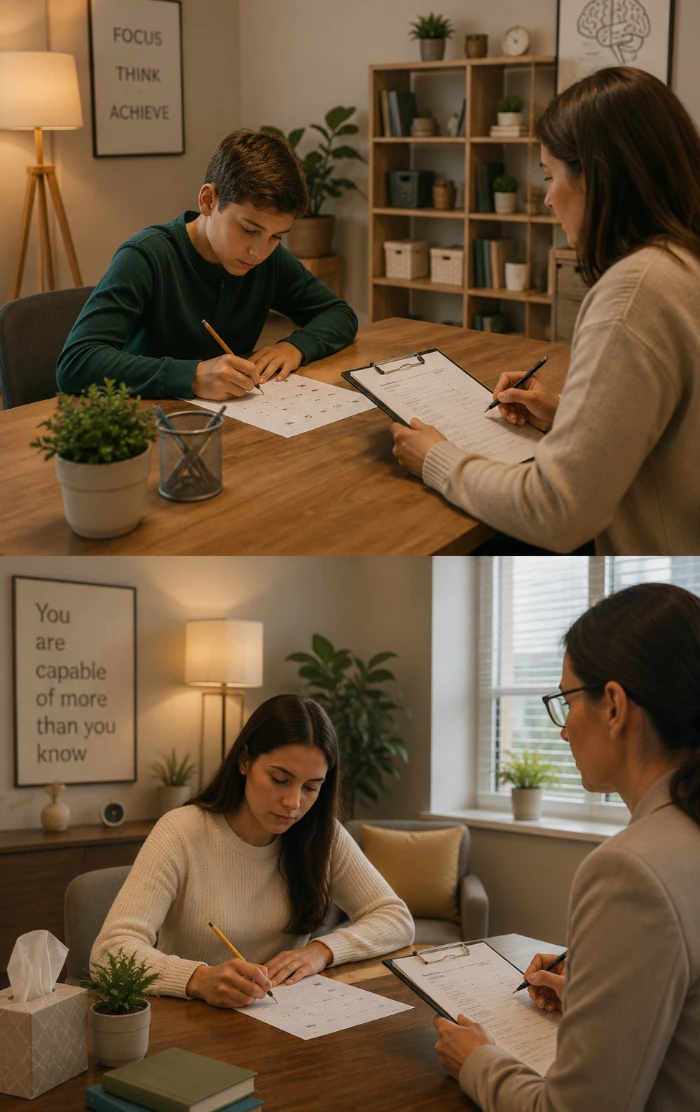
Professional IQ testing in Bellevue – whether you need an assessment for school, employment, gifted program eligibility, or personal insight, we connect you with licensed psychologists in the Bellevue area.
Last Updated: September 2026
Child IQ Testing
WISC-V & Stanford-Binet for ages 6–16. Gifted identification, learning profiles.
Adult IQ Testing
WAIS-IV & WAIS-5 available. Comprehensive adult cognitive assessments. Clinical & occupational.
WISC-V Test
Wechsler Intelligence Scale for Children® Fifth Edition – the gold standard for child IQ testing.
WAIS-IV & WAIS-5 Tests
Wechsler Adult Intelligence Scale® – Fourth Edition (WAIS-IV) and Fifth Edition (WAIS-5) available for adult IQ testing.
Gifted Testing
Identify giftedness for school placement, enrichment, and talent programs using WISC-V or Stanford-Binet.
Stanford-Binet 5
Stanford-Binet Intelligence Scales Fifth Edition – comprehensive cognitive assessment for all ages.
Mensa Testing
Mensa admission testing and preparation for the high-IQ society. Accepts WAIS-IV, WAIS-5, and Stanford-Binet 5 scores.
Full Evaluation
Combined assessment with detailed report and recommendations. Includes WISC-V, WAIS-IV, WAIS-5, or Stanford-Binet 5 as appropriate.
IQ Testing in Bellevue, Washington: city context
Bellevue is a King County city on the Eastside of Lake Washington, directly east of Seattle and connected to the wider Puget Sound economy by Interstate 90, State Route 520, Interstate 405, regional bus service, and Link light rail. The U.S. Census Bureau's July 1, 2025 estimate lists 154,193 residents, and the city covers approximately 33.46 square miles of land. Bellevue combines a dense downtown employment center with established residential communities, major retail and medical districts, schools, parks, and internationally connected technology and professional-services workplaces.
Local requests for cognitive assessment commonly involve Open Window School admission, Bellevue School District advanced-learning questions, psychoeducational evaluation, ADHD or learning-disability concerns, disability accommodations, career planning, graduate-school documentation, adult diagnostic clarification, and admission to high-IQ organizations. A licensed examiner should interpret results in light of education, language history, cultural background, sensory or medical factors, attention, motivation, and testing conditions rather than treating one composite score as a complete description of a person.
IQ by gender & ethnicity
Bellevue's population is approximately 49.5% female. Properly standardized intelligence tests are designed so broad male and female averages are comparable, although individuals may show very different profiles across verbal comprehension, visual-spatial reasoning, fluid reasoning, working memory, and processing speed. No authoritative dataset establishes separate Bellevue IQ averages by sex, race, ethnicity, neighborhood, immigration history, or home language.
Current Census demographic context includes:
- White alone: 41.3% of residents.
- Black or African American alone: 2.6%.
- American Indian and Alaska Native alone: 0.2%.
- Asian alone: 42.8%.
- Native Hawaiian and Other Pacific Islander alone: 0.3%.
- Two or more races: 9.5%.
- Hispanic or Latino residents: 7.9%; White alone, not Hispanic or Latino, 39.9%.
- Foreign-born residents: 43.5%.
- Language other than English at home: 48.8% of residents age five and older.
- Educational attainment: 95.7% of adults age 25 and older are high-school graduates or higher, and 72.1% hold a bachelor's degree or higher.
These figures describe the community, not intellectual ability. Examiners should document relevant linguistic, educational, cultural, medical, and accessibility considerations and use interpreters or bilingual assessment approaches only when professionally appropriate.
What is professional IQ testing?
Intelligence quotient (IQ) testing is a standardized method to measure human cognitive abilities and intellectual potential. Professional IQ tests are administered by licensed psychologists in a controlled environment to ensure accuracy and reliability. Unlike online quizzes, clinical assessments provide a full-scale IQ score along with detailed breakdowns of verbal comprehension, perceptual reasoning, working memory, and processing speed.
In Bellevue, IQ testing is commonly used for gifted program admission, learning disability identification, career guidance, neuropsychological evaluation, and personal development. The results are presented in a comprehensive report that includes normative comparisons, strengths and weaknesses, and actionable recommendations.
Who should get tested?
IQ testing can benefit children, adolescents, and adults in various situations:
- Children: Parents often seek testing for school readiness, gifted placement, or to understand learning challenges.
- Adults: Many adults take IQ tests for career advancement, graduate school applications, or personal curiosity.
- Mensa candidates: High-IQ societies require official test scores for membership.
- Clinical referrals: Psychologists may recommend testing as part of a broader neuropsychological evaluation.
Types of IQ tests
We offer the most recognized and scientifically validated intelligence tests in the field:
- WISC-V (Wechsler Intelligence Scale for Children® – Fifth Edition): The gold standard for children aged 6:0–16:11. It provides a Full-Scale IQ and five primary index scores.
- WAIS-IV (Wechsler Adult Intelligence Scale® – Fourth Edition): The most widely used adult IQ test for ages 16–90. It measures cognitive functioning across four domains.
- Stanford-Binet Intelligence Scales – Fifth Edition: A comprehensive assessment for ages 2–85, often used for gifted identification and clinical evaluations.
- Gifted Testing: Often includes the WISC-V or Stanford-Binet, plus additional creativity and achievement measures.
- Mensa Testing: We provide official Mensa admission testing and preparation materials.
How the testing process works
- Initial consultation: Brief phone or video call to discuss your needs and match you with the right psychologist.
- Testing session: In-person or remote testing (depending on the test) with a licensed psychologist. Most sessions last 1–2 hours.
- Scoring and interpretation: The psychologist scores the test and interprets the results in the context of your background and goals.
- Feedback session: A detailed review of your results, including strengths, weaknesses, and practical recommendations.
- Comprehensive report: You receive a written report with all scores, normative comparisons, and actionable next steps.
How much does IQ testing cost in Bellevue?
Fees depend on the referral question, age, test battery, record review, scoring time, report length, and whether achievement, attention, executive-function, adaptive, personality, autism, or neuropsychological measures are included. A focused cognitive assessment may cost several hundred dollars, while a comprehensive psychoeducational or neuropsychological evaluation can cost several thousand dollars because it requires more testing, interpretation, and documentation.
Bellevue Psychotherapy, PS LTD provides standardized psychological and neuropsychological assessment at 1400 112th Ave SE, Suite 100, Bellevue, WA 98004. Its assessment scope includes general intelligence/cognitive ability along with learning, memory, attention, executive skills, visual-spatial ability, adaptive functioning, language, social skills, motor and sensory functioning, mood, emotion, and behavior. Call (425) 765-1700 to confirm age range, available instruments, fees, turnaround time, insurance procedures, and whether a focused IQ assessment meets the intended purpose.
Bellevue's Intellectual History & Legacy
Bellevue stands on the traditional lands of Coast Salish peoples and developed from a rural and agricultural community into a major Eastside city after improved bridges connected it more directly with Seattle. Growth accelerated through suburban development, regional retail, professional services, and the expansion of technology and telecommunications across the Eastside.
Today, the city's learning ecosystem includes Bellevue College, Bellevue School District, public libraries, arts and cultural organizations, medical systems, technology employers, workforce programs, and nearby research universities. Intellectual achievement in Bellevue is better understood through education, research, professional practice, creativity, multilingual knowledge, community leadership, and applied problem-solving than through unsupported claims about a citywide IQ.
Major Bellevue Employers and Assessment Context
Routine jobs generally do not require a clinical IQ test. Employers more often use structured interviews, portfolio review, validated skills assessments, technical exercises, licensing examinations, safety evaluations, and job-specific aptitude measures. Bellevue is a major employment center for information technology, cloud computing, telecommunications, professional and business services, finance, retail, hospitality, health care, construction, and public administration.
- Technology and cloud services: Amazon, Microsoft-related Eastside activity, T-Mobile, SAP Concur, Salesforce, Smartsheet, and many other firms support software, data, security, product, design, and operations roles.
- Business and professional services: Consulting, legal, accounting, real estate, engineering, finance, and corporate-support roles are concentrated downtown and along major corridors.
- Retail and hospitality: Bellevue Square, The Bellevue Collection, Main Street, hotels, restaurants, and visitor services support management, sales, culinary, customer-service, and operations careers.
- Health care and human services: Overlake Medical Center and regional clinics support clinical, administrative, technical, research, and support occupations.
- Public and educational institutions: The City of Bellevue, Bellevue School District, Bellevue College, and nonprofit organizations employ educators, analysts, planners, administrators, and service professionals.
When testing is requested for accommodations or occupational decision-making, the examiner should connect findings to specific functional demands and avoid using IQ as a stand-alone hiring screen.
IQ Testing Across Bellevue
Bellevue includes downtown and Wilburton employment and medical districts, residential areas around Lake Hills, Crossroads, Newport, Somerset, Factoria, Bridle Trails, and West Bellevue, and communities extending toward Cougar Mountain and the Redmond, Kirkland, Issaquah, and Seattle connections. Service descriptions should not imply that intelligence differs by neighborhood. The practical issues are travel time, accessibility, school assignment, provider expertise, language capacity, and whether the report will be accepted by the receiving institution.
For an introductory overview before arranging a clinical evaluation, this IQ test resource can help readers understand the difference between informal online exercises and professionally administered standardized assessment.
Bellevue Colleges, Training, and Research Connections
- Bellevue College: Offers associate and bachelor's degrees, professional and technical programs, continuing education, adult basic education, workforce development, and accessibility services.
- Eastern Washington University at Bellevue College: Provides selected degree pathways on the Bellevue College campus.
- Nearby universities: The University of Washington in Seattle and Bothell, Seattle University, Seattle Pacific University, Northwest University, and regional institutions provide graduate, professional, research, and continuing-education options.
- Workforce and professional learning: City programs, libraries, employer training, community organizations, and professional associations support career transitions and continuing education.
Bellevue Economic Context
- Median household income: $165,576 in 2020–2024 Census estimates.
- Per-capita income: $97,015.
- Residents in poverty: 7.2%.
- Bachelor's degree or higher: 72.1% of adults age 25 and older.
- Mean travel time to work: 23.6 minutes, although I-405, I-90, SR 520, bridge traffic, and cross-region trips can take longer.
- Health care and social-assistance activity: Census business data report approximately $3.14 billion in 2022 receipts/revenue within the city.
- Transportation and warehousing: Approximately $294.5 million in 2022 receipts/revenue.
- Accommodation and food services: Approximately $1.11 billion in 2022 sales.
- Retail sales: Approximately $13.98 billion in 2022.
- Regional strengths: Information technology, business services, retail, tourism, health care, telecommunications, finance, professional services, construction, education, and public administration.
Economic and educational indicators help explain why residents may seek career, accommodation, and academic assessments, but they do not establish a local average IQ and should never be used to infer an individual's ability.
Bellevue School Districts and Educational Context
- Bellevue School District: Most city addresses are served by BSD, though families should verify assignment by address and confirm current transfer or choice-program rules.
- Advanced Learning: BSD uses academic and cognitive information, including CogAT measures, under its current identification process. A private clinical IQ score does not automatically determine public-school placement.
- Public-school evaluations: When a suspected disability affects educational performance, school teams may assess cognition, academics, language, attention, behavior, adaptive skills, and related areas under special-education procedures.
- Open Window School: This Bellevue K–8 independent school for gifted learners requires an IQ test administered by a licensed psychologist and currently specifies accepted Wechsler intelligence scales. Families should confirm editions, age rules, score-report procedures, deadlines, and financial-assistance options directly with admissions.
- Other independent and choice schools: Admission and placement rules vary and may use records, achievement testing, readiness measures, interviews, recommendations, or classroom visits rather than a clinical IQ test.
- Accommodations: School districts, testing agencies, colleges, and universities set their own documentation standards. Obtain written requirements before purchasing an evaluation.
Local Testing and Referral Resources
- Bellevue Psychotherapy, PS LTD: Psychological and neuropsychological assessment at 1400 112th Ave SE, Suite 100, Bellevue, WA 98004. Call (425) 765-1700 to verify current services, examiner availability, test editions, fees, age range, and report acceptance.
- Bellevue School District evaluation teams: Can explain special-education assessment, Section 504 procedures, Advanced Learning identification, and how outside reports are considered.
- Open Window School admissions: Publishes its required IQ-testing framework for applicants to its gifted K–8 program.
- Regional medical systems: Overlake Medical Center, primary-care practices, developmental-behavioral services, neurology, psychiatry, rehabilitation, and other regional providers can help determine whether concerns require medical or neuropsychological referral.
- College accessibility offices: Bellevue College and nearby universities publish documentation processes; confirm requirements before testing.
- Private psychologists and neuropsychologists: Confirm Washington licensure, test editions, age and population expertise, language services, accessibility, turnaround time, and intended-use acceptance.
Bellevue Learning, Arts, and Professional Events
- King County Library System: Bellevue Library and nearby branches offer literacy, technology, youth, career, and community-learning programs.
- Bellevue Arts Museum and local arts organizations: Exhibitions, talks, workshops, and cultural programming support visual and applied learning.
- Meydenbauer Center and city venues: Host conferences, professional events, performances, and community gatherings.
- Bellevue College and nearby universities: Public lectures, continuing education, career events, performances, and academic programs vary throughout the year.
- Mensa of Western Washington: The local American Mensa group includes Bellevue within its service area and offers intellectual and social programming; verify current events and admission-testing options through official channels.
- Professional associations: Washington and Puget Sound psychology, neuropsychology, education, technology, health, and disability organizations offer continuing education and public resources.
Transportation and Accessibility
- Major roads: Interstate 405, Interstate 90, State Route 520, Bellevue Way, 112th Avenue, 116th Avenue, 148th Avenue, and NE 8th Street connect major districts and neighboring Eastside communities.
- Link light rail: The 2 Line serves Bellevue and connects downtown, Wilburton, the Spring District, BelRed, and Redmond; riders should confirm current extensions and service changes.
- King County Metro and Sound Transit: Regional buses connect Bellevue with Seattle, Redmond, Kirkland, Issaquah, Renton, and other communities.
- Bicycle and pedestrian access: Trails and neighborhood routes vary in grade, traffic exposure, and crossing conditions; review the complete trip before an appointment.
- Accessible travel: Confirm wheelchair access, paratransit, elevators, building entrance, parking, sensory needs, and rest breaks in advance.
- Appointment planning: Allow extra time during I-405 and bridge congestion, rain, construction, transit disruptions, downtown events, and school commute periods.
Bellevue Weather and Seasonal Considerations
- Climate: Bellevue has cool, wet winters and generally mild, drier summers typical of the central Puget Sound region.
- Rain and low light: Wet roads, reduced visibility, and darker winter commutes can lengthen travel and affect fatigue.
- Heat and smoke: Summer heat events and regional wildfire smoke can affect sleep, hydration, respiratory comfort, concentration, and travel.
- Snow and ice: Occasional winter weather can disrupt steep neighborhood roads, transit, schools, and appointments.
- Testing environment: A quiet, comfortably lit, temperature-controlled room with appropriate breaks helps reduce avoidable effects on attention and stamina.
- School-year demand: Gifted, accommodation, and admissions requests often rise around application windows and school planning periods; begin early when a report has a firm deadline.
- Preparation: Adequate sleep, normal meals, hydration, prescribed medication taken as directed, and arriving without rushing are more useful than coaching on test items.
Areas we serve
We support all areas of the City of Bellevue. Provider location, age range, specialty, accessibility, language capacity, and in-person requirements vary, so confirm those details before scheduling.
Frequently Asked Questions
WISC-V is for children aged 6–16, while WAIS-IV is for adults aged 16–90. Each is normed for its specific age group.
Most IQ tests take between 60 and 90 minutes, plus a feedback session. Allow 2–3 hours total.
No, you can book directly with our psychologists. We serve both self-referred and professionally referred individuals.
Potentially. Acceptance depends on the exact test, edition, qualifying score, administration date, examiner credentials, and current Mensa documentation rules. Confirm before testing.
Some plans cover cognitive assessments when there is a clinical indication. Check with your provider.
Get a good night's sleep, eat a healthy meal, and arrive relaxed. No specific preparation is needed.
You'll receive a comprehensive report with your scores and tailored recommendations.
Some interview and feedback components may be available remotely, but many standardized cognitive tests require in-person administration. Confirm with the psychologist and the organization receiving the report.