
IQ Testing in Amarillo

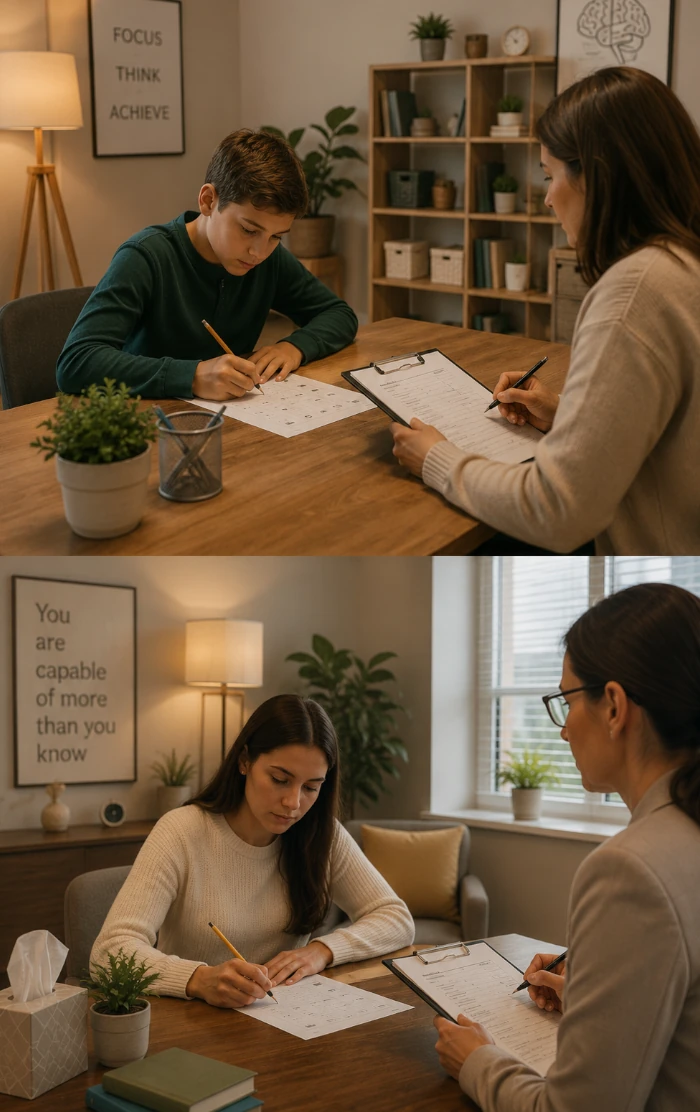
Professional IQ testing in Amarillo – whether you need an assessment for school, employment, gifted program eligibility, or personal insight, we connect you with licensed psychologists in the Amarillo area.
Last Updated: September 2026
Child IQ Testing
WISC-V & Stanford-Binet for ages 6–16. Gifted identification, learning profiles.
Adult IQ Testing
WAIS-IV & WAIS-5 available. Comprehensive adult cognitive assessments. Clinical & occupational.
WISC-V Test
Wechsler Intelligence Scale for Children® Fifth Edition – the gold standard for child IQ testing.
WAIS-IV & WAIS-5 Tests
Wechsler Adult Intelligence Scale® – Fourth Edition (WAIS-IV) and Fifth Edition (WAIS-5) available for adult IQ testing.
Gifted Testing
Identify giftedness for school placement, enrichment, and talent programs using WISC-V or Stanford-Binet.
Stanford-Binet 5
Stanford-Binet Intelligence Scales Fifth Edition – comprehensive cognitive assessment for all ages.
Mensa Testing
Mensa admission testing and preparation for the high-IQ society. Accepts WAIS-IV, WAIS-5, and Stanford-Binet 5 scores.
Full Evaluation
Combined assessment with detailed report and recommendations. Includes WISC-V, WAIS-IV, WAIS-5, or Stanford-Binet 5 as appropriate.
IQ Testing in Amarillo: city context
Gender, age and demographic statistics
Amarillo had an estimated 205,130 residents on July 1, 2025. Census 2020–2024 estimates report that 51.1% of residents are female, 26.0% are under age 18, and 15.1% are age 65 or older. The city is 62.7% White alone, 7.5% Black alone, 3.9% Asian alone, 0.8% American Indian or Alaska Native alone, 0.2% Native Hawaiian or Other Pacific Islander alone, 19.1% reporting two or more races, and 34.2% Hispanic or Latino; race and Hispanic-origin categories are not mutually exclusive.
These statistics describe community context, not intelligence. IQ scores must be interpreted individually in light of age, education, disability, health, culture, language exposure, socioeconomic opportunity, and testing conditions. In Amarillo, 23.5% of residents age five and older speak a language other than English at home, and 11.0% are foreign-born. A responsible evaluator documents the person’s strongest language, educational history, acculturation, interpreter needs, and whether verbal, nonverbal, bilingual, or alternative measures are appropriate.
- Female residents: 51.1%.
- Children and teens: 26.0% are under age 18.
- Older adults: 15.1% are age 65 or older.
- Language context: 23.5% speak a language other than English at home.
- Educational context: 86.5% of adults age 25+ completed high school and 26.6% hold a bachelor’s degree or higher.
- Interpretation: No gender, racial, ethnic, immigration, disability, or language group should be presumed to have a particular IQ profile.
What is professional IQ testing?
Intelligence quotient (IQ) testing is a standardized method to measure human cognitive abilities and intellectual potential. Professional IQ tests are administered by licensed psychologists in a controlled environment to ensure accuracy and reliability. Unlike online quizzes, clinical assessments provide a full-scale IQ score along with detailed breakdowns of verbal comprehension, perceptual reasoning, working memory, and processing speed.
In Amarillo, IQ testing is commonly used for gifted program admission, learning disability identification, career guidance, neuropsychological evaluation, and personal development. The results are presented in a comprehensive report that includes normative comparisons, strengths and weaknesses, and actionable recommendations.
Who should get tested?
IQ testing can benefit children, adolescents, and adults in various situations:
- Children: Parents often seek testing for school readiness, gifted placement, or to understand learning challenges.
- Adults: Many adults take IQ tests for career advancement, graduate school applications, or personal curiosity.
- Mensa candidates: High-IQ societies require official test scores for membership.
- Clinical referrals: Psychologists may recommend testing as part of a broader neuropsychological evaluation.
Types of IQ tests
We offer the most recognized and scientifically validated intelligence tests in the field:
- WISC-V (Wechsler Intelligence Scale for Children® – Fifth Edition): The gold standard for children aged 6:0–16:11. It provides a Full-Scale IQ and five primary index scores.
- WAIS-IV (Wechsler Adult Intelligence Scale® – Fourth Edition): The most widely used adult IQ test for ages 16–90. It measures cognitive functioning across four domains.
- Stanford-Binet Intelligence Scales – Fifth Edition: A comprehensive assessment for ages 2–85, often used for gifted identification and clinical evaluations.
- Gifted Testing: Often includes the WISC-V or Stanford-Binet, plus additional creativity and achievement measures.
- Mensa Testing: We provide official Mensa admission testing and preparation materials.
How the testing process works
- Initial consultation: Brief phone or video call to discuss your needs and match you with the right psychologist.
- Testing session: In-person or remote testing (depending on the test) with a licensed psychologist. Most sessions last 1–2 hours.
- Scoring and interpretation: The psychologist scores the test and interprets the results in the context of your background and goals.
- Feedback session: A detailed review of your results, including strengths, weaknesses, and practical recommendations.
- Comprehensive report: You receive a written report with all scores, normative comparisons, and actionable next steps.
How much does IQ testing cost in Amarillo?
The cost of IQ testing in Amarillo depends on the referral question, instrument, age, records reviewed, feedback, and report requirements. A focused cognitive assessment may cost several hundred dollars, while a comprehensive psychoeducational or neuropsychological evaluation can cost substantially more. Ask for a written estimate covering intake, testing time, scoring, records review, feedback, report length, school or physician consultation, cancellation fees, and rush charges.
Insurance may cover testing when it is medically necessary and authorized, but gifted identification, Mensa qualification, career exploration, and school admission are often educational or elective services. Confirm benefits, network status, deductible, prior authorization, and whether the practice provides superbills.
Amarillo's Intellectual History & Legacy
- Aviation and space: Amarillo native Rick Husband commanded Space Shuttle Columbia mission STS-107; the city’s international airport bears his name.
- Nuclear stewardship and engineering: The Pantex Plant supports national-security work requiring engineering, science, quality assurance, cybersecurity, safety, and high-reliability decision making.
- Agriculture and animal science: Cattle feeding, ranching, veterinary medicine, crop science, food processing, and agricultural logistics shape the Panhandle’s technical knowledge base.
- Energy and infrastructure: Oil and gas, wind energy, electric utilities, transportation, and water planning require applied mathematics, engineering, and systems thinking.
- Healthcare and education: BSA, Northwest Texas Healthcare System, TTUHSC, Amarillo College, and West Texas A&M support clinical education, research, workforce development, and professional training.
- Route 66 and regional culture: Historic Sixth Avenue, museums, arts institutions, and Panhandle history contribute creativity, entrepreneurship, preservation, and tourism.
Top Employers in Amarillo Requiring Cognitive Skills
- Pantex: Engineering, science, cybersecurity, quality, safety, project management, and skilled technical work.
- BSA Health System and Northwest Texas Healthcare System: Medicine, nursing, behavioral health, diagnostics, rehabilitation, technology, finance, and hospital operations.
- Tyson Foods and regional food processors: Food science, quality assurance, automation, maintenance, logistics, safety, and management.
- Bell Textron and aviation-related employers: Engineering, manufacturing, inspection, supply chain, and technical documentation.
- Xcel Energy and energy companies: Utility operations, engineering, data analysis, environmental compliance, and field services.
- Amarillo ISD, Amarillo College, TTUHSC, and West Texas A&M: Education, research, healthcare training, administration, counseling, and technology.
- City, county, federal, and regional agencies: Planning, public safety, transportation, health, law, finance, and information systems.
- Agriculture, cattle, and logistics businesses: Animal science, commodity analysis, transportation, equipment, finance, and operations.
IQ results should never be used as a stand-alone hiring screen. Career planning should combine cognitive findings with interests, training, work samples, personality, disability accommodations, values, and practical experience.
Amarillo IQ Testing by City Area
- Downtown and Civic Center: Government, courts, cultural venues, convention activity, transit, and professional offices.
- Medical Center district: BSA, Northwest Texas Healthcare System, TTUHSC, specialty clinics, rehabilitation, and medical offices.
- Wolflin, Oliver-Eakle, and central neighborhoods: Established residential areas near schools, professional services, and major north–south streets.
- Historic Route 66 and San Jacinto: Small businesses, restaurants, arts, tourism, and the Sixth Avenue cultural corridor.
- Southwest Amarillo: Residential growth, schools, retail, and offices near Coulter, Soncy, Bell, Hillside, and Loop 335.
- North and east Amarillo: Industrial, rail, agricultural, airport, and logistics access along Amarillo Boulevard, I-40, US-287, and airport corridors.
These areas are included for practical access planning rather than keyword repetition. The correct examiner, instrument, administration conditions, and report requirements matter more than proximity alone.
Amarillo Universities and Research Institutions
- Amarillo College: Associate degrees, certificates, transfer preparation, honors, dual credit, health sciences, STEM, business, creative arts, and workforce programs.
- Texas Tech University Health Sciences Center Amarillo: Medicine, pharmacy, nursing, physical therapy, pharmaceutical sciences, biomedical graduate study, clinical training, and research.
- Texas Tech University School of Veterinary Medicine: Veterinary education, animal health, rural practice, food-animal medicine, and One Health research.
- West Texas A&M University: Located in nearby Canyon, offering undergraduate and graduate programs in psychology, education, business, engineering, agriculture, nursing, sciences, arts, and social sciences.
- Wayland Baptist University Amarillo: Adult-oriented and professional degree pathways, subject to current program offerings.
- Regional research and training: Pantex, healthcare systems, agricultural organizations, Texas A&M AgriLife, museums, and employers provide applied research, internships, and professional development.
Amarillo Economic Context
- Median household income: $65,912 in 2020–2024 Census estimates.
- Per-capita income: $37,126.
- Residents in poverty: 15.8%.
- Bachelor's degree or higher: 26.6% of adults age 25 and older.
- Mean travel time to work: 19.6 minutes, although I-40 construction, severe weather, school traffic, and regional commutes can take longer.
- Health and social-assistance activity: Census business data report approximately $2.78 billion in 2022 receipts/revenue within the city.
- Transportation and warehousing: Approximately $610.5 million in 2022 receipts/revenue reflects Amarillo’s highway, rail, air-cargo, agricultural, and regional-distribution role.
- Retail sales: Approximately $5.72 billion in 2022.
- Accommodation and food services: Approximately $839.7 million in 2022 sales.
- Regional strengths: Healthcare, agriculture and cattle feeding, food processing, energy, nuclear-security work at Pantex, aviation and advanced manufacturing, transportation and logistics, education, government, and tourism tied to Route 66 and the Texas Panhandle.
Economic context can shape access to private testing, insurance, transportation, tutoring, and enrichment, but it does not determine intellectual potential. Reports should focus on the individual’s demonstrated performance and practical support needs.
Amarillo Public Schools Data
Amarillo ISD gifted and talented identification
Amarillo ISD’s published Gifted & Talented process begins with nomination or referral, followed by screening, collection of data, and a selection-committee decision. The district states that multiple criteria may include ability or aptitude, achievement, creativity, task commitment, and student products. Parents, educators, community members, and students may initiate referrals under the current calendar and procedures.
For Amarillo residents who want an informal introduction to reasoning questions, an online IQ test can be a useful starting point, while a licensed psychologist is necessary when formal documentation or diagnosis is required.
Texas gifted-education framework
Texas requires districts to assess students and provide services to those identified under the Texas State Plan for the Education of Gifted/Talented Students. Current guidance emphasizes qualitative and quantitative information from multiple sources; a private IQ score is not automatic placement and does not replace the district’s committee process.
District boundaries and alternatives
Depending on the address, Amarillo-area families may interact with Amarillo ISD, Canyon ISD, River Road ISD, Highland Park ISD, Bushland ISD, private schools, charter schools, homeschool programs, or specialized services. Verify the responsible district and receiving program before ordering private testing.
Advanced pathways
Gifted services may be supplemented by pre-AP or advanced coursework, Advanced Placement, dual credit through Amarillo College, career and technical education, fine arts, academic competitions, STEM activities, online learning, acceleration, and individualized differentiation. Course placement normally uses achievement, prerequisites, grades, teacher evidence, and readiness in addition to any cognitive data.
Local Testing Centers and Psychologists
Avirett Psychological is located at 1619 S. Kentucky St., Suite A-510, Amarillo, TX 79102 and can be reached at (806) 513-2008. Its published services describe comprehensive evaluations for children, teens, and young adults, including giftedness questions, cognitive skills, academic skills, attention, memory, processing speed, language, visual-spatial functioning, problem solving, learning disabilities, ADHD, autism, and other diagnostic questions. The practice also publishes adult evaluation services for defined referral questions.
Before scheduling, confirm the exact instrument required—such as WISC-V, WAIS-IV/WAIS-5, Stanford-Binet 5, achievement testing, adaptive-behavior measures, or a broader neuropsychological battery—along with age limits, current availability, examiner credentials, report format, turnaround time, fees, and whether the receiving school, employer, agency, or American Mensa will accept the results.
- Office: Avirett Psychological.
- Address: 1619 S. Kentucky St., Suite A-510, Amarillo, TX 79102.
- Phone: (806) 513-2008.
- Published scope: Comprehensive psychological and neuropsychological assessment, including cognitive and academic skills and gifted-identification questions.
- Verification: Ask whether the requested IQ test and age group are currently offered and whether the report meets the recipient’s requirements.
Amarillo Events and Conferences
Amarillo’s educational and professional calendar includes Amarillo College and TTUHSC lectures, West Texas A&M events in Canyon, health-science programs, Panhandle-Plains Historical Museum activities, Don Harrington Discovery Center programs, library workshops, career fairs, agricultural conferences, cybersecurity and engineering events, and professional meetings in psychology, education, healthcare, energy, and agriculture. Schedules change, so verify dates directly with organizers.
- Research and higher education: College lectures, poster sessions, clinical seminars, veterinary and pharmaceutical programs, and student research.
- STEM and innovation: Engineering, energy, aviation, robotics, coding, maker, and science-museum programming.
- Education and gifted learning: District information sessions, academic competitions, dual-credit events, library enrichment, and museum-based learning.
- Regional industries: Agriculture, cattle, food processing, transportation, nuclear-security, energy, and healthcare conferences.
- Arts and culture: Amarillo Symphony, Amarillo Little Theatre, museums, galleries, Route 66 events, festivals, and youth arts programs.
Transportation and Accessibility
- Major roads: I-40 is Amarillo’s primary east–west interstate; I-27 connects the city south to Canyon and Lubbock; US-60, US-87, and US-287 serve regional travel; Loop 335 forms a developing beltway around the city. Coulter Street, Soncy Road, Western Street, Bell Street, Georgia Street, Washington Street, and Amarillo Boulevard are important local corridors.
- Public transit: Amarillo City Transit operates fixed-route buses through the city. Riders should check the current system map, route schedules, transfer points, fares, and holiday service before a testing appointment.
- Paratransit and accessible travel: ACT-Connect provides complementary paratransit for certified riders whose disabilities prevent use of fixed-route service. Eligible clients should reserve early and allow time for the service window.
- Airport: Rick Husband Amarillo International Airport (AMA) is east of the city and is served by American, Southwest, and United, with nonstop connections to major hubs. Flight schedules and ground transportation should be confirmed directly with the airport and airline.
- Distance to other cities: Canyon is roughly 20 minutes away; Lubbock about 2 hours; Oklahoma City about 4 hours; Albuquerque about 4 to 4.5 hours; and Dallas–Fort Worth about 5.5 to 6 hours by road, depending on weather, construction, and stops.
- Walkability: Downtown, the Civic Center area, and the Historic Route 66/Sixth Avenue district offer the most concentrated pedestrian destinations. Most residential and medical-office trips remain car-oriented, so verify parking, entrance location, and walking distance from the bus stop.
- Bike infrastructure: Amarillo’s network includes bike routes, bike lanes, arterial trails, and the Rock Island Rail Trail. Trail continuity varies, and high winds, heat, cold, and wide arterial crossings can affect practical bicycle travel.
- Weather and appointment access: Strong winds, blowing dust, thunderstorms, hail, snow, and ice can disrupt travel. Build in extra time and reschedule when weather, fatigue, or unsafe travel would undermine valid testing.
Amarillo Weather and Seasonal Considerations
- Winter: Cold fronts, snow, ice, and blowing snow can affect highways and appointment travel. Reschedule when safety or fatigue would compromise valid testing.
- Spring: Strong winds, blowing dust, rapid temperature changes, thunderstorms, hail, and occasional severe weather require flexible travel planning.
- Summer: Heat, intense sun, dehydration, and afternoon storms can affect concentration. Confirm air conditioning, hydration, medication storage, and arrival time.
- Autumn: Often comfortable for appointments, although wind, allergy symptoms, school schedules, and agricultural activity can affect travel and energy.
- High-Plains conditions: Amarillo’s elevation, dry air, and persistent wind may contribute to headache, eye irritation, sleep disruption, or fatigue for some visitors. Testing should occur when the client is rested and medically stable.
Areas we serve
We support all areas of Amarillo. Provider selection should be based on examiner qualifications, the correct instrument, language and accessibility needs, report quality, and the requirements of the school, employer, agency, physician, attorney, or membership organization receiving the results.
Frequently Asked Questions
WISC-V is for children aged 6–16, while WAIS-IV is for adults aged 16–90. Each is normed for its specific age group.
Most IQ tests take between 60 and 90 minutes, plus a feedback session. Allow 2–3 hours total.
No, you can book directly with our psychologists. We serve both self-referred and professionally referred individuals.
Some professionally administered scores may be submitted as prior evidence, but acceptance is determined solely by American Mensa under its current rules.
Some plans cover cognitive assessments when there is a clinical indication. Check with your provider.
Get a good night's sleep, eat a healthy meal, and arrive relaxed. No specific preparation is needed.
You'll receive a comprehensive report with your scores and tailored recommendations.
Interviews and feedback may be available remotely, but many standardized cognitive tests require controlled administration and may need an in-person appointment. Contact us for details.