
IQ Testing in Wiltshire
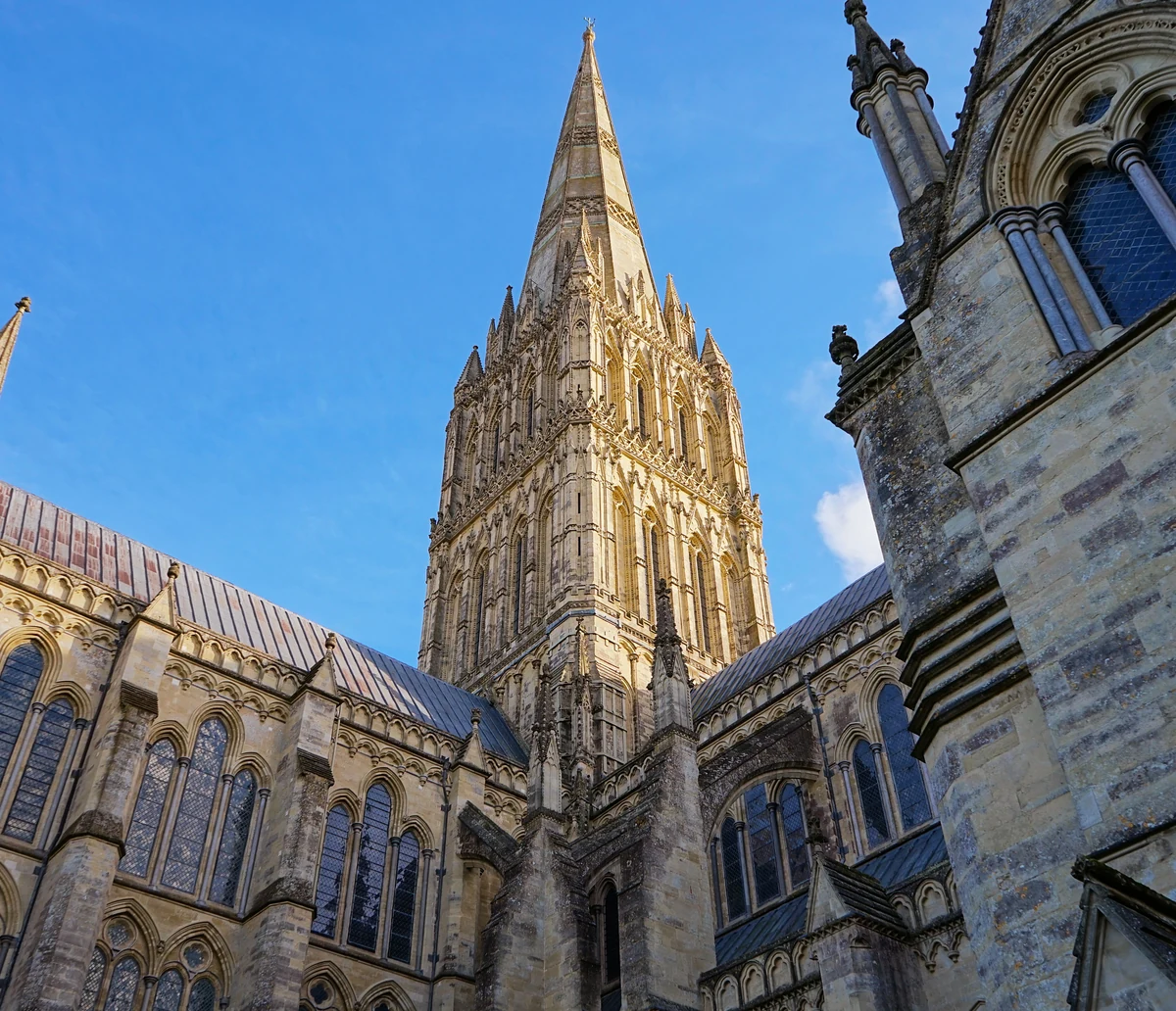

Professional IQ testing in Wiltshire – whether you need an assessment for school, employment, high-attainment or gifted educational planning, or personal insight, we connect you with qualified psychologists in the Wiltshire area.
Last Updated: October 2026
Child IQ Testing
WISC-V & Stanford-Binet for ages 6–16. Gifted identification, learning profiles.
Adult IQ Testing
Adult cognitive assessment should use an appropriate current UK measure selected for the referral question, age, norms and assessment date.
WISC-V Test
WISC–V UK is a widely used individually administered child cognitive measure with UK normative and validation evidence.
WAIS-IV & WAIS-5 Tests
Wechsler Adult Intelligence Scale® – Fourth Edition (WAIS-IV) and Fifth Edition (WAIS-5) available for adult IQ testing.
Gifted Testing
Explore unusually advanced or uneven reasoning for educational planning and enrichment; verify school admissions requirements separately.
Stanford-Binet 5
Stanford-Binet Intelligence Scales Fifth Edition – comprehensive cognitive assessment for all ages.
Mensa Testing
British Mensa qualification guidance: verify the current supervised-test and prior-evidence requirements directly with Mensa before commissioning private testing.
Full Evaluation
Combined assessment with detailed report and recommendations. Includes WISC-V, WAIS-IV, WAIS-5, or Stanford-Binet 5 as appropriate.
IQ Testing in Wiltshire: county context
Wiltshire covers approximately 1,257 square miles of land. The directory population supplied for this build is 531,890; for comparison, the guide notes an official census-scale population of about 510,400 (2021 Census). The supplied directory figure and census figure refer to different estimate dates or definitions, so they should not be treated as interchangeable.
Professional cognitive assessment in Wiltshire should be interpreted within the legal, educational and cultural framework of South West England and the wider UK. The psychologist should identify the exact test edition, document language and education history, consider health or disability factors and report uncertainty rather than reducing a person to one score.
IQ by gender & ethnicity
For demographic context, the local sex distribution is approximately 50.8% female and 49.2% male. These population figures do not predict an individual’s intelligence. Contemporary assessment focuses on the person’s own pattern of verbal, visual-spatial, fluid-reasoning, working-memory and processing-speed performance and asks whether language, education, disability, health, culture or testing conditions affected validity.
Current Wiltshire demographic context includes:
- White: about 94.3%.
- Asian, Asian British or Asian Welsh: about 2.1%.
- Mixed or multiple ethnic groups: about 1.7%.
- Black, Black British, Black Welsh, Caribbean or African: about 1.1%.
- Other ethnic groups: about 0.8%.
Demographic statistics help a clinician understand the setting in which services are delivered; they must never be used to infer an IQ score from sex, ethnicity, birthplace, neighbourhood or income.
What is professional IQ testing?
For readers comparing professional assessment with a self-guided IQ test, the key distinction is that clinical interpretation adds standardised administration, norms, uncertainty and a referral-specific report.
Intelligence quotient (IQ) testing is a standardised method to measure human cognitive abilities and intellectual potential. Professional IQ tests are administered by qualified psychologists in a controlled environment to ensure accuracy and reliability. Unlike online quizzes, clinical assessments provide a full-scale IQ score along with detailed breakdowns of verbal comprehension, perceptual reasoning, working memory, and processing speed.
In Wiltshire, cognitive testing may contribute to high-attainment or gifted educational planning, broader learning-difficulty assessment, career guidance, neuropsychological evaluation, and personal development. The results are presented in a comprehensive report that includes normative comparisons, strengths and weaknesses, and actionable recommendations.
Who should get tested?
IQ testing can benefit children, adolescents, and adults in various situations:
- Children: Families may seek testing to understand unusually advanced or uneven learning, contribute to a broader educational assessment, or clarify school-related questions; admissions and support requirements must be checked separately.
- Adults: People may seek testing for clinical or neuropsychological questions, career or study planning, Mensa prior evidence, disability documentation, or personal understanding.
- Mensa candidates: British Mensa uses supervised testing and accepted prior-evidence routes; applicants should verify the current evidence rules before commissioning private testing.
- Clinical referrals: Psychologists may recommend testing as part of a broader neuropsychological evaluation.
Types of IQ tests
Common professionally administered intelligence tests and cognitive batteries include:
- WISC–V UK (Wechsler Intelligence Scale for Children® – Fifth UK Edition): A widely used measure for ages 6:0–16:11 that reports Full Scale IQ and primary index scores under UK publisher guidance.
- WAIS-IV (Wechsler Adult Intelligence Scale® – Fourth Edition): The most widely used adult IQ test for ages 16–90. It measures cognitive functioning across four domains.
- Stanford-Binet Intelligence Scales – Fifth Edition: A comprehensive assessment for ages 2–85, often used for gifted identification and clinical evaluations.
- Gifted Testing: Often includes the WISC-V or Stanford-Binet, plus additional creativity and achievement measures.
- British Mensa: Membership testing and prior-evidence routes are administered under Mensa’s current rules; private clinical assessment serves a different purpose.
How the testing process works
- Initial consultation: Brief phone or video call to discuss your needs and match you with the right psychologist.
- Testing session: In-person or remote testing (depending on the test) with a qualified psychologist. Most sessions last 1–2 hours.
- Scoring and interpretation: The psychologist scores the test and interprets the results in the context of your background and goals.
- Feedback session: A detailed review of your results, including strengths, weaknesses, and practical recommendations.
- Comprehensive report: You receive a written report with all scores, normative comparisons, and actionable next steps.
How much does IQ testing cost in Wiltshire?
Private fees in Wiltshire vary with test choice, clinician time, report depth, complexity and whether achievement, attention, adaptive-behaviour or neuropsychological measures are added. A focused cognitive assessment may be quoted in the several-hundred-pound range, while a broad educational or neuropsychological evaluation can cost substantially more. Ask for a written fee that states what is included before booking.
- Confirm the exact instrument and edition: for example WISC–V UK for children or a current UK adult Wechsler edition where clinically appropriate.
- Clarify the report: ask whether the price includes a full written report, confidence intervals, index scores, recommendations and a feedback appointment.
- Check acceptance first: schools, universities, examination bodies, employers, courts and Mensa can apply different documentation rules.
- NHS or local-authority routes: assessment may sometimes be available without a private fee when clinically or educationally indicated, but eligibility, waiting times and scope differ.
- Private medical insurance: coverage is policy-specific and often depends on the clinical reason and provider recognition; obtain authorisation before assuming reimbursement.
Wiltshire’s Intellectual History & Legacy
Wiltshire’s intellectual and scientific story spans archaeology, military research, agriculture, conservation and the long educational traditions of Salisbury and the county’s market towns. Stonehenge and the wider prehistoric landscape also make the county unusually prominent in archaeological research and public understanding of evidence.
The most useful lesson for present-day testing is methodological: standardisation, reliability, validity, transparent limits and professional ethics. Historical psychometrics also contains serious examples of misuse, so modern interpretation should never rank demographic groups or imply that a single score defines human worth.
Top Employers and Cognitive Demands in Wiltshire
Wiltshire supports employment across advanced engineering and manufacturing, defence, life sciences, food and agriculture, logistics, professional services, health and social care, and the visitor economy. Cognitive testing can sometimes clarify an individual learning or reasoning profile, but it should not be used as a crude occupational gatekeeper and does not replace qualifications, experience or job-specific assessment.
- Advanced Engineering And Manufacturing: roles can draw on different combinations of reasoning, learning, communication, attention and speed; job performance also depends on experience, motivation and domain knowledge.
- Defence: roles can draw on different combinations of reasoning, learning, communication, attention and speed; job performance also depends on experience, motivation and domain knowledge.
- Life Sciences: roles can draw on different combinations of reasoning, learning, communication, attention and speed; job performance also depends on experience, motivation and domain knowledge.
- Food And Agriculture: roles can draw on different combinations of reasoning, learning, communication, attention and speed; job performance also depends on experience, motivation and domain knowledge.
- Logistics: roles can draw on different combinations of reasoning, learning, communication, attention and speed; job performance also depends on experience, motivation and domain knowledge.
- Professional Services: roles can draw on different combinations of reasoning, learning, communication, attention and speed; job performance also depends on experience, motivation and domain knowledge.
Where an assessment is commissioned for work, the referral question should be explicit and the psychologist should explain what the selected test can and cannot validly say about functioning in that role.
Wiltshire IQ Testing by Area
People may seek assessment from across Wiltshire, including the following representative communities. This list is geographic context rather than an attempt to associate neighbourhoods with ability or to repeat place names for search ranking.
- Salisbury
- Trowbridge
- Chippenham
- Devizes
- Marlborough
- Melksham
- Warminster
- Royal Wootton Bassett
Choose a provider for competence, test suitability and report purpose first, then confirm travel, accessibility and appointment location.
Wiltshire Universities and Research Institutions
Higher-education and research activity in and around Wiltshire includes Wiltshire College & University Centre, Salisbury Sixth Form College, New College Swindon and Lackham campus of Wiltshire College & University Centre. Their presence supports local study, research and specialist employment, but university affiliation is not itself evidence that a private IQ report will be accepted for admissions or disability support.
Students commissioning an assessment should obtain the receiving institution’s current evidence requirements before testing. Universities usually make support decisions from functional evidence and relevant diagnostic or educational documentation rather than from IQ alone.
Wiltshire Economic Context
Economic conditions matter because access to private assessment, travel, education and specialist services is not evenly distributed. They are contextual variables, not measures of intelligence.
- Wiltshire has a dispersed economy spanning market towns, rural communities and major employment sites rather than a single dominant centre.
- Defence and military activity around Salisbury Plain is a distinctive part of the local employment base.
- Advanced engineering, manufacturing and life-science supply chains are significant alongside agriculture, food production and logistics.
- Tourism draws on Salisbury, Stonehenge, historic towns and the county landscape, while health, education and public services remain major employers.
When a report is intended for education, employment, disability support or clinical planning, the psychologist should focus recommendations on the person’s functional needs and opportunities rather than treating income, occupation or postcode as a proxy for cognitive ability.
Wiltshire School and Education Data
Wiltshire Council is the relevant local authority for maintained-school and statutory SEND functions, alongside academy trusts, independent schools and further-education providers where applicable. In England, an IQ score does not automatically create an EHCP or exam access arrangement; in Wales, local additional-learning-needs processes and school policies apply. The receiving organisation’s current criteria should be checked first.
- Bishop Wordsworth’s School — check the school’s current admissions, SEND and evidence rules directly before commissioning assessment.
- South Wilts Grammar School — check the school’s current admissions, SEND and evidence rules directly before commissioning assessment.
- St Augustine’s Catholic College — check the school’s current admissions, SEND and evidence rules directly before commissioning assessment.
- Dauntsey’s School — check the school’s current admissions, SEND and evidence rules directly before commissioning assessment.
Educational psychologists may use cognitive measures when the referral question requires them, but good school planning also draws on attainment, classroom observation, developmental history, teacher and family evidence and the learner’s own experience.
Local Testing Centres and Psychologists
Wiltshire Psychology Service Ltd is a Chartered Clinical Psychologist-led practice at Brinkworth House, Brinkworth, Swindon, Wiltshire SN15 5DF. Its published 01666 337755 number is local to north Wiltshire, and its child service describes cognitive assessment, standardised measures and assessment of intellectual ability when clinically appropriate. Confirm the exact instrument, age range, report purpose and current availability before booking.
Before making contact, verify HCPC registration where a protected practitioner-psychologist title is used, ask which test edition will be administered, and confirm whether the resulting report is suitable for the organisation that requested the assessment.
Wiltshire Events and Conferences
Professional learning relevant to assessment is available through NHS, local-authority, university and BPS-linked events across Wiltshire and the wider South West. Families should treat conferences as professional-development opportunities, not substitutes for individual assessment.
Professional events can help clinicians keep current with assessment standards, neurodiversity, ethics, digital administration and culturally responsive practice. Attendance alone does not establish competence to administer a particular instrument.
Transportation and Accessibility
Wiltshire is spread across a large rural area. Rail hubs include Salisbury, Chippenham, Trowbridge and Westbury, while the M4, A303, A350 and A36 shape road access. Appointment planning should allow for longer cross-county journeys and limited public transport in some rural communities.
- Before the appointment: check the route, accessible entrance, parking or station lifts and allow a buffer for delays.
- Sensory access: ask about a quiet waiting area, lighting, noise and break arrangements when these may affect performance.
- Mobility and communication: discuss wheelchair access, hearing or visual needs and interpreter requirements in advance without improperly altering standardised conditions.
- Children: avoid placing a long assessment immediately after a tiring school day or stressful journey when a calmer time is available.
Wiltshire Weather and Seasonal Considerations
Wiltshire has a temperate southern-English climate. Rain, winter frost and occasional snow can affect rural roads, while summer tourism can add traffic around Salisbury and heritage sites; arrive rested and allow extra travel time when conditions are unsettled.
- Testing environment: the room should be quiet, comfortably lit and temperature-controlled regardless of outdoor conditions.
- Preparation: normal sleep, food, hydration and prescribed medication routines are more useful than practising test items.
- Timing: school, university or report deadlines can increase demand, so allow enough time for scoring, feedback and report writing.
- Disruption: if illness, severe fatigue or major transport problems would materially affect performance, discuss rescheduling with the clinician.
Areas we serve
We support all areas of Wiltshire. Exact appointment locations, age ranges, accessibility, language capability and test availability vary by provider, so confirm those practical details before travelling.
Frequently Asked Questions
For IQ work in Wiltshire, choose a practitioner whose training and current scope match the referral question. Protected practitioner-psychologist titles such as clinical psychologist and educational psychologist require HCPC registration, and the clinician should also have practical competence with the proposed instrument and age group.
The instrument should follow the purpose of the IQ assessment rather than the other way around. The psychologist should consider age, language history, disability, prior testing, the decision the report must support and whether the receiving organisation accepts the proposed UK edition.
A focused IQ cognitive battery may take roughly one to two hours, but intake history, breaks, additional achievement or neuropsychological measures, scoring and feedback can extend the visit. Ask for the expected face-to-face time and total turnaround before arranging travel across Wiltshire.
A useful IQ report identifies the exact test and edition, explains index and overall scores with confidence intervals, records relevant behavioural observations, states interpretive limitations and links recommendations to the original referral question. It should not reduce the person being assessed to one number.
Fees vary with clinician time, instrument licensing, complexity, records reviewed and report depth. Request a written quotation showing whether consultation, testing, scoring, feedback, a full report, school or professional liaison, travel and any follow-up letter are included.
Possibly, when the assessment is clinically or educationally indicated and fits the relevant pathway. NHS services, local authorities, schools and academy trusts use their own referral criteria; private testing is a separate route and does not automatically create statutory SEND, admissions or treatment entitlement.
Some interviews, questionnaires and feedback can be conducted online, while certain standardised measures have controlled digital or telepractice options. The examiner must decide whether remote administration preserves validity for the exact IQ instrument, individual and intended use.
Preparation for IQ assessment should protect normal performance rather than train test content: aim for usual sleep, meals, hydration, prescribed medication routines, glasses or hearing aids, and an unhurried journey. Bring relevant reports and disclose recent illness, major stress or previous exposure to the same instrument.
No. An IQ score can contribute useful cognitive evidence, but diagnosis normally requires history, functional information and additional measures chosen for the clinical or educational question. Large score differences can be meaningful, yet they must be interpreted with the rest of the evidence.
Acceptance depends on the receiving organisation and the purpose. Before paying for IQ testing, obtain its current requirements for practitioner credentials, test edition, recency, score format and supporting documentation so that the assessment is commissioned to the correct standard.
Retesting intervals depend on the instrument, practice effects, age, clinical need and the policy of the organisation requesting evidence. The psychologist should review previous test dates and manuals before repeating an IQ measure, rather than scheduling a new administration simply to chase a different score.
Trustworthy IQ interpretation combines standardised administration, suitable norms, examiner competence, transparent uncertainty and a clear referral question. Be cautious of guaranteed scores, promises that every high result will secure admission or membership, or reports that omit the exact instrument and professional rationale.