
IQ Testing in Trafford
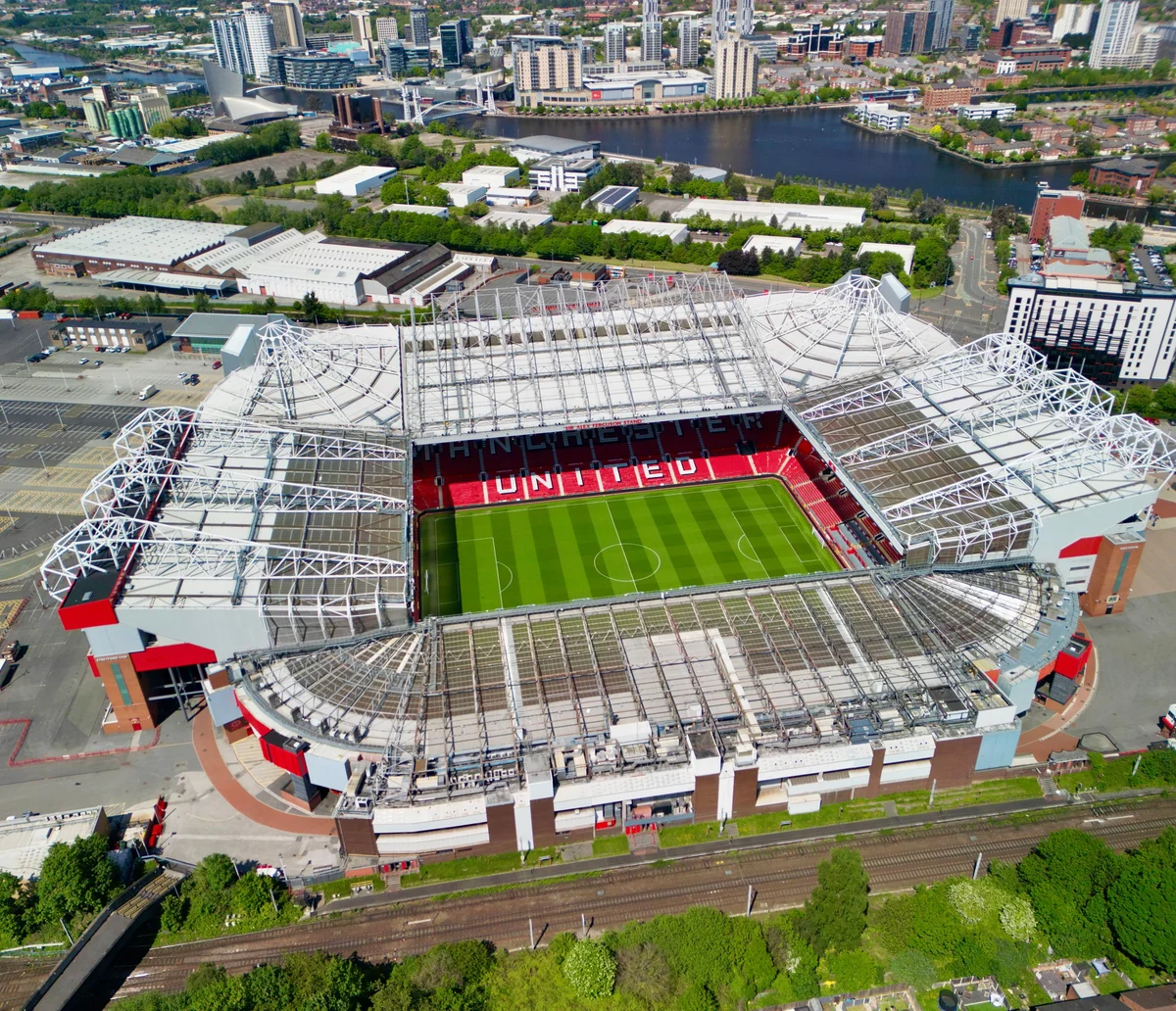

Professional IQ testing in Trafford – whether you need an assessment for school, employment, advanced-learning provision eligibility, or personal insight, we connect you with HCPC-registered psychologists in the Trafford area.
Last Updated: October 2026
Child IQ Testing
WISC-V & Stanford-Binet for ages 6–16. Gifted identification, learning profiles.
Adult IQ Testing
WAIS assessment options vary by provider. Adult cognitive assessment information; confirm local scope and referral route.
WISC-V Test
WISC-V provides an age-normed child cognitive profile across several reasoning and processing domains and is widely used in educational and clinical assessment.
WAIS-IV & WAIS-5 Tests
Wechsler Adult Intelligence Scale® – Fourth Edition (WAIS-IV) and Fifth Edition (WAIS-5) available for adult IQ testing.
Gifted Testing
Identify giftedness for school placement, enrichment, and talent programmes using WISC-V or Stanford-Binet.
Stanford-Binet 5
Stanford-Binet Intelligence Scales Fifth Edition – comprehensive cognitive assessment for all ages.
Mensa Testing
Mensa admission testing and preparation for the high-IQ society. Accepts WAIS-IV, WAIS-5, and Stanford-Binet 5 scores.
Full Evaluation
Combined assessment with detailed report and recommendations. Includes WISC-V, WAIS-IV, WAIS-5, or Stanford-Binet 5 as appropriate.
IQ Testing in Trafford: city context
Trafford covers approximately 41.0 square miles of land. The population figure supplied for this location is 242,961, with a growth figure of 0.4%. This guide uses the Trafford metropolitan borough for local context rather than treating nearby places as if they were inside the same authority.
Local demographic statistics can help an evaluator understand language, schooling and access to services, but they do not establish a local “average IQ” and must not be used to stereotype an individual. Census data are included because fair psychometric interpretation may depend on language history, migration, educational opportunity and access to support.
IQ by gender & ethnicity
Sex profile: approximately 51.3% female and 48.7% male. Modern intelligence tests use age-referenced normative procedures; there is no defensible basis for adding a local male/female or gender adjustment to a person’s score.
Current demographic context includes:
- White residents: 77.8%.
- Asian, Asian British or Asian Welsh residents: 12.6%.
- Mixed or Multiple ethnic groups: 3.8%.
- Black, Black British, Black Welsh, Caribbean or African residents: 3.4%.
- Other ethnic groups: 2.5%.
- Migration and birthplace context: Trafford includes long-established local communities and internationally mobile households connected with Greater Manchester’s universities, professional services and sports economy.
- Language context: English predominates, but multilingual assessment histories are common enough that first language and education language should be recorded explicitly.
- Education context: Trafford has high average educational attainment alongside strong within-borough variation; selective-school outcomes must not be confused with clinical intelligence norms.
For a resident of Trafford, the psychologist should consider first language, language of schooling, disability, sensory or motor needs, neurodevelopmental and medical history, emotional state, previous test exposure, educational opportunity and the exact referral purpose. None of the population percentages above should be converted into a presumed cognitive level.
What is professional IQ testing?
Intelligence quotient (IQ) testing is a standardised method to measure human cognitive abilities and intellectual potential. Professional IQ tests are administered by HCPC-registered psychologists in a controlled environment to ensure accuracy and reliability. Unlike online quizzes, clinical assessments provide a full-scale IQ score along with detailed breakdowns of verbal comprehension, perceptual reasoning, working memory, and processing speed.
In Trafford, IQ testing is commonly used for advanced-learning provision admission, learning disability identification, career guidance, neuropsychological evaluation, and personal development. The results are presented in a comprehensive report that includes normative comparisons, strengths and weaknesses, and actionable recommendations.
Who should get tested?
IQ testing can benefit children, adolescents, and adults in various situations:
- Children: Parents often seek testing for school readiness, gifted placement, or to understand learning challenges.
- Adults: Many adults take IQ tests for career advancement, graduate study applications, or personal curiosity.
- Mensa candidates: High-IQ societies require official test scores for membership.
- Clinical referrals: Psychologists may recommend testing as part of a broader neuropsychological evaluation.
Types of IQ tests
We offer the most recognized and scientifically validated intelligence tests in the field:
- WISC-V (Wechsler Intelligence Scale for Children® – Fifth Edition): The gold standard for children aged 6:0–16:11. It provides a Full-Scale IQ and five primary index scores.
- WAIS-IV (Wechsler Adult Intelligence Scale® – Fourth Edition): The most widely used adult IQ test for ages 16–90. It measures cognitive functioning across four domains.
- Stanford-Binet Intelligence Scales – Fifth Edition: A comprehensive assessment for ages 2–85, often used for gifted identification and clinical evaluations.
- Gifted Testing: Often includes the WISC-V or Stanford-Binet, plus additional creativity and achievement measures.
- Mensa Testing: We explain British Mensa’s supervised-testing and prior-evidence pathways, including when a professionally administered cognitive report may be relevant.
How the testing process works
- Initial consultation: Brief phone or video call to discuss your needs and match you with the right psychologist.
- Testing session: In-person or remote testing (depending on the test) with a HCPC-registered psychologist. Most sessions last 1–2 hours.
- Scoring and interpretation: The psychologist scores the test and interprets the results in the context of your background and goals.
- Feedback session: A detailed review of your results, including strengths, weaknesses, and practical recommendations.
- Comprehensive report: You receive a written report with all scores, normative comparisons, and actionable next steps.
How much does IQ testing cost in Trafford?
Private IQ assessment prices in Trafford vary according to the psychologist’s professional registration, test battery, age of the client, complexity of the referral question and the amount of written interpretation required. As a practical UK planning range, a focused standardised cognitive assessment may often fall around £450–£900, while a broader psychoeducational or neuropsychological evaluation can be £900–£2,000+. These are planning ranges, not quotes from the local contact.
Ask what is included: testing time, scoring, feedback, report length, school or workplace recommendations and follow-up calls may be priced differently. Check the receiving organisation first: schools, universities, employers, examination bodies and high-IQ societies can impose different rules about accepted tests, editions, recency and examiner credentials.
NHS or council pathways: publicly funded psychological assessment is normally based on clinical or educational need and referral criteria rather than a consumer request for an IQ number. VAT and cancellation terms: confirm the final written fee, deposit, cancellation policy and any charge for additional letters before the appointment.
Trafford's Intellectual History & Legacy
Trafford combines the industrial legacy of Trafford Park with the sporting identity of Old Trafford and the commercial centres of Altrincham, Sale, Stretford and Urmston. Its modern skills base spans engineering, logistics, media, professional services and higher-education-linked enterprise.
The local history is relevant because educational opportunity and occupational experience shape familiarity with particular tasks, vocabulary and problem-solving settings. A professional report should describe those contextual factors without turning civic history into a claim about the intelligence of residents.
Top Employers in Trafford and Cognitive Testing
Local employment patterns can shape why adults seek assessment—for example, career planning, occupational health, neuropsychological questions or university progression—but employers do not receive a valid “city IQ” benchmark.
- Trafford Park manufacturing, distribution and business employers: roles may span technical, professional, administrative, operational and service work; cognitive testing is relevant only when there is a defined and lawful assessment purpose.
- Manchester United and the Old Trafford sports economy: roles may span technical, professional, administrative, operational and service work; cognitive testing is relevant only when there is a defined and lawful assessment purpose.
- The Trafford Centre and major retail/leisure employers: roles may span technical, professional, administrative, operational and service work; cognitive testing is relevant only when there is a defined and lawful assessment purpose.
- Trafford General Hospital and community health services: roles may span technical, professional, administrative, operational and service work; cognitive testing is relevant only when there is a defined and lawful assessment purpose.
- Professional, digital and business-service firms in Altrincham, Sale and Stretford: roles may span technical, professional, administrative, operational and service work; cognitive testing is relevant only when there is a defined and lawful assessment purpose.
Trafford IQ Testing by Area
Cognitive assessment may be sought across the whole authority. The points below describe practical differences without implying that any neighbourhood has a characteristic IQ.
- Altrincham: offers the shortest access to central public services and transport interchanges, although appointment parking can be constrained.
- Sale: has its own schools, community services and travel patterns, so families should verify the actual venue rather than assume a town-centre location.
- Stretford: is well connected to other parts of the authority but peak-hour traffic can still affect punctuality for a fixed testing session.
- Urmston: includes residential catchments where school referral routes may be more relevant than proximity to a private practitioner.
- Partington: may require different bus, rail or car planning depending on the provider; accessibility needs should be checked before booking.
- Hale: illustrates why service coverage should be described authority-wide without repeating place names simply for search-engine density.
Trafford Universities and Research Institutions
Education and research links affect referral pathways, postgraduate study and access to specialist professionals. Relevant local or regional institutions include:
- University Academy 92 in Stretford: a potential source of education, professional training, research, referral knowledge or progression opportunities rather than an automatic IQ-testing provider.
- Trafford & Stockport College Group provision in the borough: a potential source of education, professional training, research, referral knowledge or progression opportunities rather than an automatic IQ-testing provider.
- Trafford General Hospital clinical and professional-learning links: a potential source of education, professional training, research, referral knowledge or progression opportunities rather than an automatic IQ-testing provider.
- Nearby University of Manchester and Manchester Metropolitan University: a potential source of education, professional training, research, referral knowledge or progression opportunities rather than an automatic IQ-testing provider.
- Apprenticeship and technical training connected with Trafford Park: a potential source of education, professional training, research, referral knowledge or progression opportunities rather than an automatic IQ-testing provider.
- Independent professional training networks across Altrincham and Sale: a potential source of education, professional training, research, referral knowledge or progression opportunities rather than an automatic IQ-testing provider.
Trafford Economic Context
- Population and land: 242,961 people across about 41.0 square miles, using the supplied population figure for this guide.
- Growth: the supplied annual growth figure is 0.4%; population change can alter demand for schools, health services and specialist assessment.
- Economic feature: Trafford Park is one of Europe’s historically important industrial estates and remains a major employment concentration.
- Economic feature: Advanced manufacturing, logistics, wholesale and distribution coexist with media, digital and professional services.
- Economic feature: Retail and leisure activity around the Trafford Centre supports a large service workforce.
- Economic feature: Sport and events around Old Trafford create an unusually visible visitor economy.
- Economic feature: Altrincham and Sale support strong professional-service, office and hospitality sectors.
- Assessment access: Household prosperity is relatively high on average, but Partington and other communities illustrate meaningful internal inequalities.
- Interpretation: For assessment access, car ownership, school choice and ability to pay privately can differ sharply even within a compact metropolitan borough.
When someone first encounters the topic through an online IQ test, local economic statistics still should not be used to explain or predict that individual score.
Trafford School and Education Data
School data are most useful when they explain referral context rather than when they are used to rank intelligence. Key local considerations include:
- 1. Trafford is distinctive because it retains selective grammar schools alongside non-selective secondary schools.
- 2. Grammar schools use published entrance arrangements; a privately obtained IQ result is not a substitute for the current school entrance assessment.
- 3. Altrincham Grammar School for Boys, Altrincham Grammar School for Girls, Sale Grammar, Stretford Grammar and Urmston Grammar each require families to check current admissions rules.
- 4. Educational Psychology can contribute where learning, development or SEND questions require psychological formulation rather than selection coaching.
- 5. Independent schools and preparatory settings use their own entrance procedures, which may include attainment and reasoning tasks.
- 6. Post-16 pathways range from grammar-school sixth forms to colleges, technical courses, apprenticeships and UA92.
- 7. Because selective-school participation can distort casual comparisons between neighbourhoods, cognitive reports should stay individual, age-normed and referral-specific.
Local Testing Centres and Psychologists
- Local assessment contact: a verified public-sector starting point is Trafford Educational Psychology Service.
- Telephone: 0161 911 8669.
- Address: Sale Waterside, Waterside Plaza, Sale, Greater Manchester M33 7ZF.
- What the service does: Trafford Educational Psychology Service supports educational assessment and consultation. Families should confirm whether a requested WISC, WAIS or other cognitive battery is within the service route and whether a private referral is needed for non-statutory purposes.
- Confirm the instrument: ask whether the exact WISC, WAIS, Stanford–Binet or other cognitive measure is available and appropriate for the age, language and referral question.
- Referral and report: establish who can refer, expected waiting times, whether a formal written report is issued, and whether the receiving school, university, employer, court or high-IQ society accepts that documentation.
- No implied private availability: a council or Education Authority contact is not presented as an on-demand commercial IQ clinic; where the public route does not fit, look for an HCPC-registered practitioner whose competence and local address can be independently verified.
Trafford Events and Conferences
- Education events: open days and progression sessions at University Academy 92 in Stretford can help residents understand academic and vocational routes.
- Health-sector learning: Trafford Park manufacturing, distribution and business employers contributes to local professional-development and multidisciplinary networks.
- Family and learning workshops: SEND/ASN/SEN, neurodiversity and school-transition events can explain support options without suggesting that every participant needs an IQ test.
- High-IQ society activity: British Mensa events and supervised testing arrangements vary by date and region, so current eligibility should be checked directly with Mensa.
- Regional conferences: specialist psychology, education and neurodevelopmental events may occur elsewhere in Greater Manchester, North West England, making regional travel part of professional development.
Transportation and Accessibility
- 1. Metrolink lines serve Altrincham, Sale, Stretford and Old Trafford with frequent connections toward central Manchester.
- 2. National Rail services from Altrincham, Urmston and other stations provide additional regional options.
- 3. The M60 crosses Trafford and connects directly with much of Greater Manchester.
- 4. The M56 provides strategic access toward Manchester Airport and Cheshire.
- 5. The A56 is an important north–south corridor through Stretford, Sale and Altrincham.
- 6. Event traffic around Old Trafford can transform normal journey times on match and concert days.
- 7. Trafford Park shift changes and retail peaks around the Trafford Centre can also affect road congestion.
- 8. For assessment appointments, check venue parking and step-free access because public transport convenience varies considerably by district.
- 9. Allow a quiet arrival period before testing rather than moving directly from a crowded tram, school day or long motorway journey into standardised tasks.
Trafford Weather and Seasonal Considerations
- 1. Trafford shares Greater Manchester’s temperate, frequently showery climate, with relatively mild summers and cool winters.
- 2. Heavy rain can slow the M60, M56 and A56, while major events may compound ordinary weather-related delays.
- 3. Test validity is best protected by practical comfort: normal sleep, dry clothing, hydration and enough arrival time to settle.
Areas we serve
We support all areas of Trafford.
Frequently Asked Questions
A focused cognitive battery often requires roughly 60–120 minutes of direct testing, while a broader evaluation can take several sessions. The psychologist should give an estimate based on age, referral question and breaks.
Private psychologists may accept self-referrals, while council and NHS services usually have defined referral pathways. Ask Trafford Educational Psychology Service which referral route and age range apply before relying on the service.
Possibly, but only if the exact test, edition, qualifying score, administration and documentation meet British Mensa’s current rules. Confirm those requirements before testing.
Some interviews and feedback can be remote, but many standardised cognitive tests have controlled-administration requirements. Use only a format permitted by the test publisher and accepted by the organisation receiving the report.
Prioritise normal sleep, food, prescribed medication as directed, glasses or hearing aids if used, and an unhurried arrival. Coaching on test items can undermine validity.
A good feedback session explains the score profile, limitations and practical implications. If a written report is needed, agree its intended audience and delivery date before the assessment.
WISC-V is for children aged 6–16, while WAIS-IV is for adults aged 16–90. Each is normed for its specific age group.
Most IQ tests take between 60 and 90 minutes, plus a feedback session. Allow 2–3 hours total.