
Gifted Testing in New Forest
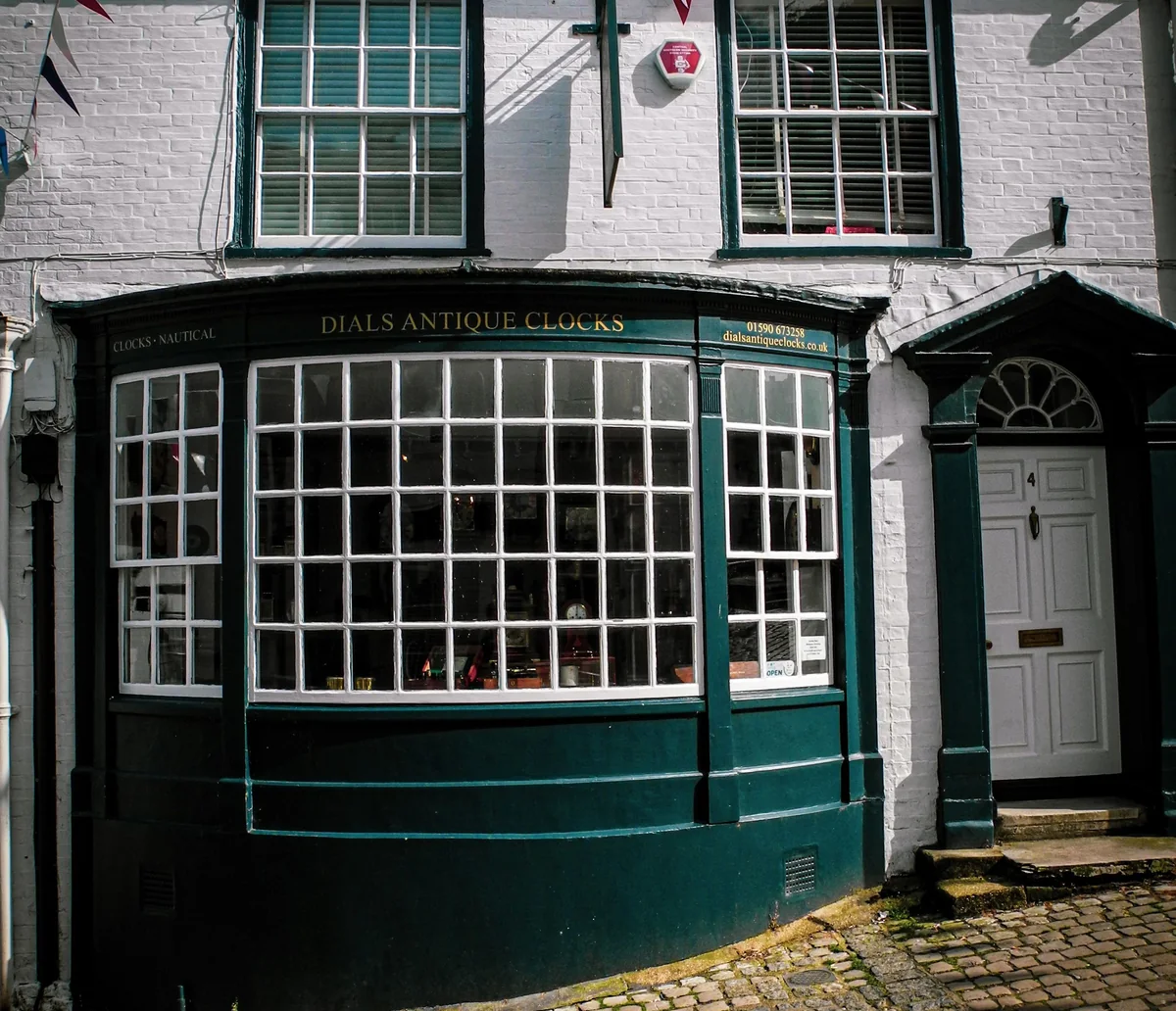

New Forest spans approximately 290.81 square miles of land (753.2 km²). Professional gifted testing in New Forest – whether your child needs identification for school placement, enrichment programmes, or you're an adult seeking Mensa admission, we connect you with HCPC-registered psychologists who specialize in gifted assessment.
Last Updated: October 2026
Child Gifted Testing
WISC-V & Stanford-Binet 5 for ages 6–16. Gifted identification, school placement.
Adult Gifted Testing
WAIS assessment options vary by provider. Comprehensive assessments for adults seeking Mensa or career guidance.
WISC-V Test
Wechsler Intelligence Scale for Children® Fifth Edition – the gold standard for child gifted identification.
Stanford-Binet 5
Stanford-Binet Intelligence Scales Fifth Edition – comprehensive cognitive assessment for all ages, often used for gifted identification.
Mensa Testing
Mensa admission testing and preparation for the high-IQ society. Accepts WAIS-IV, WAIS-5, and Stanford-Binet 5 scores.
School Placement Testing
Testing for independent school admission and advanced-learning provision eligibility using WISC-V or Stanford-Binet 5.
Gifted Testing in New Forest: city context
New Forest extends across roughly 290.81 square miles of land (753.2 km²). Its listed population is 175,741, with growth of -0.11%. For children, school system, language history, travel distance and the exact educational question are more informative than treating the whole authority as one homogeneous testing market.
The most relevant local demographic reference is the 2021 Census. Demographic figures can help a psychologist understand language, schooling, migration, cultural context and access to services, but they must never be used as a shortcut for estimating an individual’s intelligence.
IQ by gender & ethnicity (child population)
Sex profile: approximately 51.1% female and 48.9% male. Modern age-normed cognitive tests do not apply a local male-versus-female correction, and there is no valid New Forest-wide dataset establishing a meaningful IQ difference by sex or gender.
- White ethnic groups: about 96.8%.
- Asian, Black, Mixed and other ethnic groups combined: about 3.2%.
These categories describe population composition, not cognitive ability. Interpretation should instead consider the individual’s primary language, educational opportunity, disability or sensory needs, health, test familiarity and the representativeness of the test norms.
Gifted children in New Forest: who are they?
High-attaining children in New Forest are not a single clinical group. Some need deeper curriculum challenge, some thrive through subject-specific opportunities, and some are twice-exceptional with simultaneous high ability and additional needs.
Education for high-attaining children in New Forest
- New Forest schools use the English SEND framework through Hampshire County Council. The district’s dispersed settlements and National Park geography can make specialist access uneven, so a school-based referral may be more practical than repeatedly travelling to a distant private clinic.
- Local school examples include Priestlands School in Lymington and Noadswood School near Totton, but provision should be checked with the child’s actual school.
Potential advantages of appropriately matched advanced learning
- Greater depth and pace can reduce boredom when it is matched to demonstrated readiness.
- Mentoring, competitions, research projects or advanced reading can provide challenge without relying on acceleration in every subject.
- Wellbeing and peer relationships should be monitored alongside attainment.
Hobbies and interests of high-attaining children
- Brockenhurst College and local cultural organisations may provide outreach or progression activities.
- New Forest & Hampshire County Show and other area events can support interests that fall outside the standard classroom.
- Music, coding, languages, sport, debate, science, art and practical making can all reveal strengths that a global IQ score does not capture.
What is giftedness?
Giftedness is a complex and multifaceted construct that goes beyond a single IQ score. In the field of psychology, giftedness is typically defined as an IQ score of 130 or above (the 98th percentile), but it also encompasses exceptional creativity, leadership ability, or talent in specific academic or artistic domains.
However, in New Forest and across the UK, the definition of giftedness is evolving. Many psychologists and educators now recognize that giftedness manifests in diverse ways, including:
- Intellectual giftedness: Exceptional reasoning, problem-solving, and abstract thinking.
- Creative giftedness: Unusual originality, imagination, and ability to generate novel ideas.
- Leadership giftedness: Exceptional interpersonal skills, empathy, and ability to inspire others.
- Artistic giftedness: Superior talent in visual arts, music, drama, or dance.
- Twice-exceptional (2E): Gifted individuals who also have a learning disability or neurodivergence such as ADHD or dyslexia.
In New Forest, where diversity and inclusion are highly valued, there is a growing movement to identify and support gifted students from all backgrounds, including those who may be underserved by traditional testing methods.
New Forest Gifted Identification Statistics
There is no authoritative published count of “gifted” children for the whole of New Forest based on one uniform IQ threshold. School attainment datasets, selective admissions, Mensa membership and private-assessment figures measure different things and should not be merged into a fabricated local giftedness rate.
- Top 2% convention: some high-IQ organisations use approximately the top two percent on an accepted test, but this is an admission rule rather than a local prevalence survey.
- School identification: schools can identify high attainment or exceptional subject performance without administering a clinical IQ test.
- Equity: language, disability, socioeconomic opportunity and access to enrichment can influence who is referred for testing, so referral counts are not neutral estimates of ability.
New Forest Gifted Testing Timeline
- First: define the decision the assessment must support and ask the school or programme what evidence it accepts.
- Next: contact MindSenseAbility / East Street Farm psychological assessment team or an appropriately registered independent psychologist and confirm the exact test, age range and report scope.
- Assessment day: use normal sleep, meals, medication as prescribed and an unhurried arrival; do not coach secure test items.
- After scoring: review the complete profile and confidence intervals rather than focusing only on a headline number.
- Planning: translate findings into curriculum, enrichment, wellbeing and support decisions, then revisit them as the child develops.
New Forest High-Ability Provision by Age Group
- Early years: observe language, play, problem-solving and development broadly; formal IQ testing should be used only when it answers a meaningful question.
- Primary age: enrichment, reading depth, mathematics challenge and social-emotional fit may all matter alongside cognitive data.
- Secondary age: subject acceleration, examination choices, extracurricular depth and peer fit often become more useful than a broad “gifted” label.
- Post-16: Brockenhurst College and other progression routes allow high-attaining students to specialise through qualifications, projects and advanced study.
- Twice-exceptional learners: high ability can coexist with ADHD, autism, dyslexia, language disorder or other needs; strengths must not be used to dismiss disability.
Unique challenges and nuances of giftedness
Giftedness is not always a straightforward advantage. Many gifted individuals face unique challenges that can impact their well-being and success:
- Asynchronous development: Gifted children often have intellectual abilities that outpace their social and emotional maturity. This can lead to frustration, social isolation, and difficulty relating to peers.
- Perfectionism: Many gifted individuals set unrealistically high standards for themselves, leading to anxiety, burnout, and avoidance of challenges.
- Underachievement: Gifted students may underperform in school if they are not adequately challenged or if their learning needs are not met.
- Social isolation: Gifted individuals may struggle to find peers who share their interests and intellectual intensity, leading to loneliness and depression.
- Planning for complex gifted profiles: When a learner shows advanced reasoning alongside ADHD, dyslexia, autism or another learning need, support should preserve appropriate challenge while directly addressing the barriers that interfere with classroom or daily functioning.
- Cultural and ethnic disparities: Giftedness is often under-identified in minority and low-income populations due to cultural biases in testing and limited access to enrichment programmes. New Forest is actively working to address these disparities through inclusive identification practices.
Gifted testing can help identify these challenges and provide a roadmap for support. A comprehensive evaluation can reveal not only strengths but also areas where intervention is needed.
Mensa and high-IQ societies
- British Mensa membership is based on scoring within the top 2% of the general population on an accepted, properly administered test. A raw IQ number by itself is not enough because different instruments and editions use different scales and qualifying thresholds.
- Prior evidence: British Mensa can consider qualifying evidence from accepted tests when documentation and administration requirements are met.
- Mensa testing: British Mensa also offers its own supervised or secure proctored testing routes; current procedures can change, so applicants should verify the current membership instructions directly before paying for a separate assessment.
- Clinical reports: ask in advance whether the exact test, edition, score type, examiner credentials and report format will be accepted.
- Children: age limits and accepted evidence can differ from adult routes; families should confirm current rules rather than assuming a school IQ score automatically qualifies.
Areas we serve
This gifted-assessment guide is written for residents across the full New Forest authority area, including its principal towns, neighbourhoods and rural communities. The footer deliberately avoids a long place-name list: service suitability depends on the assessor, referral route and required test rather than repeated geographic keywords.
Frequently Asked Questions
A focused cognitive battery often requires roughly 60–120 minutes of direct testing, while a broader evaluation can take several sessions. The psychologist should give an estimate based on age, referral question and breaks.
Private psychologists may accept self-referrals, while council and NHS services usually have defined referral pathways. Ask MindSenseAbility / East Street Farm psychological assessment team which referral route and age range apply before relying on the service.
Possibly, but only if the exact test, edition, qualifying score, administration and documentation meet British Mensa’s current rules. Confirm those requirements before testing.
Some interviews and feedback can be remote, but many standardised cognitive tests have controlled-administration requirements. Use only a format permitted by the test publisher and accepted by the organisation receiving the report.
Prioritise normal sleep, food, prescribed medication as directed, glasses or hearing aids if used, and an unhurried arrival. Coaching on test items can undermine validity.
A good feedback session explains the score profile, limitations and practical implications. If a written report is needed, agree its intended audience and delivery date before the assessment.
Both are excellent tests. WISC-V is more commonly used for school-age children, while Stanford-Binet 5 can be used for ages 2–85. The appropriate instrument depends on the child’s age, referral question, communication needs and the requirements of any school or organisation receiving the report.
Direct cognitive testing often takes around 60–90 minutes, but consultation, additional measures, feedback and report preparation vary by referral question and clinician. Ask for the expected report turnaround before booking.
Potentially. Acceptance depends on the exact test, edition, qualifying score, administration date, examiner credentials, and current Mensa documentation rules. Confirm before testing.
Some UK private medical-insurance policies may cover psychological or neuropsychological assessment when there is a clinical indication. Check the policy, referral rules and pre-authorisation requirements with the insurer.