
IQ Testing in County Durham
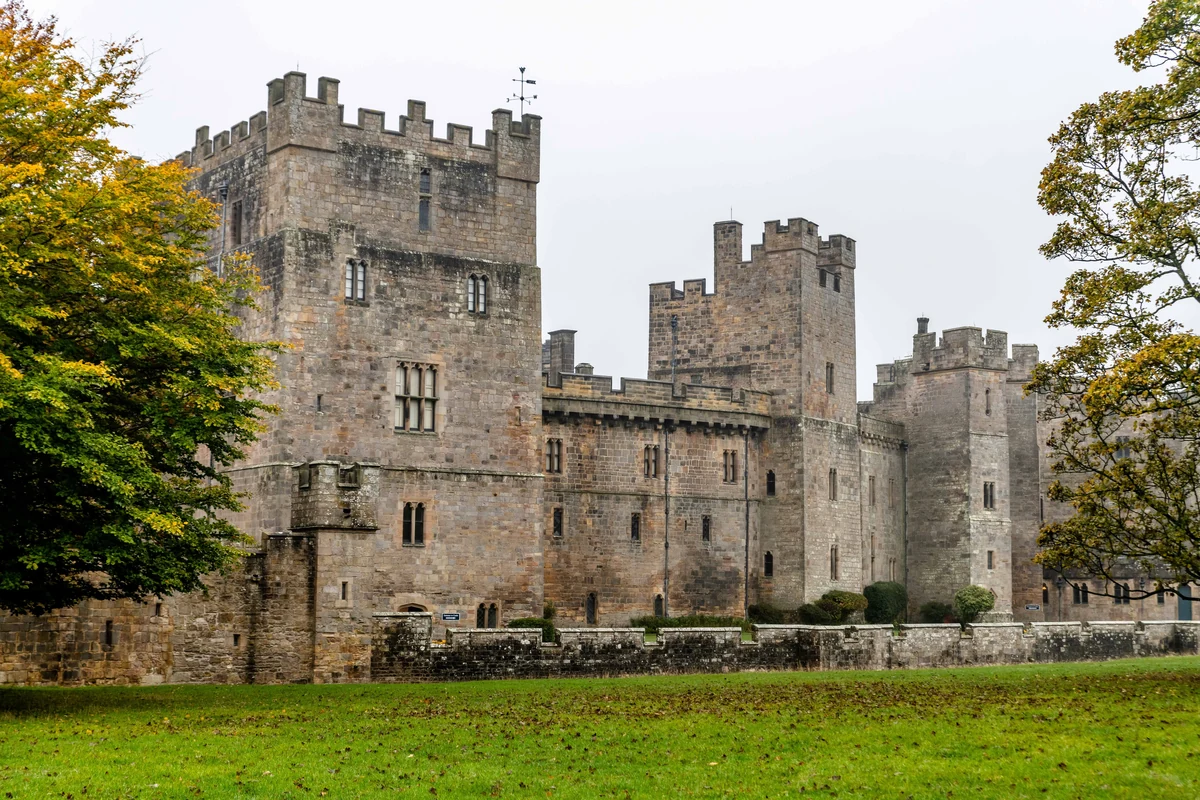

Professional IQ testing in County Durham – whether you need an assessment for school, employment, high-attainment or gifted educational planning, or personal insight, we connect you with qualified psychologists in the County Durham area.
Last Updated: October 2026
Child IQ Testing
WISC-V & Stanford-Binet for ages 6–16. Gifted identification, learning profiles.
Adult IQ Testing
Adult cognitive assessment should use an appropriate current UK measure selected for the referral question, age, norms and assessment date.
WISC-V Test
WISC–V UK is a widely used individually administered child cognitive measure with UK normative and validation evidence.
WAIS-IV & WAIS-5 Tests
Wechsler Adult Intelligence Scale® – Fourth Edition (WAIS-IV) and Fifth Edition (WAIS-5) available for adult IQ testing.
Gifted Testing
Explore unusually advanced or uneven reasoning for educational planning and enrichment; verify school admissions requirements separately.
Stanford-Binet 5
Stanford-Binet Intelligence Scales Fifth Edition – comprehensive cognitive assessment for all ages.
Mensa Testing
British Mensa qualification guidance: verify the current supervised-test and prior-evidence requirements directly with Mensa before commissioning private testing.
Full Evaluation
Combined assessment with detailed report and recommendations. Includes WISC-V, WAIS-IV, WAIS-5, or Stanford-Binet 5 as appropriate.
IQ Testing in County Durham: local-authority context
County Durham covers approximately 862.7 square miles of land. The directory population supplied for this build is 543,515; for additional context, the guide notes an official census-scale population of about 522,100 (2021 Census). Boundary definitions and estimate dates can differ, so these figures should not be treated as interchangeable.
Professional cognitive assessment in County Durham should be interpreted within the legal, educational and cultural framework of England and the wider UK. The psychologist should identify the exact test edition, document language and education history, consider health or disability factors and report confidence intervals rather than reducing a person to one score.
IQ by gender & ethnicity
Across the local-authority population, the approximate sex distribution used for contextual discussion is 50.8% female and 49.2% male. Modern cognitive testing is designed and normed to limit systematic sex bias in global scores; an individual can nevertheless show meaningful differences among verbal, visual-spatial, fluid-reasoning, working-memory and processing-speed domains. Local Authority demographics provide context for fair assessment, not a basis for assigning intelligence to groups.
- White ethnic groups: well over 95% of residents; these are contextual population descriptors, not indicators of cognitive ability.
- Asian ethnic groups: a small minority share; these are contextual population descriptors, not indicators of cognitive ability.
- Black, Black British, Caribbean or African: a small minority share; these are contextual population descriptors, not indicators of cognitive ability.
- Mixed or Multiple ethnic groups: a small minority share; these are contextual population descriptors, not indicators of cognitive ability.
- Other ethnic groups: a small minority share; these are contextual population descriptors, not indicators of cognitive ability.
- Education: County Durham includes Durham University, further-education colleges, former mining communities, market towns and extensive rural areas. Educational opportunity and qualification patterns vary significantly, so assessment must centre on personal history rather than a local-authority average.
- Language and culture: home language, language of schooling, migration history where relevant, disability, sensory or motor needs and familiarity with formal testing should be considered before interpreting scores.
Demographic statistics cannot substitute for an individual clinical history. A responsible report explains which contextual factors could affect validity and separates measured performance from unsupported assumptions about sex, ethnicity, income, postcode or social background.
What is professional IQ testing?
Intelligence quotient (IQ) testing is a standardised method to measure human cognitive abilities and intellectual potential. Professional IQ tests are administered by qualified psychologists in a controlled environment to ensure accuracy and reliability. Unlike online quizzes, clinical assessments provide a full-scale IQ score along with detailed breakdowns of verbal comprehension, perceptual reasoning, working memory, and processing speed.
In County Durham, IQ testing is commonly used for high-attainment or gifted educational planning, learning disability identification, career guidance, neuropsychological evaluation, and personal development. The results are presented in a comprehensive report that includes normative comparisons, strengths and weaknesses, and actionable recommendations.
Who should get tested?
IQ testing can benefit children, adolescents, and adults in various situations:
- Children: Families may seek testing to understand unusually advanced or uneven learning, contribute to a broader educational assessment, or clarify school-related questions; admissions and support requirements must be checked separately.
- Adults: People may seek testing for clinical or neuropsychological questions, career or study planning, Mensa prior evidence, disability documentation, or personal understanding.
- Mensa candidates: British Mensa uses supervised testing and accepted prior-evidence routes; applicants should verify the current evidence rules before commissioning private testing.
- Clinical referrals: Psychologists may recommend testing as part of a broader neuropsychological evaluation.
Types of IQ tests
Common professionally administered intelligence tests and cognitive batteries include:
- WISC–V UK (Wechsler Intelligence Scale for Children® – Fifth UK Edition): A widely used measure for ages 6:0–16:11 that reports Full Scale IQ and primary index scores under UK publisher guidance.
- WAIS-IV (Wechsler Adult Intelligence Scale® – Fourth Edition): The most widely used adult IQ test for ages 16–90. It measures cognitive functioning across four domains.
- Stanford-Binet Intelligence Scales – Fifth Edition: A comprehensive assessment for ages 2–85, often used for gifted identification and clinical evaluations.
- Gifted Testing: Often includes the WISC-V or Stanford-Binet, plus additional creativity and achievement measures.
- British Mensa: Membership testing and prior-evidence routes are administered under Mensa’s current rules; private clinical assessment serves a different purpose.
How the testing process works
- Initial consultation: Brief phone or video call to discuss your needs and match you with the right psychologist.
- Testing session: In-person or remote testing (depending on the test) with a qualified psychologist. Most sessions last 1–2 hours.
- Scoring and interpretation: The psychologist scores the test and interprets the results in the context of your background and goals.
- Feedback session: A detailed review of your results, including strengths, weaknesses, and practical recommendations.
- Comprehensive report: You receive a written report with all scores, normative comparisons, and actionable next steps.
How much does IQ testing cost in County Durham?
Private fees in County Durham vary with test choice, clinician time, report depth, complexity and whether achievement, attention, adaptive-behaviour or neuropsychological measures are added. A focused cognitive assessment may be quoted in the several-hundred-pound range, while a broad educational or neuropsychological evaluation can cost substantially more. Ask for a written fee that states what is included before booking.
- Confirm the exact instrument and edition: for example WISC–V UK for children or a current UK adult Wechsler edition where clinically appropriate.
- Clarify the report: ask whether the price includes a full written report, confidence intervals, index scores, recommendations and a feedback appointment.
- Check acceptance first: schools, universities, examination bodies, employers, courts and Mensa can apply different documentation rules.
- NHS or local-authority routes: assessment may sometimes be available without a private fee when clinically or educationally indicated, but eligibility, waiting times and scope differ.
- Private medical insurance: coverage is policy-specific and often depends on the clinical reason and provider recognition; obtain authorisation before assuming reimbursement.
In County Durham, the usefulness of an IQ test depends as much on the quality of the referral question and interpretation as on the score itself, particularly when long travel or rural access affects the testing day.
County Durham’s Intellectual History & Legacy
County Durham’s intellectual history includes Durham University, mining engineering, industrial communities, teacher education, medicine and public-health research. Contemporary cognitive assessment across the local-authority must balance rigorous psychometrics with practical realities of rural access and varied educational opportunity.
The most useful legacy for present-day testing is methodological: standardisation, reliability, validity, transparent limits and professional ethics. Historical psychometrics also contains serious examples of misuse, so location pages should avoid claims that rank demographic groups or imply that one test score defines human worth.
Top Employers and Cognitive Demands in County Durham
County Durham employers do not ordinarily require applicants to submit clinical IQ scores. Recruitment may use aptitude, situational-judgement, numerical, verbal, coding or work-sample assessments, which serve different purposes from a clinical intelligence test.
- Advanced manufacturing: roles can draw on different combinations of reasoning, communication, working memory, accuracy, learning speed and domain knowledge.
- Health and social care: roles can draw on different combinations of reasoning, communication, working memory, accuracy, learning speed and domain knowledge.
- Education: roles can draw on different combinations of reasoning, communication, working memory, accuracy, learning speed and domain knowledge.
- Logistics and distribution: roles can draw on different combinations of reasoning, communication, working memory, accuracy, learning speed and domain knowledge.
- Public administration: roles can draw on different combinations of reasoning, communication, working memory, accuracy, learning speed and domain knowledge.
- Tourism and heritage: roles can draw on different combinations of reasoning, communication, working memory, accuracy, learning speed and domain knowledge.
- Energy and renewables: roles can draw on different combinations of reasoning, communication, working memory, accuracy, learning speed and domain knowledge.
- Construction and engineering: roles can draw on different combinations of reasoning, communication, working memory, accuracy, learning speed and domain knowledge.
A psychologist’s cognitive assessment is most appropriate when there is a genuine clinical, educational, disability, forensic or self-understanding question. It should not be marketed as a routine hiring credential.
County Durham IQ Testing by Area
Assessment demand is distributed across County Durham rather than concentrated in a single neighbourhood. Representative access points include Durham City and nearby communities, Chester-le-Street, Consett and northwest Durham, Bishop Auckland, Newton Aycliffe, Seaham and east Durham, Barnard Castle and Teesdale, and rural communities across County Durham.
Choose a provider for clinical fit, credentials, test expertise, accessibility and report acceptance rather than for a postcode keyword. For children, travel time and school-day fatigue can affect test-day behaviour; for adults, work schedules, medication timing and sensory needs can be equally important.
County Durham Universities and Research Institutions
County Durham has a large higher-education and research community. Institutions include Durham University, New College Durham, East Durham College and other further-education provision.
- Psychology and neuroscience: university departments conduct research on cognition, development, mental health, learning and brain function.
- Student support: university disability and wellbeing services may request evidence tailored to functional impact; an IQ score by itself rarely answers the entire accommodations question.
- Graduate training: doctoral, professional and research programmes create demand for careful career planning, learning-disability assessment and clinically indicated cognitive evaluation.
- Research participation: experimental cognitive tasks used in research are not automatically equivalent to an individually administered clinical IQ assessment.
County Durham Economic Context
Cognitive assessment sits within a wider labour, education and healthcare environment. The figures below use recent ONS/Nomis releases and should be read as county context rather than predictors of any individual’s test performance.
- Directory population: 543,515 is the figure supplied for this build; local-authority and council-area statistical definitions can vary.
- Land area: approximately 862.7 square miles, so access and travel are materially different from compact urban areas.
- Manufacturing: advanced manufacturing, engineering and supply-chain businesses remain major economic strengths.
- Education: Durham University gives the local-authority a substantial research and student economy alongside colleges and schools.
- Health and care: NHS and social-care services are major employers across dispersed communities.
- Tourism and heritage: Durham Cathedral and Castle, Beamish, the Durham Dales and other attractions support visitor activity.
- Logistics: strategic road connections support distribution and industrial employment.
- Regional strengths: manufacturing, education, health, heritage tourism, logistics, energy and public services.
Income, occupation and educational attainment can shape access to assessment, schooling and healthcare, but they should never be used as proxies for a person’s cognitive ability. A valid evaluation focuses on the examinee, the referral question and the psychometric evidence.
County Durham School and Education Data
Durham Local Authority Council is the local authority across a large local-authority, alongside academy trusts, maintained schools, special schools and independent provision. Rural distance and cross-local-authority travel can affect access to educational psychology and private assessment.
- Local Authority geography: rural travel can affect access to specialist schools, educational psychology and private clinicians.
- Local governance: Durham Local Authority Council retains statutory SEND functions while many schools operate through academy trusts.
- EHCP evidence: cognitive results can be part of a wider educational-needs picture but are not a stand-alone statutory threshold.
- Access arrangements: current JCQ and awarding-body rules and evidence of normal way of working remain central.
- Transitions: movement between rural schools, colleges, apprenticeships and university can create different documentation requirements; confirm them before testing.
A private cognitive score can add useful information when the referral question is clear, but it does not automatically create school eligibility, an Education, Health and Care Plan, an examination access arrangement or selective-school admission. The relevant school, local authority, awarding body or programme makes its own decision under its published criteria.
Local Testing Centres and Psychologists
One option within County Durham that meets the requested address and local-telephone criteria is Select Psychology – Durham, private psychology clinic with a Durham-based Chartered Psychologist offering cognitive assessment and WAIS-IV administration/interpretation, at Durham Workspace, Abbey Road, Pity Me, County Durham, DH1 5JZ. Its published local telephone number is 0191 258 0008. Victoria Parkinson’s profile lists cognitive assessment and WAIS-IV administration and interpretation, with sessions at the Durham clinic. Confirm current availability, age range and whether WAIS-IV or a newer UK-appropriate adult measure is selected for the referral question.
Provider information, staff, test editions, referral routes and availability can change. Check the practitioner’s relevant HCPC registration where a protected practitioner-psychologist title is used, and confirm in advance that the receiving school, university, employer, court or membership organisation will accept the resulting documentation.
County Durham Events and Conferences
Relevant professional and public events vary by year, but recurring sources of learning include:
- Durham University psychology seminars and conferences: schedules and eligibility should be checked with the organiser.
- County Durham education and SEND events: schedules and eligibility should be checked with the organiser.
- NHS professional-development sessions: schedules and eligibility should be checked with the organiser.
- regional British Psychological Society events: schedules and eligibility should be checked with the organiser.
- British Mensa activities accessible in North East England: schedules and eligibility should be checked with the organiser.
Conference attendance is not a substitute for a clinical appointment, but professional events help practitioners keep current with assessment standards, neurodiversity, ethics, digital administration and culturally responsive practice.
Transportation and Accessibility
County Durham is geographically broad. The A1(M), A19 and A66 are key road corridors; the East Coast Main Line serves Durham, while local rail and bus coverage varies across rural communities. Long journeys and winter weather should be factored into test-day planning.
- Before the appointment: check the route, accessible entrance, parking or station lifts, and allow a buffer for delays.
- Sensory access: ask about a quiet waiting area, lighting, noise and break arrangements if these affect performance.
- Mobility and communication: discuss wheelchair access, hearing or visual needs and interpreter requirements in advance without altering standardised test conditions improperly.
- Children: avoid squeezing a long assessment between school and another demanding activity when a calmer time is available.
County Durham Weather and Seasonal Considerations
County Durham has a cool temperate climate, with coastal, valley and upland conditions differing considerably. Snow, ice, fog and heavy rain can affect rural and Pennine routes, so avoid schedules that create fatigue before a long cognitive assessment.
- Testing environment: the room should be quiet, comfortably lit and temperature-controlled regardless of outdoor conditions.
- Preparation: normal sleep, food, hydration and prescribed medication routines are more useful than practising test items.
- School-year timing: demand can rise around admissions, SEND reviews, examination access-arrangement deadlines and transitions between schools or university stages.
- Severe disruption: if transport problems, illness or extreme fatigue would materially affect performance, discuss rescheduling with the clinician.
Areas we serve
We support all areas of County Durham. Exact appointment locations, age ranges, accessibility, language capability and test availability vary by provider, so confirm those practical details before travelling.
Frequently Asked Questions
For IQ work in County Durham, choose a practitioner whose training and current scope match the referral question. Protected practitioner-psychologist titles such as clinical psychologist and educational psychologist require HCPC registration, and the clinician should also have practical competence with the proposed instrument and age group.
The instrument should follow the purpose of the IQ assessment rather than the other way around. The psychologist should consider age, language history, disability, prior testing, the decision the report must support and whether the receiving organisation accepts the proposed UK edition.
A focused IQ cognitive battery may take roughly one to two hours, but intake history, breaks, additional achievement or neuropsychological measures, scoring and feedback can extend the visit. Ask for the expected face-to-face time and total turnaround before arranging travel across County Durham.
A useful IQ report identifies the exact test and edition, explains index and overall scores with confidence intervals, records relevant behavioural observations, states interpretive limitations and links recommendations to the original referral question. It should not reduce the person being assessed to one number.
Fees vary with clinician time, instrument licensing, complexity, records reviewed and report depth. Request a written quotation showing whether consultation, testing, scoring, feedback, a full report, school or professional liaison, travel and any follow-up letter are included.
Possibly, when the assessment is clinically or educationally indicated and fits the relevant pathway. NHS services, local authorities, schools and academy trusts use their own referral criteria; private testing is a separate route and does not automatically create statutory SEND, admissions or treatment entitlement.
Some interviews, questionnaires and feedback can be conducted online, while certain standardised measures have controlled digital or telepractice options. The examiner must decide whether remote administration preserves validity for the exact IQ instrument, individual and intended use.
Preparation for IQ assessment should protect normal performance rather than train test content: aim for usual sleep, meals, hydration, prescribed medication routines, glasses or hearing aids, and an unhurried journey. Bring relevant reports and disclose recent illness, major stress or previous exposure to the same instrument.
No. An IQ score can contribute useful cognitive evidence, but diagnosis normally requires history, functional information and additional measures chosen for the clinical or educational question. Large score differences can be meaningful, yet they must be interpreted with the rest of the evidence.
Acceptance depends on the receiving organisation and the purpose. Before paying for IQ testing, obtain its current requirements for practitioner credentials, test edition, recency, score format and supporting documentation so that the assessment is commissioned to the correct standard.
Retesting intervals depend on the instrument, practice effects, age, clinical need and the policy of the organisation requesting evidence. The psychologist should review previous test dates and manuals before repeating an IQ measure, rather than scheduling a new administration simply to chase a different score.
Trustworthy IQ interpretation combines standardised administration, suitable norms, examiner competence, transparent uncertainty and a clear referral question. Be cautious of guaranteed scores, promises that every high result will secure admission or membership, or reports that omit the exact instrument and professional rationale.