
IQ Testing in Barnsley
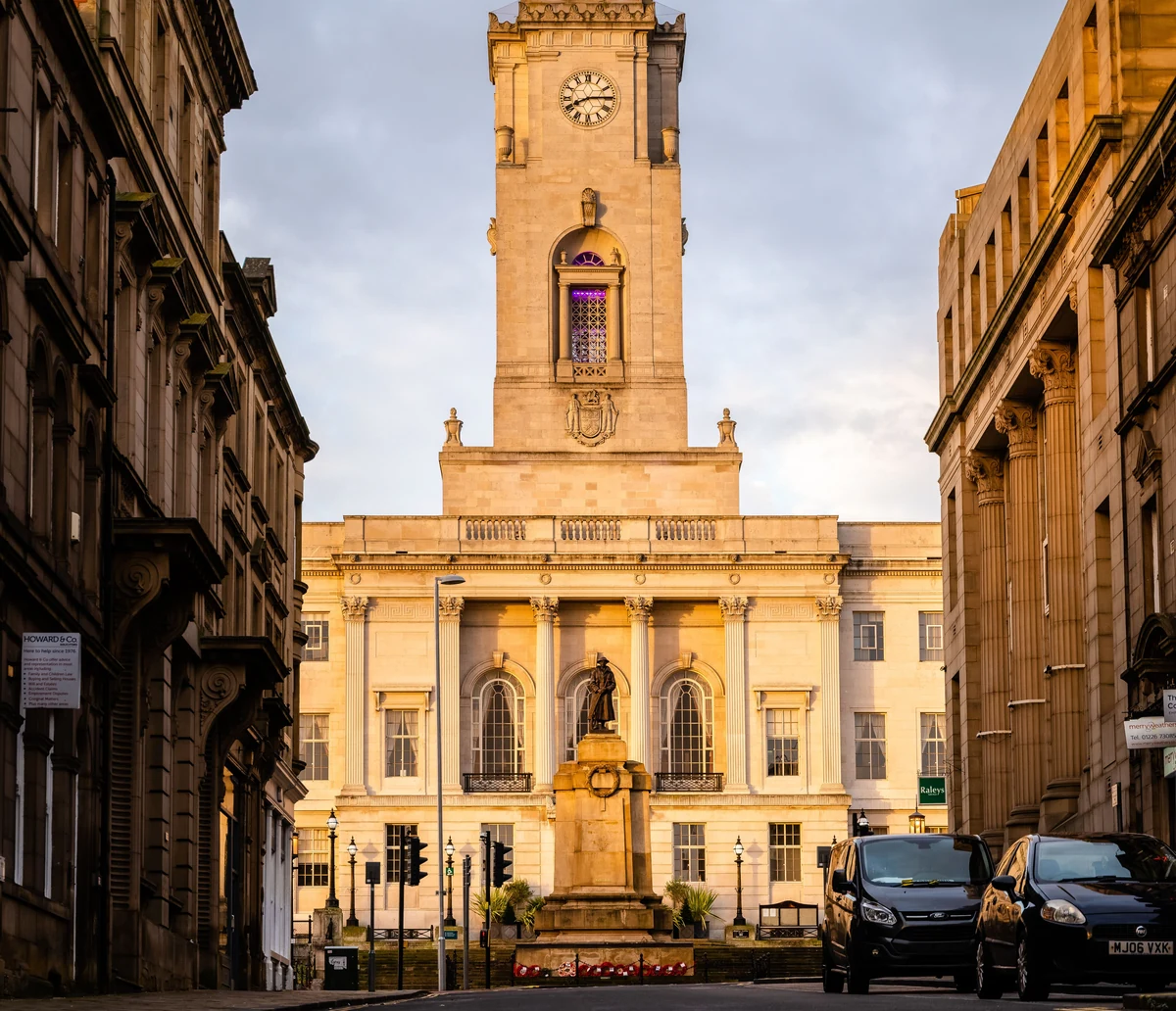

Professional IQ testing in Barnsley – whether you need an assessment for school, employment, advanced-learning provision eligibility, or personal insight, we connect you with HCPC-registered psychologists in the Barnsley area.
Last Updated: October 2026
Child IQ Testing
WISC-V & Stanford-Binet for ages 6–16. Gifted identification, learning profiles.
Adult IQ Testing
WAIS assessment options vary by provider. Adult cognitive assessment information; confirm local scope and referral route.
WISC-V Test
WISC-V provides an age-normed child cognitive profile across several reasoning and processing domains and is widely used in educational and clinical assessment.
WAIS-IV & WAIS-5 Tests
Wechsler Adult Intelligence Scale® – Fourth Edition (WAIS-IV) and Fifth Edition (WAIS-5) available for adult IQ testing.
Gifted Testing
Identify giftedness for school placement, enrichment, and talent programmes using WISC-V or Stanford-Binet.
Stanford-Binet 5
Stanford-Binet Intelligence Scales Fifth Edition – comprehensive cognitive assessment for all ages.
Mensa Testing
Mensa admission testing and preparation for the high-IQ society. Accepts WAIS-IV, WAIS-5, and Stanford-Binet 5 scores.
Full Evaluation
Combined assessment with detailed report and recommendations. Includes WISC-V, WAIS-IV, WAIS-5, or Stanford-Binet 5 as appropriate.
IQ Testing in Barnsley: city context
Barnsley covers approximately 127.1 square miles of land. The population figure supplied for this location is 254,879. Local statistics and service references on this page use the Barnsley Metropolitan Borough Council geography, rather than a looser surrounding-area definition.
The listed population-change figure is 0.62%.
Current demographic context for Barnsley is included to support equitable planning for residents; demographic categories are not evidence that any group has a particular IQ or cognitive profile.
IQ by gender & ethnicity
Sex profile: approximately 51.0% female and 49.0% male in the relevant recent local population profile. Modern cognitive tests use age-referenced norms and do not apply a local male-versus-female correction. Gender statistics are therefore useful for service planning, not score prediction.
Relevant demographic and educational context includes:
- White residents: approximately 97%
- Asian residents: approximately 1%
- Black residents: under 1%
- Mixed ethnic groups: approximately 1%
- Other ethnic groups: under 1%
- Language and cultural context: English is the main language for the large majority of Barnsley residents, but individual language, literacy, migration and educational histories still need to be considered rather than assumed from borough-level averages.
For an individual in Barnsley, a qualified psychologist should interpret results alongside language background, educational opportunity, disability or health factors, sensory and motor needs, neurodevelopmental history, emotional state, testing conditions and the exact referral question. This is more defensible than making assumptions from postcode, ethnicity, sex, income or neighbourhood.
What is professional IQ testing?
Intelligence quotient (IQ) testing is a standardised method to measure human cognitive abilities and intellectual potential. Professional IQ tests are administered by HCPC-registered psychologists in a controlled environment to ensure accuracy and reliability. Unlike online quizzes, clinical assessments provide a full-scale IQ score along with detailed breakdowns of verbal comprehension, perceptual reasoning, working memory, and processing speed.
In Barnsley, IQ testing is commonly used for advanced-learning provision admission, learning disability identification, career guidance, neuropsychological evaluation, and personal development. The results are presented in a comprehensive report that includes normative comparisons, strengths and weaknesses, and actionable recommendations.
Who should get tested?
IQ testing can benefit children, adolescents, and adults in various situations:
- Children: Parents often seek testing for school readiness, gifted placement, or to understand learning challenges.
- Adults: Many adults take IQ tests for career advancement, graduate study applications, or personal curiosity.
- Mensa candidates: High-IQ societies require official test scores for membership.
- Clinical referrals: Psychologists may recommend testing as part of a broader neuropsychological evaluation.
Types of IQ tests
We offer the most recognized and scientifically validated intelligence tests in the field:
- WISC-V (Wechsler Intelligence Scale for Children® – Fifth Edition): The gold standard for children aged 6:0–16:11. It provides a Full-Scale IQ and five primary index scores.
- WAIS-IV (Wechsler Adult Intelligence Scale® – Fourth Edition): The most widely used adult IQ test for ages 16–90. It measures cognitive functioning across four domains.
- Stanford-Binet Intelligence Scales – Fifth Edition: A comprehensive assessment for ages 2–85, often used for gifted identification and clinical evaluations.
- Gifted Testing: Often includes the WISC-V or Stanford-Binet, plus additional creativity and achievement measures.
- Mensa Testing: We explain British Mensa’s supervised-testing and prior-evidence pathways, including when a professionally administered cognitive report may be relevant.
How the testing process works
- Initial consultation: Brief phone or video call to discuss your needs and match you with the right psychologist.
- Testing session: In-person or remote testing (depending on the test) with a HCPC-registered psychologist. Most sessions last 1–2 hours.
- Scoring and interpretation: The psychologist scores the test and interprets the results in the context of your background and goals.
- Feedback session: A detailed review of your results, including strengths, weaknesses, and practical recommendations.
- Comprehensive report: You receive a written report with all scores, normative comparisons, and actionable next steps.
How much does IQ testing cost in Barnsley?
Private IQ assessment prices in Barnsley vary according to the psychologist’s professional registration, test battery, age of the client, complexity of the referral question and the amount of written interpretation required. As a practical UK planning range, a focused standardised cognitive assessment may often fall around £450–£900, while a broader psychoeducational or neuropsychological evaluation can be £900–£2,000+. These are planning ranges, not quotes from the local contact.
Ask what is included: testing time, scoring, feedback, report length, school or workplace recommendations and follow-up calls may be priced differently. Check the receiving organisation first: schools, universities, employers, examination bodies and high-IQ societies can impose different rules about accepted tests, editions, recency and examiner credentials.
NHS or council pathways: publicly funded psychological assessment is normally based on clinical or educational need and referral criteria rather than a consumer request for an IQ number. VAT and cancellation terms: confirm the final written fee, deposit, cancellation policy and any charge for additional letters before the appointment.
Barnsley's Intellectual History & Legacy
Barnsley’s local intellectual context reflects mining, manufacturing, civic education and the changing South Yorkshire economy. The borough’s colleges, health services and cultural institutions support learning and professional development while modern assessment avoids stereotypes based on industrial or socioeconomic history.
- Education and research: Barnsley College and regional higher-education links contribute to local learning and professional-development pathways.
- Health and psychology: Barnsley Hospital NHS Foundation Trust and education services create multidisciplinary routes in which cognitive evidence may sometimes be relevant.
- Interpretation principle: local heritage, occupation and educational opportunity can shape experience, but none provides a valid shortcut to an individual intelligence score.
Top Employers in Barnsley and Cognitive Testing
Important employment activity in Barnsley includes advanced manufacturing, logistics and distribution, health and social care, public services and education, construction and food, digital and business services. A clinical IQ assessment is not a universal hiring instrument, and employer aptitude tests should not be treated as substitutes for an individually administered cognitive battery.
- Major local employers and sectors: Barnsley Council and public services; Barnsley Hospital NHS Foundation Trust; Barnsley College and education providers; manufacturing businesses; logistics and distribution employers near the M1 corridor.
- Job relevance: selection methods should measure capabilities genuinely connected to the role and be applied consistently under UK equality and employment law.
- Neurodiversity: a cognitive profile may help a person understand strengths and support needs, while workplace decisions should focus on functional evidence and reasonable adjustments.
- Career planning: results are most useful when integrated with qualifications, experience, interests, values, health, preferred working conditions and realistic labour-market information.
- Occupational versus clinical testing: recruitment assessments are designed for selection or development; WAIS, WISC and related instruments answer clinical or educational questions under standardised conditions.
Barnsley IQ Testing by Area
No credible dataset supports neighbourhood-level IQ averages within Barnsley. Practical differences between local areas concern schools, healthcare access, working patterns, referral routes and travel rather than inherent cognitive ability.
- Barnsley town centre: is a practical local hub where travel, schools and service access can influence appointment planning.
- Wombwell: has its own mix of schools, work patterns and transport connections, so journey time should be checked before a multi-session assessment.
- Hoyland: may offer convenient local services, although highly specialist psychology provision can still require travel.
- Penistone: illustrates why access and transport vary inside the same authority without implying any difference in inherent ability.
- Cudworth: can involve different school or health referral pathways depending on age and purpose of assessment.
- Royston: may require advance checks for parking, step-free access, sensory needs or public-transport connections.
- Goldthorpe: shows why postcode is useful for logistics but is not a valid proxy for intelligence or educational potential.
- Dodworth: remains covered by the same principles of standardisation, informed consent and individual interpretation as elsewhere in the authority.
Across different parts of Barnsley, the standards for a professionally administered IQ test should remain consistent even when travel, school access and referral routes vary.
Barnsley Universities and Research Institutions
Barnsley residents can use local education routes and, where relevant, institutions in the wider Yorkshire and the Humber network. Research testing should be distinguished from a psychologist’s individual assessment because purpose, consent, battery selection and documentation can differ.
- Barnsley College: part of the local education or progression landscape; students should verify its own support and evidence requirements.
- South Yorkshire Institute of Technology – Barnsley provision: offers additional regional study or research options; admissions criteria are set by the institution and programme.
- University of Sheffield within the wider regional network: adds further progression or research opportunities in the regional network.
- Barnsley maintained schools and academies: school support and placement decisions should integrate attainment, classroom evidence, developmental needs and the learner’s views rather than apply a blanket IQ threshold.
- Research interpretation: a cognitive measure selected for a study protocol may not be the battery a psychologist would choose for an individual referral.
Barnsley Economic Context
- Population and land context: With 254,879 residents across around 127.1 square miles, Barnsley’s authority area includes the main urban centre, former mining communities and a sizeable rural west.
- Population-change context: the supplied figure is 0.62%.
- Economic strengths: Barnsley’s economic profile includes advanced manufacturing and distribution alongside health, care, education and public services; construction plus food, digital and business-service activity add further technical and service-sector opportunities.
- Education and skills: Barnsley College and other local or regional providers support vocational, academic and adult-learning routes; qualification levels vary across age groups and neighbourhoods.
- Household context: income, employment and deprivation measures describe economic circumstances, not intelligence; a psychologist should never infer cognitive ability from postcode, occupation or household resources.
- Transport and labour-market reach: Barnsley Interchange and local rail stations connecting with Sheffield, Leeds, Huddersfield and surrounding South Yorkshire communities; M1, A61, A628 and A635 strategic routes influence access to work, study and specialist appointments.
- Assessment relevance: local technical, health, education, service and professional roles may create demand for neurodiversity, learning, career or clinical assessment, but a clinical IQ score is not a universal employment screen.
- Access inequality: cost, caring responsibilities, shift work, language needs, disability access and travel time can affect who obtains private assessment; unequal access must not be mistaken for unequal ability.
Barnsley School and Education Data
Barnsley operates within England’s SEND and Education, Health and Care Plan (EHCP) framework. Educational psychology and school-support decisions should answer a defined learning question and integrate cognitive findings with attainment, development, classroom evidence, family information and the learner’s own views.
- Education landscape: Barnsley maintained schools and academies; Barnsley College; South Yorkshire Institute of Technology provision and specialist SEND services.
- High attainment: schools normally use curriculum evidence, teacher assessment and individual learning needs rather than a single authority-wide IQ threshold.
- Additional-support assessment: cognitive testing can clarify a learning profile but should sit alongside attainment, adaptive functioning, developmental history, observations and other relevant specialist evidence.
- Exam access arrangements: IQ alone does not establish entitlement; evidence must match the examination body’s rules and demonstrate relevant functional impact.
- Admissions: selective or independent procedures, where they exist, are institution-specific. Families should confirm whether an independently obtained cognitive report is relevant before paying for testing.
- Transition planning: reports are most useful when recommendations translate into practical teaching, study, workplace or support strategies instead of merely restating a Full Scale IQ.
Local Testing Centres and Psychologists
A local public-sector starting point is Barnsley MBC Educational, Child and Community Psychology Service (ECCPS). The listed contact address is within Barnsley Metropolitan Borough Council, and the telephone number uses the local 01226 area code.
- Enquiry route: use the council Educational, Child and Community Psychology contact details below to confirm eligibility, referral pathway and assessment scope.
- Telephone: 01226 773577.
- Address: PO Box 64, Barnsley S70 9GG.
- Assessment scope: educational psychology services assess cognition and learning when this is relevant to an educational or statutory question, but they do not necessarily offer unrestricted, on-demand standalone IQ testing for every age or purpose.
- Confirm the exact test: ask whether the required WISC, WAIS, Stanford–Binet or alternative cognitive battery can be administered, which edition and norms are used, and whether the written report will satisfy the intended recipient.
- Referral and access: public services usually have defined school, ALN/SEND/ASN or statutory referral pathways. Confirm who can refer, age range, eligibility, waiting times and whether private self-referral is available.
- Report purpose: explain whether the report is needed for education, clinical clarification, workplace support, high-IQ society evidence or personal understanding so the practitioner can judge whether the requested battery is appropriate.
Barnsley Events and Conferences
- Higher-education activity: Barnsley College, South Yorkshire Institute of Technology – Barnsley provision and other regional providers may host lectures, open days, research seminars or professional-development events related to learning, psychology and cognition.
- Health-sector learning: Barnsley Hospital NHS Foundation Trust contributes to the professional environment for health, neurodevelopmental and multidisciplinary practice.
- School and family workshops: SEND/ALN/ASN, neurodiversity, learning and transition events can help families understand support pathways without implying that every learner needs an IQ assessment.
- High-IQ society activities: British Mensa and similar organisations may hold regional events; dates, formats and eligibility rules change and should be checked directly with the organisation.
- Regional conferences: specialist psychology and education events are often organised across South Yorkshire or the wider Yorkshire and the Humber network rather than within one authority boundary.
Transportation and Accessibility
- Rail or rapid transit: Barnsley Interchange and local rail stations connecting with Sheffield, Leeds, Huddersfield and surrounding South Yorkshire communities.
- Strategic roads: M1, A61, A628 and A635 strategic routes.
- Barnsley Interchange: Barnsley Interchange combines rail and bus services in the town centre, making it a practical transfer point for many local journeys to an assessment venue.
- Local rail corridors: Stations at Wombwell, Elsecar, Penistone and Darton extend rail access across the borough, though some residents will still need a bus, taxi or car for the final leg.
- M1 motorway: The M1 gives Barnsley direct north–south motorway access toward Sheffield, Leeds and other regional centres where specialist assessment may also be available.
- A61 and A628 routes: The A61 and A628 carry important cross-borough movements, and their traffic conditions can affect punctuality for residents travelling from outlying communities.
- Bus coverage beyond the centre: Local bus networks serve former mining towns and the more rural western side of the borough, where frequency and journey length can be very different from central Barnsley.
- Test-day planning: allow enough time to arrive settled rather than rushing from work, school or a transport connection.
- Accessibility: confirm step-free access, accessible parking, interpreter arrangements, sensory requirements and other reasonable adjustments before the appointment.
- Remote components: history-taking or feedback may sometimes be remote, but many standardised cognitive measures have administration rules requiring controlled or in-person conditions.
Barnsley Weather and Seasonal Considerations
- Climate: Barnsley has a South Yorkshire climate with cool winters, mild summers and changeable rainfall; exposed western routes toward Penistone can see colder or windier conditions than the town centre.
- Testing environment: a quiet, well-lit room, comfortable temperature, access to water and appropriate breaks matter more to validity than the season.
- Travel: check severe-weather alerts, rail engineering works, strikes and road disruption before an in-person appointment.
- Fatigue and timing: children and adults should avoid a testing time that predictably conflicts with sleep, medication routines, long commutes or a demanding school/work day when alternatives exist.
Areas we serve
Assessment guidance on this page is intended for residents throughout Barnsley.
Practical access can differ across Barnsley town centre, Wombwell, Hoyland, Penistone and other communities, so confirm the actual venue, referral route, age range and appointment format before travelling. The service-area statement is geographical and does not imply that every provider offers every test.
Frequently Asked Questions
A focused cognitive battery often requires roughly 60–120 minutes of direct testing, while a broader evaluation can take several sessions. The psychologist should give an estimate based on age, referral question and breaks.
Private psychologists may accept self-referrals, while council and NHS services usually have defined referral pathways. Ask Barnsley MBC Educational, Child and Community Psychology Service (ECCPS) which referral route and age range apply before relying on the service.
Possibly, but only if the exact test, edition, qualifying score, administration and documentation meet British Mensa’s current rules. Confirm those requirements before testing.
Some interviews and feedback can be remote, but many standardised cognitive tests have controlled-administration requirements. Use only a format permitted by the test publisher and accepted by the organisation receiving the report.
Prioritise normal sleep, food, prescribed medication as directed, glasses or hearing aids if used, and an unhurried arrival. Coaching on test items can undermine validity.
A good feedback session explains the score profile, limitations and practical implications. If a written report is needed, agree its intended audience and delivery date before the assessment.
WISC-V is for children aged 6–16, while WAIS-IV is for adults aged 16–90. Each is normed for its specific age group.
Most IQ tests take between 60 and 90 minutes, plus a feedback session. Allow 2–3 hours total.