
IQ Testing in Topeka

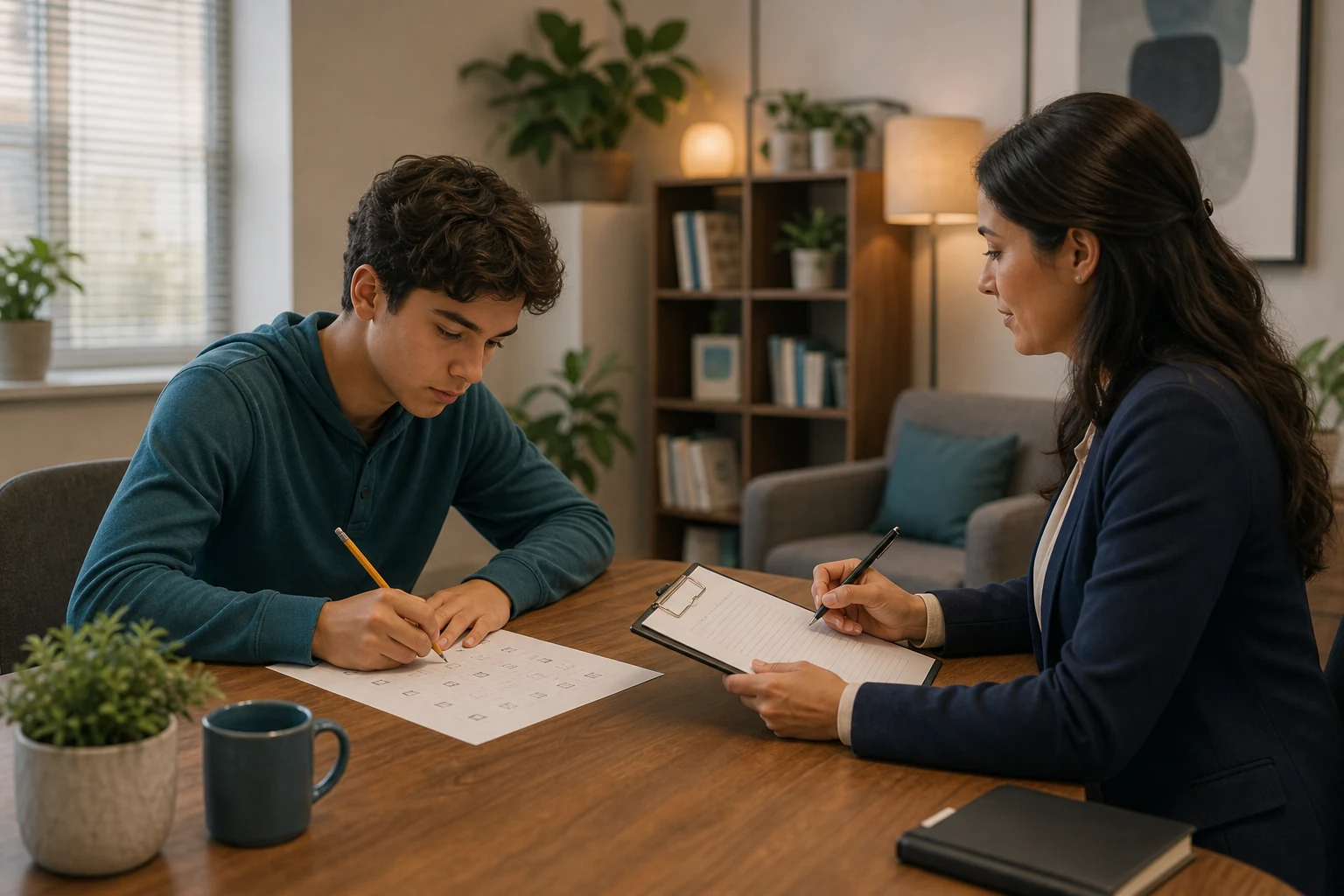
Professional IQ testing in Topeka – whether you need an assessment for school, employment, gifted program eligibility, or personal insight, we connect you with licensed psychologists in the Topeka area.
Last Updated: September 2026
Child IQ Testing
WISC-V & Stanford-Binet for ages 6–16. Gifted identification, learning profiles.
Adult IQ Testing
WAIS-IV & WAIS-5 available. Comprehensive adult cognitive assessments. Clinical & occupational.
WISC-V Test
Wechsler Intelligence Scale for Children® Fifth Edition – the gold standard for child IQ testing.
WAIS-IV & WAIS-5 Tests
Wechsler Adult Intelligence Scale® – Fourth Edition (WAIS-IV) and Fifth Edition (WAIS-5) available for adult IQ testing.
Gifted Testing
Identify giftedness for school placement, enrichment, and talent programs using WISC-V or Stanford-Binet.
Stanford-Binet 5
Stanford-Binet Intelligence Scales Fifth Edition – comprehensive cognitive assessment for all ages.
Mensa Testing
Mensa admission testing and preparation for the high-IQ society. Accepts WAIS-IV, WAIS-5, and Stanford-Binet 5 scores.
Full Evaluation
Combined assessment with detailed report and recommendations. Includes WISC-V, WAIS-IV, WAIS-5, or Stanford-Binet 5 as appropriate.
IQ Testing in Topeka: city context
Topeka is located in Shawnee County, covers 61.45 square miles of land according to 2020 Census geography, and has an estimated 125,786 residents in the 2020–2024 American Community Survey. Its schools, healthcare systems, colleges, and state government, healthcare, education, insurance, food production, tire manufacturing, logistics, retail, and professional services create varied reasons for children and adults to seek professionally administered cognitive assessment.
Testing in Topeka should answer a clear referral question and account for education, language history, culture, health, attention, motivation, sensory needs, and testing conditions. A single score is never a complete description of a person.
IQ by gender & ethnicity
The city population is approximately 51.8% female. Properly normed intelligence tests are designed so broad averages are comparable across sexes. No authoritative city dataset establishes separate Topeka IQ averages by sex, race, ethnicity, neighborhood, or home language.
Current Topeka demographic context from the 2020–2024 ACS includes:
- Hispanic or Latino residents: 16.9%.
- Black residents, non-Hispanic: 8.5%.
- Asian residents, non-Hispanic: 1.5%.
- White residents, non-Hispanic: 65.1%.
- Foreign-born residents: 5.1%.
- Language other than English at home: 9.1% of residents age five and older.
- Educational attainment: 91.7% of adults age 25+ have completed high school or higher, and 29.0% hold a bachelor’s degree or higher.
Group statistics must never be turned into assumptions about an individual. A licensed psychologist selects tests and interprets results in light of the person’s complete background and the intended use of the report.
What is professional IQ testing?
Intelligence quotient (IQ) testing is a standardized method to measure human cognitive abilities and intellectual potential. Professional IQ tests are administered by licensed psychologists in a controlled environment to ensure accuracy and reliability. Unlike online quizzes, clinical assessments provide a full-scale IQ score along with detailed breakdowns of verbal comprehension, perceptual reasoning, working memory, and processing speed.
In Topeka, IQ testing is commonly used for gifted program admission, learning disability identification, career guidance, neuropsychological evaluation, and personal development. The results are presented in a comprehensive report that includes normative comparisons, strengths and weaknesses, and actionable recommendations.
Who should get tested?
IQ testing can benefit children, adolescents, and adults in various situations:
- Children: Parents often seek testing for school readiness, gifted placement, or to understand learning challenges.
- Adults: Many adults take IQ tests for career advancement, graduate school applications, or personal curiosity.
- Mensa candidates: High-IQ societies require official test scores for membership.
- Clinical referrals: Psychologists may recommend testing as part of a broader neuropsychological evaluation.
Types of IQ tests
We offer the most recognized and scientifically validated intelligence tests in the field:
- WISC-V (Wechsler Intelligence Scale for Children® – Fifth Edition): The gold standard for children aged 6:0–16:11. It provides a Full-Scale IQ and five primary index scores.
- WAIS-IV (Wechsler Adult Intelligence Scale® – Fourth Edition): The most widely used adult IQ test for ages 16–90. It measures cognitive functioning across four domains.
- Stanford-Binet Intelligence Scales – Fifth Edition: A comprehensive assessment for ages 2–85, often used for gifted identification and clinical evaluations.
- Gifted Testing: Often includes the WISC-V or Stanford-Binet, plus additional creativity and achievement measures.
- Mensa Testing: We provide official Mensa admission testing and preparation materials.
How the testing process works
- Initial consultation: Brief phone or video call to discuss your needs and match you with the right psychologist.
- Testing session: In-person or remote testing (depending on the test) with a licensed psychologist. Most sessions last 1–2 hours.
- Scoring and interpretation: The psychologist scores the test and interprets the results in the context of your background and goals.
- Feedback session: A detailed review of your results, including strengths, weaknesses, and practical recommendations.
- Comprehensive report: You receive a written report with all scores, normative comparisons, and actionable next steps.
How much does IQ testing cost in Topeka?
The cost of IQ testing in Topeka varies depending on the type of test, the psychologist's experience, and whether a comprehensive report is required. Typical fees range from $200 to $1,200 for a full assessment. Gifted testing and Mensa admission testing are often at the lower end, while neuropsychological evaluations may be higher.
Some insurance plans cover IQ testing when it's deemed medically necessary. We recommend checking with your provider for details. We also offer affordable payment plans and sliding-scale options for qualifying individuals.
Topeka's Intellectual History & Legacy
Topeka’s intellectual life is shaped by Washburn University and Washburn Institute of Technology, its public schools, libraries, healthcare systems, and civic institutions. Their teaching, research, technical training, and public programming create a local culture in which learning and evidence-based assessment matter.
A responsible account of local intellectual history avoids assigning intelligence to places or demographic groups. The useful legacy is institutional: access to education, scholarship, skilled work, libraries, and healthcare expands opportunities for people to develop and demonstrate their abilities.
Top Employers in Topeka Requiring Cognitive Testing
Major employment settings include the State of Kansas, Stormont Vail, USD 501, Washburn University, Hill’s Pet Nutrition, Goodyear, Frito-Lay, and regional logistics employers. None routinely requires an IQ score for ordinary hiring; employers generally use education, licensure, skills, experience, interviews, and job-specific assessments.
Cognitive testing may become relevant for vocational rehabilitation, fitness-for-duty or disability questions, return-to-work planning, or a broader clinical evaluation. The examiner should clarify who will receive the report and whether the proposed battery is appropriate before testing begins.
Topeka IQ Testing by Neighborhood
Residents seek services from across Downtown, College Hill, Oakland, North Topeka, Westboro, and the Wanamaker corridor. Provider choice should be based on credentials, test battery, age specialty, report quality, accessibility, insurance or self-pay terms, and whether the receiving school or organization accepts the results—not on neighborhood branding.
We support all areas of Topeka. Families who travel within Northeast Kansas should ask about parking, public transportation, telehealth limits, and whether all standardized testing must occur in person.
Topeka Universities and Research Institutions
Higher-education resources include Washburn University and Washburn Institute of Technology. Colleges may offer psychology training, accessibility services, educational research, counseling, or referral information, but availability and eligibility vary.
Students seeking accommodations should contact the institution’s accessibility office before testing to learn its documentation rules, acceptable instruments, recency requirements, and deadlines. A general IQ score alone may not establish a disability or justify a specific accommodation.
Topeka Economic Context
- Median household income: $56,956 in the 2020–2024 ACS.
- Per-capita income: $34,089.
- Residents in poverty: 15.7%.
- Bachelor’s degree or higher: 29.0% of adults age 25 and older.
- Mean travel time to work: 16.7 minutes.
- Healthcare context: Stormont Vail Health, The University of Kansas Health System St. Francis Campus, and related outpatient services contribute to clinical and rehabilitation referrals.
- Education and public-sector activity: USD 501, local colleges, and government employers shape accommodation and career-testing needs.
- Commercial activity: the local economy includes state government, healthcare, education, insurance, food production, tire manufacturing, logistics, retail, and professional services.
- Regional strengths: the State of Kansas, Stormont Vail, USD 501, Washburn University, Hill’s Pet Nutrition, Goodyear, Frito-Lay, and regional logistics employers are representative of the employment base.
Income, education, or occupation does not determine an individual’s intelligence. These figures describe the setting in which testing referrals arise and help clinicians understand educational and occupational opportunity—not cognitive potential.
Topeka School District Data
Public-school placement and special-education decisions are handled through Topeka Public Schools USD 501 or the applicable surrounding district. The district—not a marketing page—controls current eligibility rules, evaluation procedures, timelines, and accepted outside reports.
- Gifted and advanced learning: ask USD 501 which measures, rating scales, achievement data, and local criteria apply.
- Special education: a school evaluation may include cognitive, academic, behavioral, language, and adaptive measures chosen for the referral question.
- Independent evaluations: families should confirm examiner qualifications and report requirements before paying for private testing.
Local Testing Centers and Psychologists
A locally matched option is Parish Mental Health, 2930 Southwest Wanamaker Drive, Topeka, KS 66614, (785) 861-7261. The practice offers psychological testing and assessment. Confirm the specific instrument, age range, examiner license, fee, waiting time, and whether the final report will satisfy the intended school, Mensa, legal, or clinical use.
Other referral pathways include Stormont Vail Health, The University of Kansas Health System St. Francis Campus, Washburn University and Washburn Institute of Technology, pediatricians, primary-care clinicians, school psychologists, and licensed private practitioners. Hospital systems may focus on medical neuropsychology rather than stand-alone IQ testing, so prospective clients should ask directly.
Topeka Events and Conferences
Educational workshops, parent programs, professional continuing education, and public lectures may be offered through Washburn University and Washburn Institute of Technology, USD 501, libraries, healthcare systems, and statewide psychological associations.
Event schedules change. A conference or public lecture can provide education but does not replace an individualized evaluation or create a diagnosis.
Transportation and Accessibility
Common access routes include Interstates 70 and 470, US 75, US 24, Topeka Metro buses, Topeka Regional Airport, and Kansas City International Airport. Appointment planning should allow for traffic, parking, mobility access, school schedules, and the length of a multi-hour testing session.
Ask the office in advance about wheelchair access, sensory needs, breaks, interpreter policies, quiet waiting space, and whether testing can be divided across sessions without affecting standardization.
Adults planning a career change may use an IQ test to generate discussion points before selecting a professionally administered aptitude or intelligence battery.
Topeka Weather and Seasonal Considerations
Local planning should account for hot summers, cold winters, strong winds, thunderstorms, tornado risk, and occasional snow and ice. Weather closures, school calendars, travel fatigue, sleep, medication changes, and illness can affect performance and may justify rescheduling.
- Before testing: verify closure notices and arrive rested, fed, and with prescribed sensory aids.
- During testing: tell the examiner about fatigue, discomfort, anxiety, or an interruption so it can be documented.
- After testing: allow time for scoring, interpretation, records review, feedback, and report preparation before an application deadline.
Areas we serve
We support all areas of Topeka. Provider availability, licensing, travel distance, and in-person testing requirements should be confirmed directly.
Frequently Asked Questions
WISC-V is for children aged 6–16, while WAIS-IV is for adults aged 16–90. Each is normed for its specific age group.
Most IQ tests take between 60 and 90 minutes, plus a feedback session. Allow 2–3 hours total.
No, you can book directly with our psychologists. We serve both self-referred and professionally referred individuals.
Potentially. Acceptance depends on the exact test, edition, qualifying score, administration date, examiner credentials, and current Mensa documentation rules. Confirm before testing.
Some plans cover cognitive assessments when there is a clinical indication. Check with your provider.
Get a good night's sleep, eat a healthy meal, and arrive relaxed. No specific preparation is needed.
You'll receive a comprehensive report with your scores and tailored recommendations.
Some interview and feedback components may be available remotely, but many standardized cognitive tests require in-person administration. Confirm with the psychologist and the organization receiving the report.