
IQ Testing in Round Rock
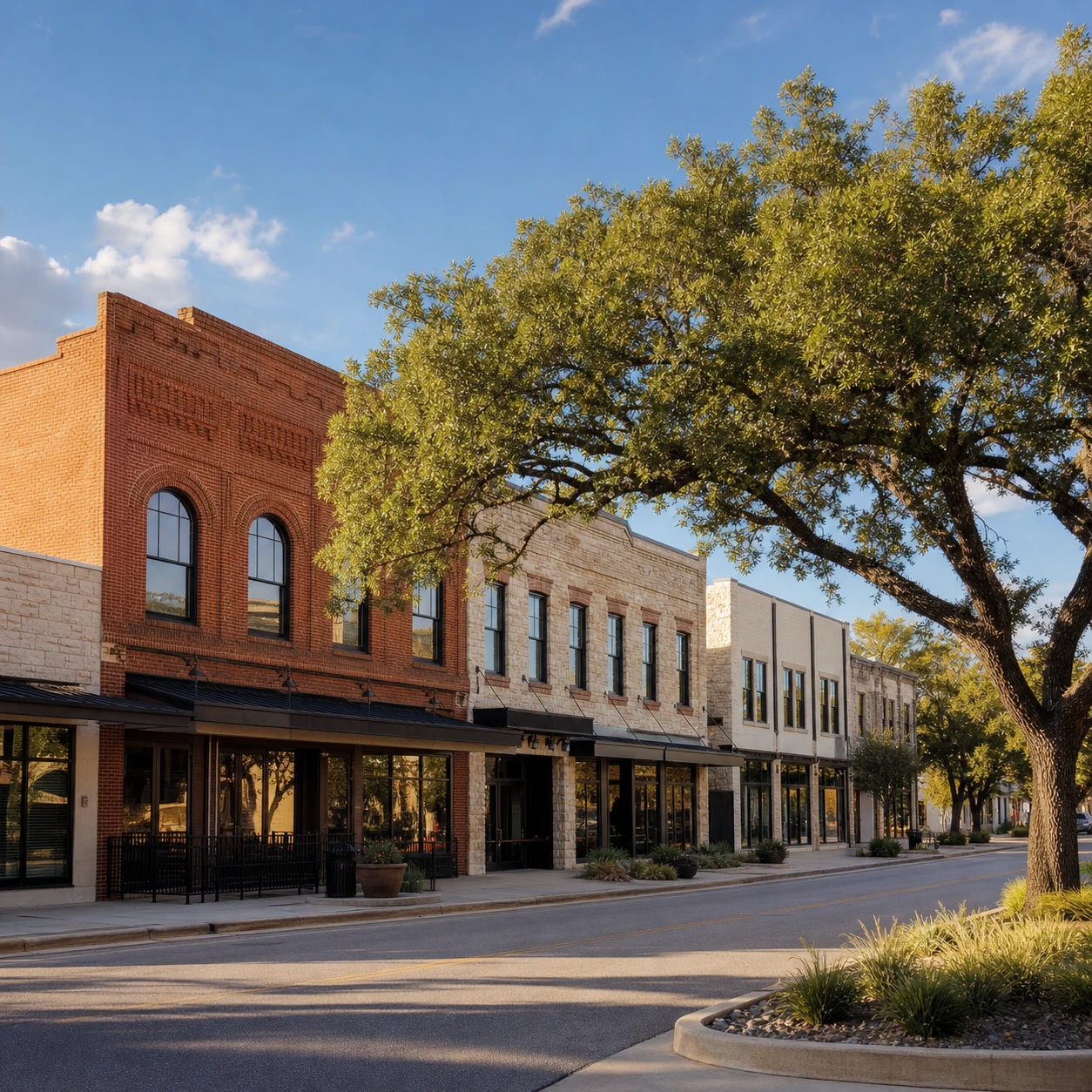
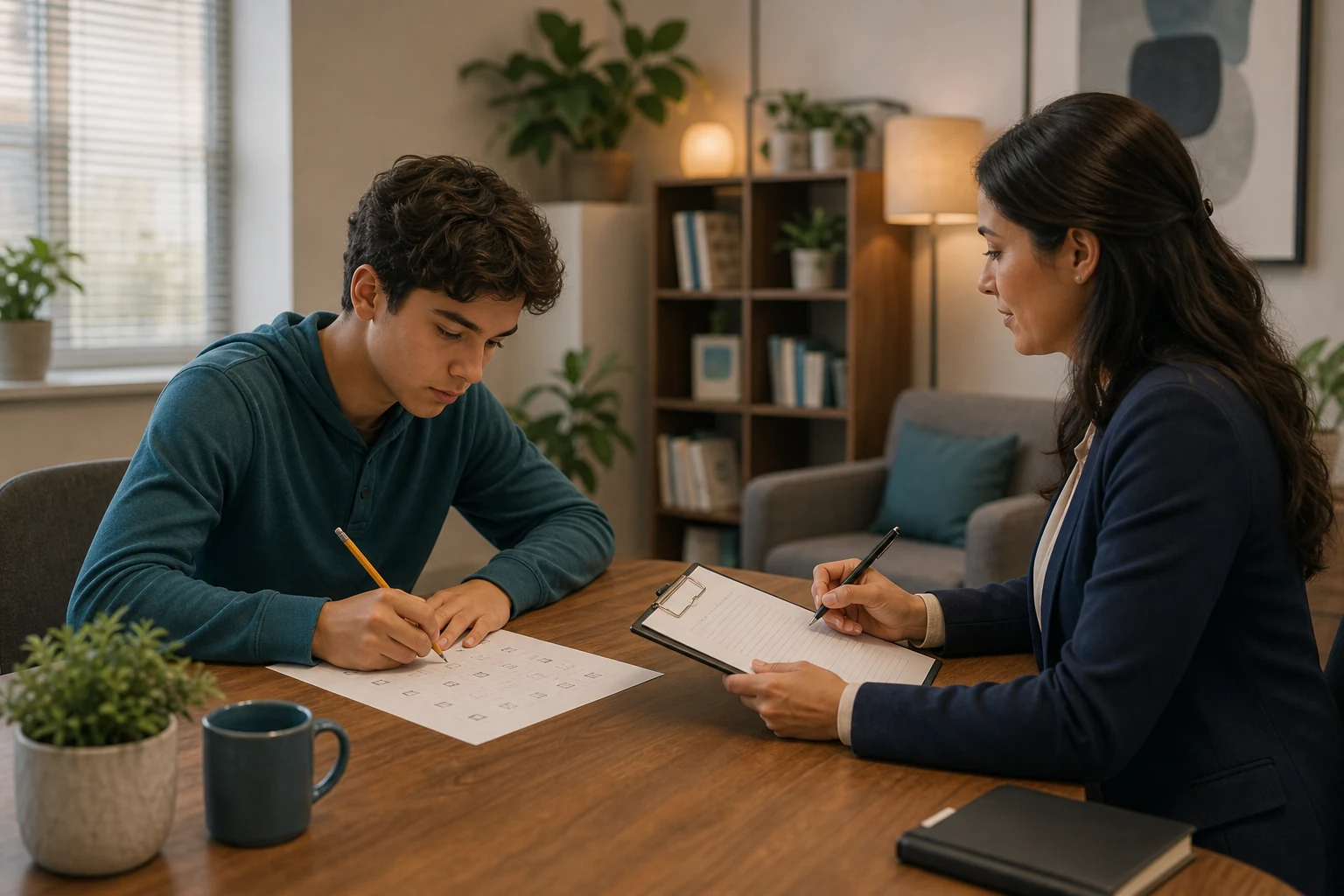
Professional IQ testing in Round Rock – whether you need an assessment for school, employment, gifted program eligibility, or personal insight, we connect you with licensed psychologists in the Round Rock area.
Last Updated: September 2026
Child IQ Testing
WISC-V & Stanford-Binet for ages 6–16. Gifted identification, learning profiles.
Adult IQ Testing
WAIS-IV & WAIS-5 available. Comprehensive adult cognitive assessments. Clinical & occupational.
WISC-V Test
Wechsler Intelligence Scale for Children® Fifth Edition – the gold standard for child IQ testing.
WAIS-IV & WAIS-5 Tests
Wechsler Adult Intelligence Scale® – Fourth Edition (WAIS-IV) and Fifth Edition (WAIS-5) available for adult IQ testing.
Gifted Testing
Identify giftedness for school placement, enrichment, and talent programs using WISC-V or Stanford-Binet.
Stanford-Binet 5
Stanford-Binet Intelligence Scales Fifth Edition – comprehensive cognitive assessment for all ages.
Mensa Testing
Mensa admission testing and preparation for the high-IQ society. Accepts WAIS-IV, WAIS-5, and Stanford-Binet 5 scores.
Full Evaluation
Combined assessment with detailed report and recommendations. Includes WISC-V, WAIS-IV, WAIS-5, or Stanford-Binet 5 as appropriate.
IQ Testing in Round Rock: city context
Round Rock is a fast-growing Central Texas city in Williamson and Travis counties, about 15 miles north of Austin. The U.S. Census Bureau estimated 135,359 residents in 2024, up 13.2% from the 2020 estimates base, across 37.64 square miles of land. The city combines a major technology base, advanced manufacturing, healthcare, education, logistics, hospitality, retail, sports, and professional services.
Local assessment needs reflect Round Rock ISD's Talented and Gifted services, a highly educated commuter workforce, significant language diversity, major healthcare systems, Texas State University's Round Rock Campus, Austin Community College's Round Rock Campus, and families seeking disability documentation, gifted planning, private-school support, graduate education, or career direction. Test selection and interpretation should consider language history, education, culture, disability, health, and testing conditions rather than treating one score as a complete description of ability.
IQ by gender & ethnicity
Round Rock's population is approximately 50.6% female. Standardized intelligence tests are designed so broad male and female averages are similar, while individuals may show different patterns across verbal, visual-spatial, working-memory, fluid-reasoning, and processing-speed tasks. There is no authoritative city dataset establishing separate Round Rock IQ averages by sex, race, ethnicity, neighborhood, or language group.
Current Round Rock demographic context includes:
- Hispanic or Latino residents: 29.7% of the city population.
- Black residents: 11.3% identify as Black alone.
- Asian residents: 8.2% identify as Asian alone.
- White, non-Hispanic residents: 45.9%.
- Foreign-born residents: 17.0%, making migration and educational history relevant to culturally informed interpretation.
- Language other than English at home: 29.2% of residents age five and older.
- Educational attainment: 93.5% of adults age 25+ are high-school graduates or higher, and 44.8% hold a bachelor's degree or higher.
Group demographic statistics should never be converted into assumptions about an individual. A licensed psychologist evaluates the person's full background, language proficiency, referral question, health, education, and behavioral observations when selecting and interpreting tests.
What is professional IQ testing?
Intelligence quotient (IQ) testing is a standardized method to measure human cognitive abilities and intellectual potential. Professional IQ tests are administered by licensed psychologists in a controlled environment to ensure accuracy and reliability. Unlike online quizzes, clinical assessments provide a full-scale IQ score along with detailed breakdowns of verbal comprehension, perceptual reasoning, working memory, and processing speed.
In Round Rock, IQ testing is commonly used for gifted program admission, learning disability identification, career guidance, neuropsychological evaluation, and personal development. The results are presented in a comprehensive report that includes normative comparisons, strengths and weaknesses, and actionable recommendations.
Who should get tested?
IQ testing can benefit children, adolescents, and adults in various situations:
- Children: Parents often seek testing for school readiness, gifted placement, or to understand learning challenges.
- Adults: Many adults take IQ tests for career advancement, graduate school applications, or personal curiosity.
- Mensa candidates: High-IQ societies require official test scores for membership.
- Clinical referrals: Psychologists may recommend testing as part of a broader neuropsychological evaluation.
Types of IQ tests
We offer the most recognized and scientifically validated intelligence tests in the field:
- WISC-V (Wechsler Intelligence Scale for Children® – Fifth Edition): The gold standard for children aged 6:0–16:11. It provides a Full-Scale IQ and five primary index scores.
- WAIS-IV (Wechsler Adult Intelligence Scale® – Fourth Edition): The most widely used adult IQ test for ages 16–90. It measures cognitive functioning across four domains.
- Stanford-Binet Intelligence Scales – Fifth Edition: A comprehensive assessment for ages 2–85, often used for gifted identification and clinical evaluations.
- Gifted Testing: Often includes the WISC-V or Stanford-Binet, plus additional creativity and achievement measures.
- Mensa Testing: We provide official Mensa admission testing and preparation materials.
How the testing process works
- Initial consultation: Brief phone or video call to discuss your needs and match you with the right psychologist.
- Testing session: In-person or remote testing (depending on the test) with a licensed psychologist. Most sessions last 1–2 hours.
- Scoring and interpretation: The psychologist scores the test and interprets the results in the context of your background and goals.
- Feedback session: A detailed review of your results, including strengths, weaknesses, and practical recommendations.
- Comprehensive report: You receive a written report with all scores, normative comparisons, and actionable next steps.
How much does IQ testing cost in Round Rock?
The cost of IQ testing in Round Rock varies depending on the type of test, the psychologist's experience, and whether a comprehensive report is required. Typical fees range from $200 to $1,200 for a full assessment. Gifted testing and Mensa admission testing are often at the lower end, while neuropsychological evaluations may be higher.
Some insurance plans cover IQ testing when it's deemed medically necessary. We recommend checking with your provider for details. We also offer affordable payment plans and sliding-scale options for qualifying individuals.
Round Rock's Intellectual History & Legacy
Round Rock takes its name from the large anvil-shaped limestone rock in Brushy Creek that marked a shallow crossing used by Indigenous travelers, settlers, cattle drives, and the Chisholm Trail. The community developed around transportation, education, agriculture, and commerce before becoming a major Central Texas technology and healthcare center.
Dell Technologies moved its headquarters to Round Rock in the 1990s and helped accelerate the city's technology economy. Today, Texas State University Round Rock Campus, Austin Community College Round Rock Campus, and the Texas A&M Health Science Center support undergraduate, graduate, nursing, health-profession, workforce, and continuing-education pathways. These institutions, together with Round Rock ISD and regional research universities, shape demand for assessment, accommodations, gifted services, and evidence-based educational planning.
The city's educational story also includes the growth of Round Rock ISD, the development of public libraries and civic learning spaces, and close links with Austin's research and technology corridor. These resources do not establish a distinctive local IQ average; they create varied opportunities to develop, demonstrate, and support cognitive strengths across school, work, healthcare, and community life.
Top Employers in Round Rock Requiring Cognitive Testing
Employers do not generally require a clinical IQ test for routine hiring. Some organizations use legally appropriate skills tests, professional examinations, safety assessments, medical fitness evaluations, or role-specific aptitude measures. Major local employment settings include:
- Dell Technologies: Technology, engineering, cybersecurity, analytics, sales, operations, finance, and leadership roles.
- Round Rock Independent School District: Teaching, school psychology, counseling, special education, administration, transportation, and technology.
- Ascension Seton Williamson, Baylor Scott & White, and St. David's Round Rock Medical Center: Clinical, diagnostic, rehabilitation, technical, and administrative careers.
- Emerson and Toppan Photomasks: Engineering, semiconductor, manufacturing, automation, laboratory, and quality-control positions.
- Amazon and UPS: Logistics, warehousing, operations, fleet, safety, and supply-chain functions.
- Kalahari Resorts and Conventions: Hospitality, events, culinary, engineering, management, and guest services.
- Round Rock Premium Outlets, IKEA, and Bass Pro Shops: Retail, merchandising, operations, facilities, and management roles.
- City of Round Rock and Williamson County: Public safety, transportation, planning, utilities, parks, libraries, courts, and administrative services.
- Texas State University, ACC, and Texas A&M Health Science Center: Teaching, research support, healthcare education, student services, information technology, and campus operations.
- Construction and business services: Rapid regional growth supports engineering, architecture, skilled trades, project management, accounting, insurance, and consulting.
- Assessment distinction: Employment aptitude or skills tests are not interchangeable with a clinical IQ test, and disability-related evaluations should be separated from ordinary hiring selection.
Round Rock IQ Testing by Area
No credible dataset supports neighborhood-level IQ averages. Practical differences across Round Rock involve travel routes, school attendance zones, employment centers, language access, and proximity to healthcare or psychological services.
- Downtown and the Main Street area: Historic civic, library, dining, professional, and community-event district.
- Round Rock West and central neighborhoods: Established residential areas near schools, professional offices, Brushy Creek, and I-35.
- University Boulevard and northeast Round Rock: Medical centers, Texas State and ACC campuses, retail, housing, and major employment sites.
- La Frontera and south Round Rock: Dense employment, retail, housing, and SH 45/I-35 access near the Austin boundary.
- Forest Creek and southeast Round Rock: Residential communities with access to SH 130, schools, parks, and healthcare.
- Teravista, Siena, and east-side growth areas: Newer housing, schools, recreation, and expanding commercial services.
- Old Settlers Park and Dell Diamond corridor: Recreation, sports, events, hospitality, and family activity can affect traffic and appointment timing.
- Brushy Creek and Chisholm Trail areas: Parks, trails, established neighborhoods, and historic resources connect central and western parts of the city.
- Planning principle: Choose an evaluator for credentials, test fit, language capacity, and report acceptance—not merely the closest ZIP code.
Round Rock Universities and Research Institutions
- Texas State University Round Rock Campus: Flexible undergraduate and graduate programs designed for Central Texas students and working professionals.
- Austin Community College Round Rock Campus: Transfer, workforce, science, technology, health, business, and general-education programs.
- Texas A&M Health Science Center in Round Rock: Health-profession education and regional medical training.
- Round Rock ISD: Advanced academics, Talented and Gifted services, career and technical education, dual credit, and college-readiness pathways.
- Regional research access: The University of Texas at Austin and Texas State's San Marcos campus expand nearby options in psychology, neuroscience, education, engineering, medicine, and public health.
- Disability services: College students seeking accommodations should ask each institution which diagnoses, functional evidence, test editions, evaluator credentials, and report dates it accepts.
- Graduate planning: IQ testing is rarely a standard admissions requirement; it is more often used for clinical clarification, disability documentation, learning planning, or career guidance.
- Records: Prior evaluations, transcripts, accommodation histories, language background, and medical information can help a psychologist select an efficient and defensible battery.
People comparing a professionally administered assessment with a general online IQ test should first clarify whether a school, employer, clinician, or membership organization requires supervised scores and a psychologist's report.
Round Rock Economic Context
- Median household income: $99,287 in 2020–2024 Census estimates.
- Per-capita income: $50,365.
- Residents in poverty: 7.8%.
- Bachelor's degree or higher: 44.8% of adults age 25 and older.
- Mean travel time to work: 24.9 minutes, although I-35 and Austin-bound peak traffic can lengthen trips.
- Healthcare and social-assistance activity: Census business data report approximately $1.72 billion in 2022 receipts/revenue within the city.
- Transportation and warehousing: Approximately $120.70 million in 2022 receipts/revenue.
- Retail sales: Approximately $5.58 billion in 2022.
- Accommodation and food services: Approximately $807.65 million in 2022 sales.
- Labor-force participation: 72.2% of residents age 16 and older; female labor-force participation was 65.7%.
- Housing: Owner occupancy was 55.5%, the median owner-occupied home value was $418,600, and median gross rent was $1,763.
- Regional strengths: Technology and computing, innovative manufacturing, life sciences and healthcare, professional and financial services, logistics, education, hospitality, sports, retail, and construction.
Round Rock School District Data
- Round Rock Independent School District: Serves most of the city through elementary, middle, high-school, alternative, and specialized programs; some city addresses fall in neighboring districts, so families should verify attendance boundaries.
- Talented and Gifted services: Round Rock ISD identifies students who show advanced ability or potential relative to peers of similar age, experience, and environment.
- Referral and identification: Parents or guardians use the district's current referral window; universal screening and campus processes vary by grade.
- Multiple measures: Eligibility and placement should be based on the district's current assessment battery and review process, not a single online or privately obtained IQ score.
- Advanced pathways: Honors, Advanced Placement, International Baccalaureate, dual credit, career and technical education, and Early College options offer different forms of acceleration.
- Transfer students: Previously identified students and students new to the district should contact the campus TAG specialist or secondary counselor about records and testing timelines.
- Language and disability: Teams should consider English proficiency, educational opportunity, disability, twice-exceptionality, and culturally responsive evidence.
- Private and charter schools: Admissions, placement, gifted services, and accommodation-documentation rules vary and must be confirmed directly.
- Testing calendar: The district publishes annual referral, universal-screening, assessment, and summer-testing information; dates change and should be checked for the current school year.
- Outside reports: Before paying privately, families should ask the campus whether an outside evaluation will be reviewed and whether the district may conduct additional assessment.
- Program fit: A high score alone does not determine whether acceleration, enrichment, dual credit, or a particular campus program matches a student's academic and emotional readiness.
Local Testing Centers and Psychologists
- Round Rock Child Psychology: Dr. Alexandra Hudson, a licensed psychologist and Licensed Specialist in School Psychology, documents educational, developmental, psychological, learning-disability, and giftedness assessments at 595 Round Rock West Drive, Suite 104, Round Rock, TX 78681; phone (512) 586-9905. Confirm the current age range, test battery, fees, and report requirements before scheduling.
- Round Rock ISD school psychologists: Conduct school-based evaluations when a referral proceeds through district procedures.
- Ascension Seton Williamson: Hospital and specialty services may coordinate neurological, behavioral-health, rehabilitation, and related referrals.
- Baylor Scott & White Medical Center – Round Rock: Medical, neurological, rehabilitation, and specialty care may generate cognitive-assessment referrals.
- St. David's Round Rock Medical Center: Acute, neurological, rehabilitation, and specialty services may refer to appropriate outpatient professionals.
- Private licensed psychologists: Confirm Texas licensure, age range, test qualifications, language competence, report format, school or Mensa acceptance, insurance status, and in-person requirements.
- Child versus adult services: Practices differ in the ages they assess and in whether they offer WISC, WAIS, Stanford-Binet, achievement, ADHD, autism, or neuropsychological batteries.
- Receiving-organization rules: A school, college, licensing body, disability office, court, or Mensa may reject an otherwise valid report if its required test, edition, documentation, or examiner qualification is missing.
- Medical referral questions: Sudden cognitive change, head injury, neurological symptoms, or suspected dementia requires appropriate medical evaluation rather than a stand-alone IQ appointment.
Round Rock Events and Conferences
- Texas State Round Rock programs: Academic departments and professional programs host lectures, information sessions, and continuing education.
- Round Rock ISD family events: TAG parent nights, campus meetings, college planning, and advanced-academic information sessions vary by year.
- Round Rock Public Library: Learning, technology, maker, literacy, youth, and community programming supports curiosity across ages.
- Texas Psychological Association: State professional education covers assessment, ethics, neuropsychology, telehealth, and culturally responsive practice.
- Central Texas Mensa: Local and regional calendars may include social, game, lecture, youth, and testing-related activities; verify current details with the group.
- Medical education: Local health systems and regional universities host professional training relevant to cognition, development, rehabilitation, and mental health.
- Community enrichment: Parks and Recreation, the Arts and Culture program, local museums, youth sports, and maker activities provide routes for developing interests beyond test scores.
- Current schedules: Event calendars, eligibility, costs, and age limits change, so users should verify details with the organizing institution.
Transportation and Accessibility
- Major roads: I-35, SH 45, SH 130, US 79/Palm Valley Boulevard, University Boulevard, FM 620/Round Rock Avenue, and local north-south corridors.
- Round Rock Rides: The city's on-demand shared-ride program serves designated locations within city limits and offers an ADA curb-to-curb option for eligible riders.
- CapMetro: Routes 50, 152, and 980 provide local connections and service toward Tech Ridge and Downtown Austin.
- Round Rock Transit Center: The facility at 300 W. Bagdad Avenue supports park-and-ride and commuter connections.
- CARTS: The Interurban Coach provides regional links that include Round Rock, Austin, San Marcos, Taylor, Texas State University, and Austin-Bergstrom International Airport.
- Driving conditions: I-35 construction, school traffic, large events, and Austin-bound peaks can add substantial time.
- Airport: Austin-Bergstrom International Airport is the primary commercial airport; allow extra time for cross-metro traffic.
- Accessibility: Confirm parking, elevators, accessible entrances, interpreter needs, sensory accommodations, and paratransit timing before an appointment.
- Walking and cycling: Downtown sidewalks and the Brushy Creek trail network may help with some local trips, but major highways and long distances make many appointments car- or transit-dependent.
- Regional travel: Georgetown is immediately north, Pflugerville lies to the southeast, and Downtown Austin is roughly 20 miles south; actual trip time varies greatly with traffic.
- Appointment buffer: Arriving early protects testing validity by reducing stress and prevents a shortened session when I-35 congestion or construction causes delay.
Round Rock Weather and Seasonal Considerations
- Climate: Round Rock has hot summers, generally mild winters, and variable spring and fall weather typical of Central Texas.
- Summer: Extreme heat can affect sleep, hydration, travel, and concentration; morning appointments may be more comfortable.
- Severe weather: Spring thunderstorms, hail, flash flooding, and occasional tornado warnings can disrupt routes and school schedules.
- Winter: Infrequent freezes or ice can create significant travel problems because bridges and elevated roads become hazardous.
- Allergies: Cedar pollen and seasonal allergens can affect sleep and attention; follow usual medical guidance and tell the examiner about symptoms or medications.
- Testing environment: Quiet, well-lit, climate-controlled rooms, planned breaks, hydration, and adequate sleep support valid performance.
- School-cycle demand: Referral windows, accommodation deadlines, admissions planning, and summer availability can affect scheduling.
- Heat and air quality: Outdoor heat, ozone, smoke, or dust may worsen fatigue or respiratory symptoms; plan travel and medication according to medical advice.
- Rescheduling: Severe-weather warnings, power outages, unsafe roads, acute illness, or major sleep disruption may justify postponing rather than producing a less representative score.
- Preparation: Normal sleep, meals, glasses or hearing devices, prescribed medication taken as directed, and relevant records are more useful than coaching on test items.
Areas we serve
We support all areas of Round Rock. Provider location, age range, language capacity, specialty, test inventory, in-person requirements, and acceptance by the receiving organization should be confirmed before scheduling.
Frequently Asked Questions
WISC-V is for children aged 6–16, while WAIS-IV is for adults aged 16–90. Each is normed for its specific age group.
Most IQ tests take between 60 and 90 minutes, plus a feedback session. Allow 2–3 hours total.
Many private practices accept self-referrals, while insurance or specialty clinics may require a referral. Confirm with the selected provider.
Potentially. Acceptance depends on the exact test, edition, qualifying score, administration date, examiner credentials, and current Mensa documentation rules. Confirm before testing.
Some plans cover cognitive assessments when there is a clinical indication. Check with your provider.
Get a good night's sleep, eat a healthy meal, and arrive relaxed. No specific preparation is needed.
You'll receive a comprehensive report with your scores and tailored recommendations.
Some interview and feedback components may be available remotely, but many standardized cognitive tests require in-person administration. Confirm with the psychologist and the organization receiving the report.