
IQ Testing in Daly City
Professional IQ testing in Daly City – whether you need an assessment for school, employment, gifted program eligibility, or personal insight, we connect you with licensed psychologists in the Daly City area.
Last Updated: October 2026
Child IQ Testing
WISC-V & Stanford-Binet for ages 6–16. Gifted identification, learning profiles.
Adult IQ Testing
WAIS-IV & WAIS-5 available. Comprehensive adult cognitive assessments. Clinical & occupational.
WISC-V Test
Wechsler Intelligence Scale for Children® Fifth Edition – the gold standard for child IQ testing.
WAIS-IV & WAIS-5 Tests
Wechsler Adult Intelligence Scale® – Fourth Edition (WAIS-IV) and Fifth Edition (WAIS-5) available for adult IQ testing.
Gifted Testing
Identify giftedness for school placement, enrichment, and talent programs using WISC-V or Stanford-Binet.
Stanford-Binet 5
Stanford-Binet Intelligence Scales Fifth Edition – comprehensive cognitive assessment for all ages.
Mensa Testing
Mensa admission testing and preparation for the high-IQ society. Accepts WAIS-IV, WAIS-5, and Stanford-Binet 5 scores.
Full Evaluation
Combined assessment with detailed report and recommendations. Includes WISC-V, WAIS-IV, WAIS-5, or Stanford-Binet 5 as appropriate.
IQ Testing in Daly City: city context
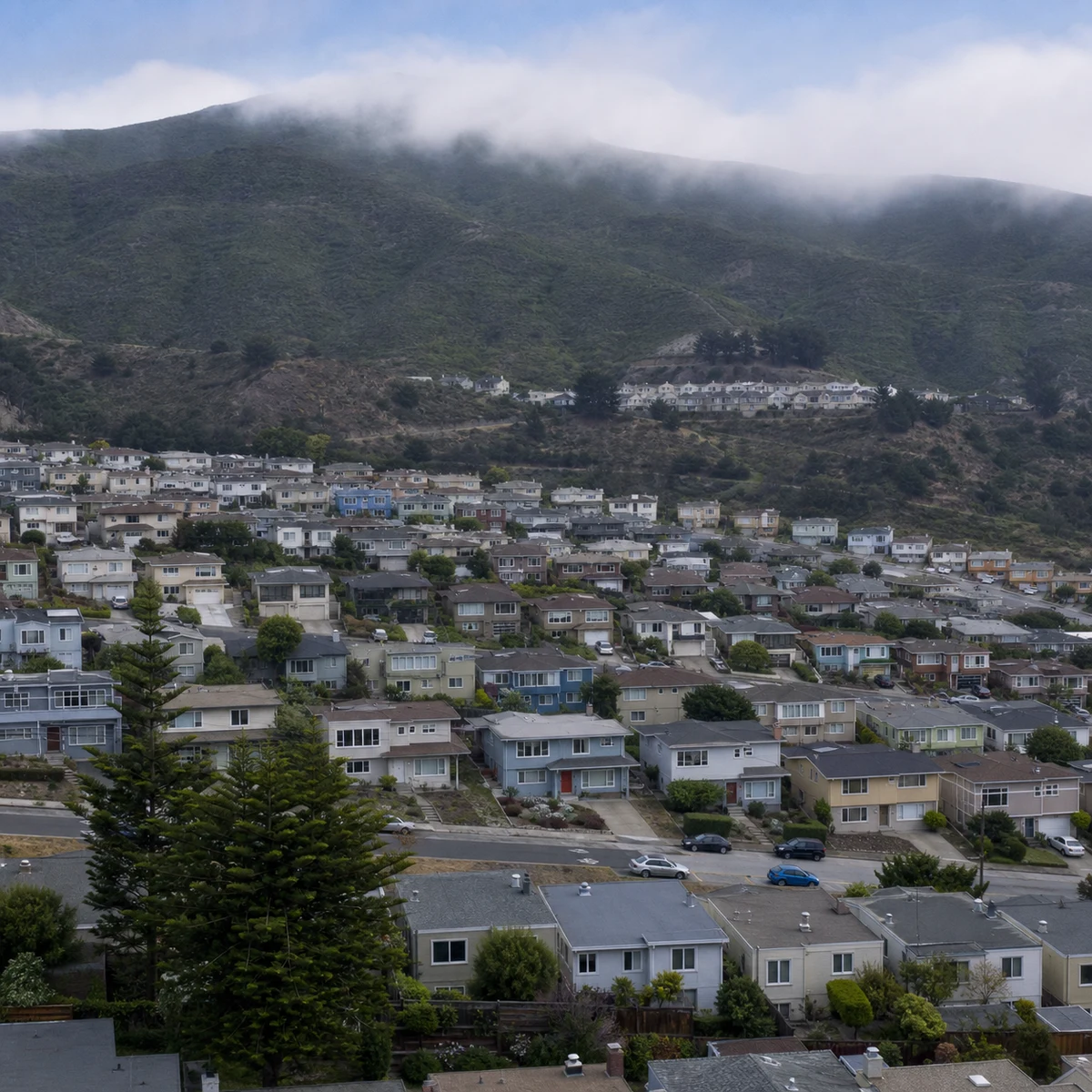
Daly City had an estimated 101,261 residents in 2025 across 7.7 square miles of land. Located in San Mateo County, the city connects residents with education, healthcare, employment, and specialized assessment resources throughout northern San Mateo County and the San Francisco Peninsula.
Local assessment questions include gifted identification, uneven academic progress, attention and learning concerns, disability documentation, college accommodations, career planning, and adult diagnostic clarification. A responsible evaluation integrates interviews, records, behavioral observations, language history, educational opportunity, health, and testing conditions instead of reducing a person to one number.
IQ by gender & ethnicity
Daly City's population is approximately 49.8% female. Properly normed intelligence tests are designed so broad male and female averages are comparable, although individuals can show different patterns in verbal comprehension, visual-spatial reasoning, fluid reasoning, working memory, and processing speed. No authoritative city dataset establishes separate Daly City IQ averages by sex, race, ethnicity, neighborhood, or home language.
Current Daly City demographic context includes:
- Hispanic or Latino residents: 20.5% of the city population.
- Black residents: 2.7% identify as Black alone.
- Asian residents: 59.7% identify as Asian alone.
- White, non-Hispanic residents: 11.9%.
- Foreign-born residents: 49.7%, which makes language exposure and prior schooling relevant to interpretation.
- Language other than English at home: 59.3% of residents age five and older.
- Educational attainment: 88.0% of adults age 25+ are high-school graduates or higher, and 38.9% hold a bachelor's degree or higher.
Community percentages never predict an individual's ability. Examiners should select measures for the referral question and explain how culture, language proficiency, education, disability, and opportunity to learn affect conclusions.
What is professional IQ testing?
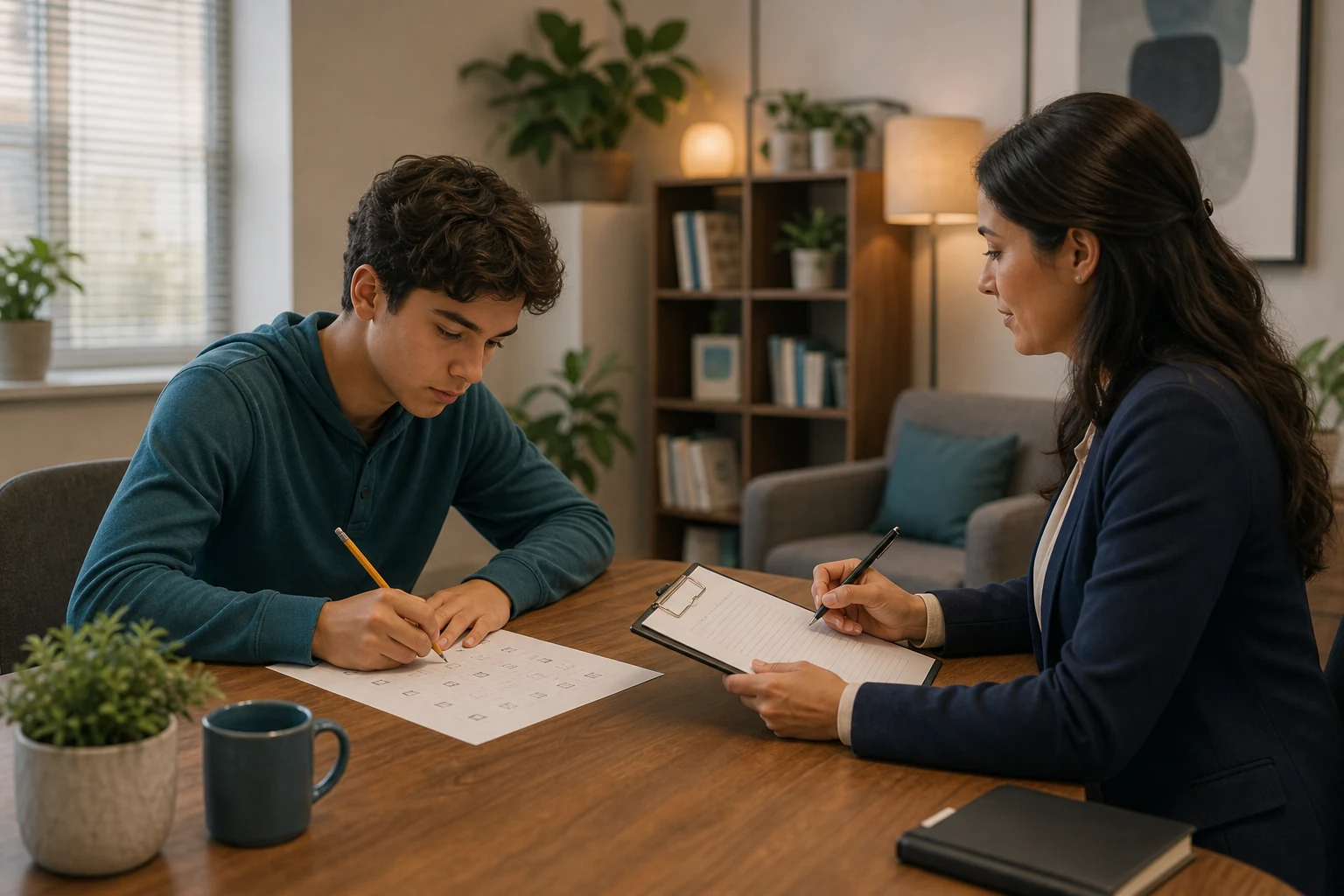
Professional intelligence testing uses standardized, individually administered instruments under controlled conditions. A licensed psychologist may report a Full-Scale IQ together with index and subtest scores, confidence intervals, behavioral observations, and limitations on interpretation.
Clinical assessment differs from a casual online quiz because the examiner verifies testing conditions, follows publisher rules, evaluates score validity, and connects the findings to the stated referral question.
Who should get tested?
- Children with advanced learning needs: Results may contribute evidence for gifted services, acceleration, or enrichment.
- Students with uneven achievement: Cognitive and academic measures can help clarify a suspected learning disability.
- Adults seeking diagnostic clarity: Evaluation may distinguish developmental, attention, neurological, educational, and emotional factors.
- People requesting accommodations: The receiving institution should specify required instruments, credentials, documentation age, and functional evidence.
- High-IQ society applicants: Candidates should confirm accepted tests and score-report rules before scheduling.
Types of IQ tests
- WISC-V: An individually administered measure for ages 6:0–16:11 with a Full-Scale IQ and primary index scores.
- WAIS-IV and WAIS-5: Adult Wechsler editions selected according to publisher guidance, examiner training, purpose, and recipient requirements.
- Stanford-Binet Intelligence Scales, Fifth Edition: A broad cognitive battery spanning early childhood through older adulthood.
- Nonverbal measures: These may reduce expressive-language demands but do not erase cultural, educational, sensory, or motor influences.
- Psychoeducational batteries: Cognitive testing may be paired with achievement, attention, executive-function, behavior, or adaptive measures.
How the testing process works
- Referral clarification: The psychologist identifies who needs the results and what decision they must inform.
- History and record review: Relevant developmental, medical, educational, employment, and prior-testing information is gathered.
- Standardized administration: Testing occurs in a suitable setting, with permitted accommodations documented.
- Integrated interpretation: Scores are evaluated alongside history, effort, observations, and contextual factors.
- Feedback and report: Findings, limitations, recommendations, and written deliverables are explained.
How much does IQ testing cost in Daly City?
Fees depend on age, battery length, records reviewed, report detail, feedback time, urgency, and whether the question involves school, disability, forensic, or neuropsychological documentation. A focused cognitive assessment generally costs less than a comprehensive psychoeducational or neuropsychological evaluation.
Before paying, request the planned instruments, estimated hours, deliverables, cancellation policy, insurance coding, payment schedule, and confirmation that the intended school, employer, court, licensing body, or membership organization will accept the report.
Daly City's Intellectual History & Legacy
San Francisco State University contributes to regional education and research, while Skyline College expands access to transfer, workforce, and professional pathways. Students may seek assessment when persistent learning barriers or accommodation needs are not explained by effort alone.
Seton Medical Center and North East Medical Services Daly City Clinic connect the region with medical and specialty services. Cognitive concerns associated with development, injury, illness, attention, or aging require the appropriate clinical referral rather than a one-size-fits-all test.
Top Employers in Daly City Requiring Cognitive Testing
Routine employers generally do not request clinical IQ scores. Organizations may use job-related skills tests, licensing examinations, safety certifications, structured interviews, medical-fitness procedures, or validated aptitude measures that comply with employment and disability law.
- Healthcare and social assistance: Roles can require careful judgment, confidential records, coordinated communication, and reliable responses to changing needs.
- Education and public services: Work may emphasize technical learning, accurate documentation, planning, and collaboration across specialties.
- Retail and regional commerce: Employees often combine quality control, problem solving, equipment or software knowledge, and deadline awareness.
- Construction and building services: Job-relevant screening may focus on customer communication, numerical accuracy, scheduling, and adaptable decision making.
- Professional and technology work: Safe operations depend on route or workflow planning, sustained attention, regulatory knowledge, and dependable handoffs.
- Transportation and hospitality: These positions can reward analysis, leadership, digital fluency, project organization, and clear written reasoning.
Applicants should ask what instrument is required, who administers it, how results are used, which accommodations are available, and whether the procedure is validated for the position.
Trying an IQ test in a quiet setting can reveal how distraction changes performance, but it cannot reproduce the controls or interpretation used in Daly City assessment offices.
Daly City IQ Testing by Neighborhood
Neighborhood does not predict intelligence. Location matters for travel time, parking, transit, accessibility, language capacity, age specialization, and whether a provider offers the exact assessment required.
- Westlake: Central routes may make it easier to combine testing with school, medical, or work obligations.
- Serramonte: Families can compare after-school availability and travel reliability when an evaluation spans several visits.
- St. Francis Heights: Drivers should verify parking, step-free entrances, elevators, and the location of a quiet waiting area.
- Original Daly City: The examiner's age range and report expertise matter more than choosing the geographically closest listing.
- Hillside: Intake or feedback may be remote when permitted, while standardized administration can still require an office visit.
- Bayshore: Confirm the actual street address because online directories sometimes describe a broader service territory.
Daly City Universities and Research Institutions
- San Francisco State University: Students should consult disability services and the receiving program for current documentation standards.
- Skyline College: Transfer, career, and continuing-education pathways may have distinct placement and accommodation procedures.
- Seton Medical Center: Appropriate departments can address cognitive concerns arising within medical, developmental, or rehabilitation care.
- Independent licensed psychologists: Scope may include focused IQ, gifted, psychoeducational, ADHD, autism, or neuropsychological assessment.
Daly City Economic Context
- Median household income: $123,547 in 2020–2024 Census estimates.
- Per-capita income: $50,863.
- Residents in poverty: 7.7%.
- Bachelor's degree or higher: 38.9% of adults age 25 and older.
- Mean travel time to work: 28.8 minutes, with longer trips possible during incidents or peak congestion.
- Healthcare and social-assistance activity: Census business data report approximately $926.35 million in 2022 receipts/revenue within the city.
- Transportation and warehousing: Census QuickFacts reports approximately $35.77 million in 2022 receipts/revenue.
- Retail sales: Approximately $1.38 billion in 2022.
- Assessment access: Fees, insurance, paid leave, childcare, transportation, and report requirements can affect access to private testing.
- Regional strengths: Healthcare and social assistance, Education and public services, Retail and regional commerce, Construction and building services, Professional and technology work, Transportation and hospitality.
Daly City School District Data
- Jefferson Union High School District: Families should obtain current gifted, special-education, independent-evaluation, enrollment, and documentation rules directly from the district.
- Jefferson High School: Counselors can explain advanced-course sequencing, accommodation procedures, testing deadlines, and referral pathways.
- Westmoor High School: Program offerings and admission criteria can change, making the school the authoritative source for current requirements.
- Summit Shasta High School: Specialized or independent programs establish their own records, interview, testing, and deadline policies.
- Gifted identification: Decisions use the applicable state and district framework, not an online score or national rule of thumb.
- Disability evaluation: School teams consider educational impact and multiple data sources; a private report does not automatically determine services.
- Multilingual learners: Evaluation should examine language dominance, instruction history, opportunity to learn, and limits of translated or nonverbal measures.
Local Testing Centers and Psychologists
- Chinese Hospital Lifespan Neuropsychology Center: Located at 386 Gellert Boulevard, Daly City, CA 94014; call (628) 228-2828. Published services include psychological, cognitive, intellectual, neuropsychological, or psychoeducational assessment relevant to IQ-related referrals. Confirm the instrument, age range, report format, fees, and recipient acceptance before booking.
- Seton Medical Center: Relevant departments may address neurological, developmental, rehabilitation, memory, or behavioral-health concerns through clinical referral procedures.
- North East Medical Services Daly City Clinic: Specialty availability varies; ask whether the question belongs with psychology, neuropsychology, developmental care, neurology, psychiatry, or rehabilitation.
- Jefferson Union High School District: School psychologists evaluate eligible students through district procedures when an educational referral is initiated.
- Provider verification: Check active California licensure, assessment training, language competence, privacy practices, insurance status, and in-person requirements.
Daly City Events and Conferences
- University programming: San Francisco State University calendars may list public lectures, research presentations, workshops, and education events.
- Professional education: State psychology organizations and health systems periodically offer ethics, assessment, and clinical training.
- Family information sessions: District and school calendars are the best source for gifted, special-education, enrollment, and college-planning meetings.
- Science and learning activities: Libraries, museums, civic groups, and colleges offer changing programs that encourage curiosity without functioning as clinical tests.
- Mensa calendars: American Mensa's official local-group directory provides current events, testing information, and boundaries.
Transportation and Accessibility
- Major roads: Interstate 280, State Route 1, Mission Street, Junipero Serra Boulevard, and John Daly Boulevard carry many local and regional trips.
- Transit choices: Residents can investigate BART, SamTrans buses, and Redi-Wheels paratransit, taxi, and ride-share options according to location and eligibility.
- Airport access: San Francisco International Airport is the primary nearby aviation connection.
- Arrival planning: Build in time for traffic, road work, school dismissal, weather, and unfamiliar parking arrangements.
- Accessible facilities: Ask about step-free entrances, elevators, restrooms, seating, lighting, and sensory conditions before the visit.
- Paratransit: Eligibility and advance-reservation rules differ from fixed-route service and should be checked early.
- Interpreter needs: Confirm whether an interpreter is clinically appropriate and permitted by the instrument's standardization rules.
- Testing-day travel: Choose a time that minimizes fatigue and avoids rushing directly from work or school.
Daly City Weather and Seasonal Considerations
- Climate: Daly City has a cool coastal Mediterranean climate with fog, marine wind, mild summers, winter rain, occasional heat, wildfire smoke, and localized landslide or flood risk.
- Severe-weather plans: Verify closure and rescheduling procedures when warnings, unsafe roads, smoke, flooding, or power interruptions are possible.
- Room conditions: A quiet, comfortably heated or cooled, well-lit room supports standardized administration.
- School-year demand: Gifted, accommodation, and placement deadlines can increase appointment pressure from autumn through spring.
- Summer scheduling: Families may have more flexibility, although vacations and clinician leave can reduce available dates.
- Health preparation: Sleep, regular meals, hydration, prescribed medication, and needed glasses or hearing devices matter more than coaching.
- Illness: Fever, migraine, significant pain, acute anxiety, or sleep deprivation can undermine validity and may justify rescheduling.
Areas we serve
We support all areas of Daly City. Confirm the provider's exact office location, age range, language capacity, specialty, and in-person requirements before scheduling.
Frequently Asked Questions
WISC-V is for children aged 6–16, while WAIS-IV is for adults aged 16–90. Each is normed for its specific age group.
Most IQ tests take between 60 and 90 minutes, plus a feedback session. Allow 2–3 hours total.
No, you can book directly with our psychologists. We serve both self-referred and professionally referred individuals.
Potentially. Acceptance depends on the exact test, edition, qualifying score, administration date, examiner credentials, and current Mensa documentation rules. Confirm before testing.
Some plans cover cognitive assessments when there is a clinical indication. Check with your provider.
Get a good night's sleep, eat a healthy meal, and arrive relaxed. No specific preparation is needed.
You'll receive a comprehensive report with your scores and tailored recommendations.
Some interview and feedback components may be available remotely, but many standardized cognitive tests require in-person administration. Confirm with the psychologist and the organization receiving the report.