
IQ Testing in Billings
Professional IQ testing in Billings – whether you need an assessment for school, employment, gifted program eligibility, or personal insight, we connect you with licensed psychologists in the Billings area.
Last Updated: September 2026
Child IQ Testing
WISC-V & Stanford-Binet for ages 6–16. Gifted identification, learning profiles.
Adult IQ Testing
WAIS-IV & WAIS-5 available. Comprehensive adult cognitive assessments. Clinical & occupational.
WISC-V Test
Wechsler Intelligence Scale for Children® Fifth Edition – the gold standard for child IQ testing.
WAIS-IV & WAIS-5 Tests
Wechsler Adult Intelligence Scale® – Fourth Edition (WAIS-IV) and Fifth Edition (WAIS-5) available for adult IQ testing.
Gifted Testing
Identify giftedness for school placement, enrichment, and talent programs using WISC-V or Stanford-Binet.
Stanford-Binet 5
Stanford-Binet Intelligence Scales Fifth Edition – comprehensive cognitive assessment for all ages.
Mensa Testing
Mensa admission testing and preparation for the high-IQ society. Accepts WAIS-IV, WAIS-5, and Stanford-Binet 5 scores.
Full Evaluation
Combined assessment with detailed report and recommendations. Includes WISC-V, WAIS-IV, WAIS-5, or Stanford-Binet 5 as appropriate.
Billings residents can use a short IQ test to clarify which reasoning domains they want to discuss before investing in a comprehensive neuropsychological assessment.
IQ Testing in Billings: city context
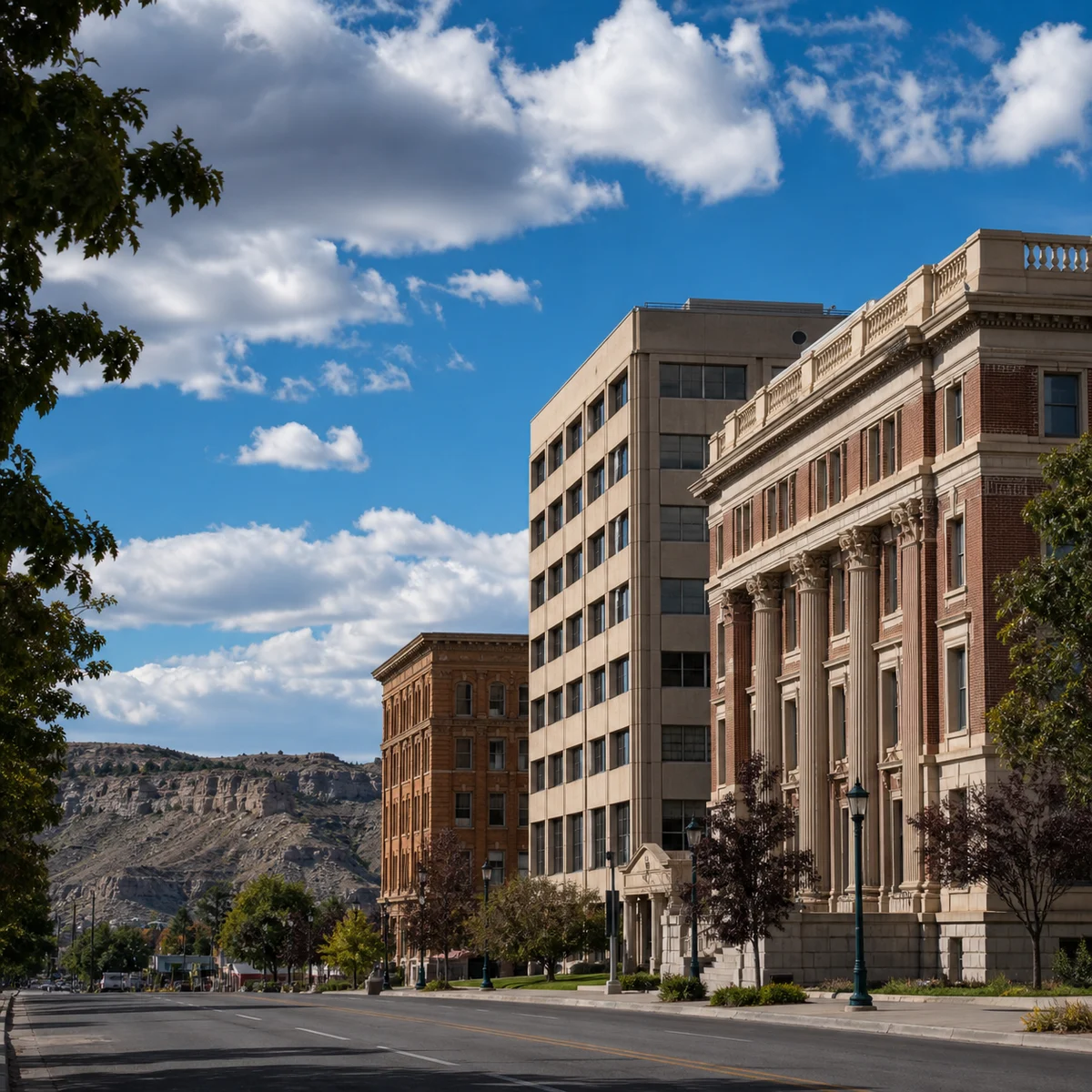
Billings covers 44.78 square miles of land and had an estimated 119,434 residents in the 2020-2024 American Community Survey. It is located in Yellowstone County. Local assessment demand reflects the city's schools, employers, healthcare network, universities, language backgrounds, and families seeking gifted, disability, admissions, career, or diagnostic documentation.
Professional interpretation should consider referral purpose, age, education, language history, disability, culture, health, sleep, medication, and testing conditions. A score is one standardized data point rather than a complete description of a person.
IQ by gender & ethnicity (city population)
Billings's population is approximately 50.2% female and 49.8% male. Well-normed intelligence tests are designed so broad sex averages are similar, although individuals can show different verbal, visual-spatial, working-memory, fluid-reasoning, and processing-speed profiles. No authoritative city dataset establishes separate local IQ averages by sex, race, ethnicity, neighborhood, or language group.
Current Billings demographic context includes:
- Hispanic or Latino residents: 7.4%.
- Black, non-Hispanic residents: 0.4%.
- Asian, non-Hispanic residents: 0.8%.
- White, non-Hispanic residents: 82.5%.
- Foreign-born residents: 2.1%, an important reason to document language and educational history.
- Language other than English at home: 3.8% of residents age five and older.
- Educational attainment: 95.5% of adults age 25+ are high-school graduates or higher, and 36.9% hold a bachelor's degree or higher.
Group demographic statistics must never be converted into assumptions about an individual. A licensed psychologist selects measures and interprets results in the context of the examinee's own history and the standards of the school, employer, court, licensing body, or membership organization receiving the report.
What is professional IQ testing?
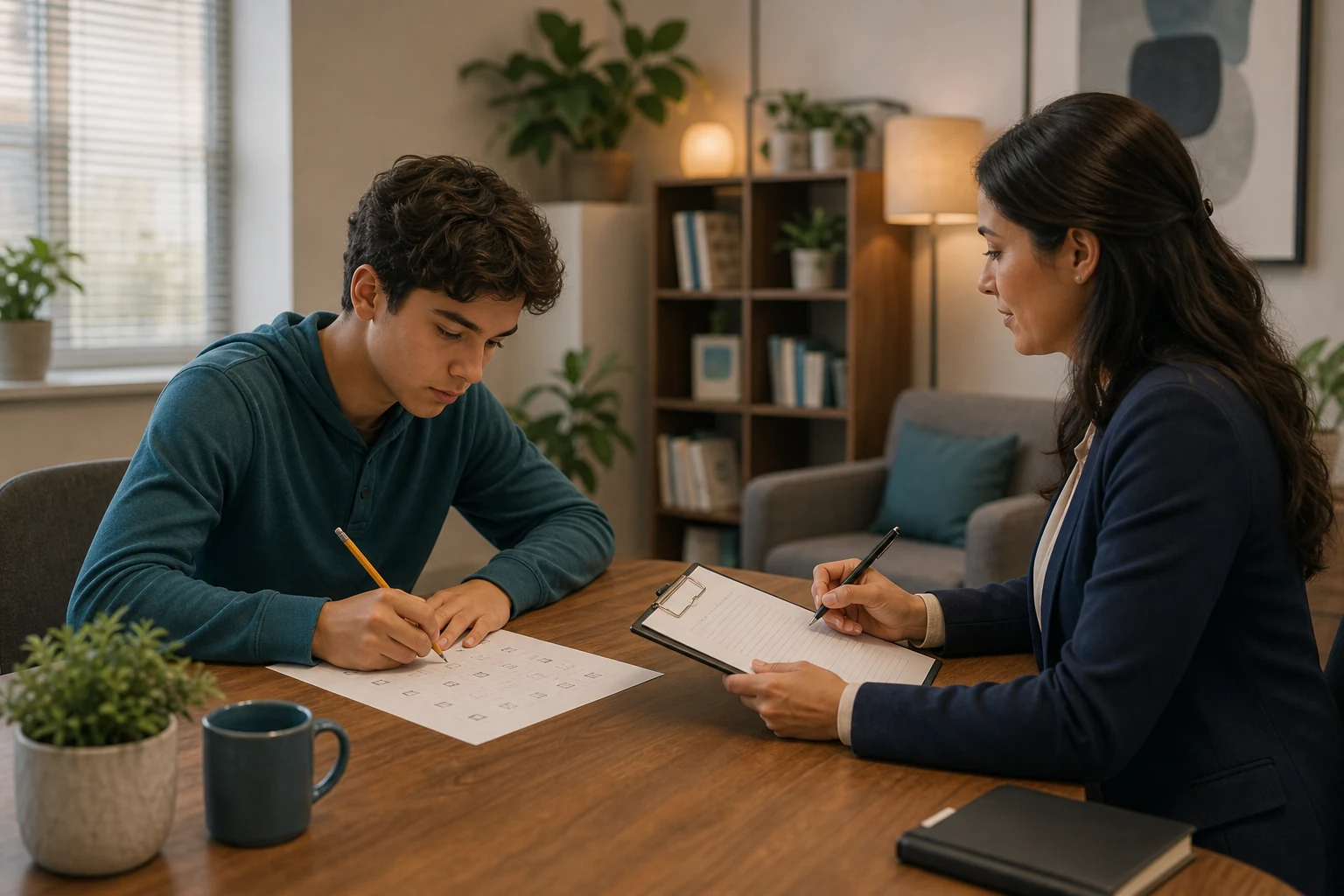
Intelligence quotient (IQ) testing is a standardized method to measure human cognitive abilities and intellectual potential. Professional IQ tests are administered by licensed psychologists in a controlled environment to ensure accuracy and reliability. Unlike online quizzes, clinical assessments provide a full-scale IQ score along with detailed breakdowns of verbal comprehension, perceptual reasoning, working memory, and processing speed.
In Billings, IQ testing is commonly used for gifted program admission, learning disability identification, career guidance, neuropsychological evaluation, and personal development. The results are presented in a comprehensive report that includes normative comparisons, strengths and weaknesses, and actionable recommendations.
Who should get tested?
IQ testing can benefit children, adolescents, and adults in various situations:
- Children: Parents often seek testing for school readiness, gifted placement, or to understand learning challenges.
- Adults: Many adults take IQ tests for career advancement, graduate school applications, or personal curiosity.
- Mensa candidates: High-IQ societies require official test scores for membership.
- Clinical referrals: Psychologists may recommend testing as part of a broader neuropsychological evaluation.
Types of IQ tests
We offer the most recognized and scientifically validated intelligence tests in the field:
- WISC-V (Wechsler Intelligence Scale for Children® – Fifth Edition): The gold standard for children aged 6:0–16:11. It provides a Full-Scale IQ and five primary index scores.
- WAIS-IV (Wechsler Adult Intelligence Scale® – Fourth Edition): The most widely used adult IQ test for ages 16–90. It measures cognitive functioning across four domains.
- Stanford-Binet Intelligence Scales – Fifth Edition: A comprehensive assessment for ages 2–85, often used for gifted identification and clinical evaluations.
- Gifted Testing: Often includes the WISC-V or Stanford-Binet, plus additional creativity and achievement measures.
- Mensa Testing: We provide official Mensa admission testing and preparation materials.
How the testing process works
- Initial consultation: Brief phone or video call to discuss your needs and match you with the right psychologist.
- Testing session: In-person or remote testing (depending on the test) with a licensed psychologist. Most sessions last 1–2 hours.
- Scoring and interpretation: The psychologist scores the test and interprets the results in the context of your background and goals.
- Feedback session: A detailed review of your results, including strengths, weaknesses, and practical recommendations.
- Comprehensive report: You receive a written report with all scores, normative comparisons, and actionable next steps.
How much does IQ testing cost in Billings?
The cost of IQ testing in Billings varies depending on the type of test, the psychologist's experience, and whether a comprehensive report is required. Typical fees range from $200 to $1,200 for a full assessment. Gifted testing and Mensa admission testing are often at the lower end, while neuropsychological evaluations may be higher.
Some insurance plans cover IQ testing when it's deemed medically necessary. We recommend checking with your provider for details. We also offer affordable payment plans and sliding-scale options for qualifying individuals.
Billings's Intellectual History & Legacy
Billings's intellectual life is shaped by Montana State University Billings, Rocky Mountain College, City College at MSU Billings, its school systems, libraries, healthcare institutions, employers, and civic organizations. Local interest in assessment spans gifted education, learning and attention questions, disability accommodations, graduate study, career transitions, neurological care, and personal development.
Modern practice separates historical intelligence-testing claims from current ethical assessment. The strongest local evaluations use current norms, trained examiners, documented testing conditions, multiple information sources, and recommendations tied to the examinee's real-world needs.
Top Employers in Billings Requiring Cognitive Testing
Major employment sectors do not usually require a clinical IQ test. Formal cognitive assessment may nevertheless appear in disability, rehabilitation, fitness-for-duty, vocational, or accommodation contexts when legally and clinically appropriate.
- Healthcare: as a regional medical hub, Billings supports roles that require clinical reasoning, accurate handoffs, procedural discipline, and sensitive communication with patients traveling long distances.
- Energy: technical and operational staff may interpret instrumentation, manage hazards, follow environmental controls, and respond systematically when conditions depart from plan.
- Agriculture and Food Distribution: producers and distributors coordinate seasonal inputs, storage, quality, pricing, and shipment decisions across a broad service territory.
- Transportation and Logistics: rail, highway, and freight work depends on routing, load planning, regulatory compliance, weather awareness, and clear coordination between teams.
- Retail: Billings' regional shopping role creates varied demands in inventory management, customer assistance, supervision, merchandising, and financial accuracy.
- Education, Finance, and Professional Services: these fields emphasize different combinations of instruction, quantitative analysis, client judgment, confidentiality, and written communication.
Applicants should ask what instrument is required, who may administer it, how results will be used, and whether the request complies with employment and disability law.
Billings IQ Testing by Neighborhood
Assessment offices and referral routes serve residents across the city without implying that neighborhood predicts cognitive ability. Practical access considerations include:
- Downtown: central medical and professional offices may be convenient, though clients should check garage access and allow for a full uninterrupted testing block.
- West End: the concentration of services broadens provider choice, making examiner training and referral fit better selection criteria than the nearest address.
- The Heights: residents crossing the rimrocks should account for travel and winter conditions when scheduling time-sensitive standardized appointments.
- South Side: families can ask about accessible facilities, language support, and payment arrangements before committing to a multi-visit evaluation.
- North Elevation: nearby access to healthcare settings may help with record coordination when the client authorizes communication among providers.
- Shiloh: parents arranging child testing should confirm age specialization, planned breaks, and how teacher observations will inform interpretation.
- Alkali Creek: households at the city's northern edge may prefer grouped appointments while ensuring that long sessions remain appropriate for the examinee.
- Central-Terry area: clients can clarify report turnaround, feedback options, and whether recommendations will address the institution receiving the results.
Billings Universities and Research Institutions
Local and regional higher-education resources include:
- Montana State University Billings: contributes education, research, disability-support, workforce, or referral resources relevant to cognition and learning.
- Rocky Mountain College: contributes education, research, disability-support, workforce, or referral resources relevant to cognition and learning.
- City College at MSU Billings: contributes education, research, disability-support, workforce, or referral resources relevant to cognition and learning.
University disability offices set their own documentation rules. Students should obtain those requirements before scheduling an evaluation so the examiner can address the correct functional questions.
Billings Economic Context
The following city figures use 2020-2024 American Community Survey estimates and 2022 Census business data:
- Median household income: $73,712.
- Per-capita income: $43,934.
- Residents in poverty: 9.8%.
- Bachelor's degree or higher: 36.9% of adults age 25 and older.
- Mean travel time to work: 16.5 minutes, although cross-city and regional trips can take longer.
- Health care and social-assistance activity: approximately $2.67 billion in 2022 city receipts/revenue.
- Transportation and warehousing: approximately $785.32 million in 2022 city receipts/revenue.
- Retail sales: approximately $3.88 billion in 2022.
- Regional strengths: regional healthcare, energy, agriculture, logistics, retail, education, finance, and professional services.
These figures describe the local context, not individual cognitive potential. Cost, insurance, school documentation, transportation, work schedules, and provider availability can affect whether residents pursue a focused IQ test or a broader evaluation.
Billings School District Data
School systems and educational options relevant to testing include:
- Billings Public Schools: parents should consult current district evaluation and gifted-service procedures because eligibility is not determined by a private IQ score alone.
- Billings Senior High School: school staff can identify existing performance data and explain what new information, if any, an outside evaluation should address.
- Billings West High School: documentation for accommodations should describe current functional impact and recommended support in addition to standardized results.
- Skyview High School: families should define whether the question concerns learning, attention, giftedness, admissions, or another issue before selecting an assessment.
- Billings Central Catholic High School: private-school policies should be requested directly, including accepted documentation, submission timing, and how results are used.
School-based evaluation, private psychoeducational testing, gifted screening, and admissions testing serve different purposes. Parents should obtain written criteria before choosing WISC-V, Stanford-Binet, achievement, attention, language, or adaptive-behavior measures.
Local Testing Centers and Psychologists
Liat Hoffman, PsyD, Neuropsychologist
Billings, MT 59101
(406) 719-7882
This local provider provides in-person comprehensive neuropsychological assessments addressing baseline cognition, attention, learning, memory, ADHD, and neurological referral questions for adults. Availability, fees, insurance, age limits, referral requirements, accepted test editions, and turnaround times can change. Confirm that the office will administer the required IQ or cognitive instrument and produce documentation accepted by the intended school, employer, court, disability office, or high-IQ organization before booking.
A careful referral match matters more than a directory ranking: ask who administers and interprets the test, whether the examiner is licensed for the requested purpose, what collateral records are needed, which norms and editions are used, and whether feedback and a signed written report are included.
Billings Events and Conferences
- University programming: Montana State University Billings and other area institutions host talks, workshops, public lectures, and professional programs related to psychology, education, neuroscience, health, and technology.
- School and family workshops: Billings Public Schools and parent organizations may offer gifted, special-education, accommodation, and transition information sessions.
- Professional education: Montana psychology, neuropsychology, education, and healthcare organizations periodically offer assessment and ethics training.
- Community learning: libraries, museums, colleges, and civic organizations support STEM, literacy, workforce, and lifelong-learning events.
- Mensa activities: regional groups may hold social, games, discussion, lecture, and testing-related events; verify the current calendar and eligibility rules directly.
Transportation and Accessibility
- Major roads: Interstates 90 and 94 and U.S. 87.
- Public and regional transit: MET Transit buses, regional road connections, and paratransit services.
- Airport access: Billings Logan International Airport.
- Accessible appointments: confirm step-free entry, elevators, accessible restrooms, parking, interpreter needs, sensory accommodations, and paratransit timing before the visit.
- Testing-day travel: build in time for traffic, weather, road construction, campus events, and unfamiliar parking. Arriving rushed can affect comfort and concentration.
- Break planning: ask whether long batteries can be divided across sessions and whether food, medication, mobility, fatigue, or caregiving needs can be accommodated without compromising standardization.
Billings Weather and Seasonal Considerations
- Local climate: cold, snowy winters, warm summers, rapid temperature shifts, and occasional wildfire smoke; winter roads and wind can affect travel.
- Testing environment: a quiet, well-lit, temperature-controlled room with appropriate breaks supports standardized administration.
- School-year demand: gifted, accommodation, and admissions referrals often increase around application deadlines and semester transitions.
- Preparation: adequate sleep, a normal meal, prescribed medication taken as directed, glasses or hearing devices, and relevant records are more useful than test coaching.
- Rescheduling: illness, severe weather, unsafe roads, or major sleep disruption may justify contacting the examiner rather than completing testing under unrepresentative conditions.
Areas we serve
We support all areas of Billings.
Frequently Asked Questions
WISC-V is for children aged 6–16, while WAIS-IV is for adults aged 16–90. Each is normed for its specific age group.
Most IQ tests take between 60 and 90 minutes, plus a feedback session. Allow 2–3 hours total.
No, you can book directly with our psychologists. We serve both self-referred and professionally referred individuals.
Potentially. Acceptance depends on the exact test, edition, qualifying score, administration date, examiner credentials, and current Mensa documentation rules. Confirm before testing.
Some plans cover cognitive assessments when there is a clinical indication. Check with your provider.
Get a good night's sleep, eat a healthy meal, and arrive relaxed. No specific preparation is needed.
You'll receive a comprehensive report with your scores and tailored recommendations.
Some interview and feedback components may be available remotely, but many standardized cognitive tests require in-person administration. Confirm with the psychologist and the organization receiving the report.